
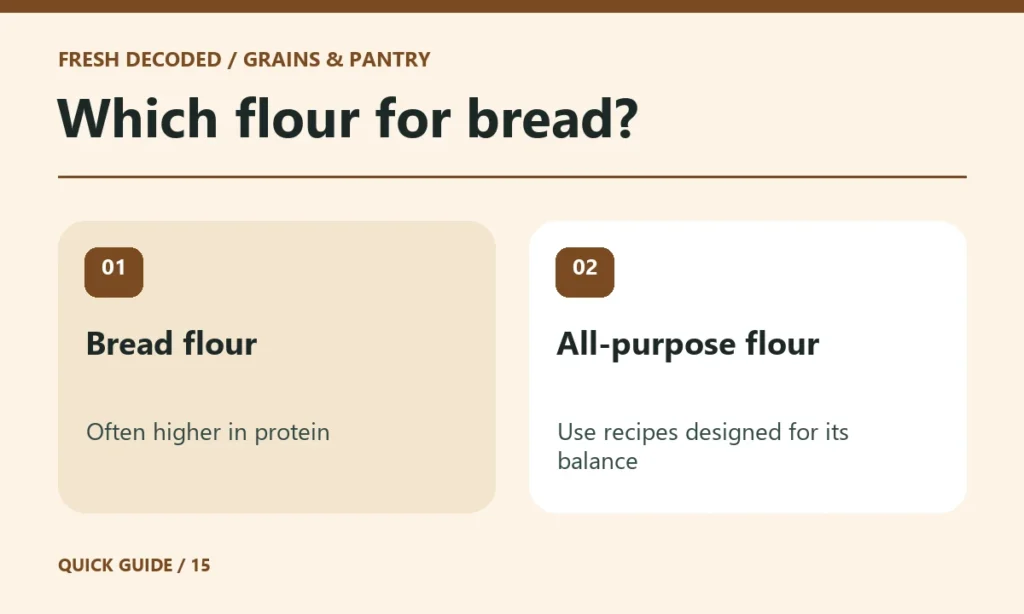
Bread Flour vs. All-Purpose Flour: Choose by the Dough
Compare bread flour and all-purpose flour by protein, recipe purpose and dough handling before swapping bags in a bread recipe.
Read the guideRice, beans, grains, and shelf staples.
Compare bread flour and all-purpose flour by protein, recipe purpose and dough handling before swapping bags in a bread recipe.
Read the guide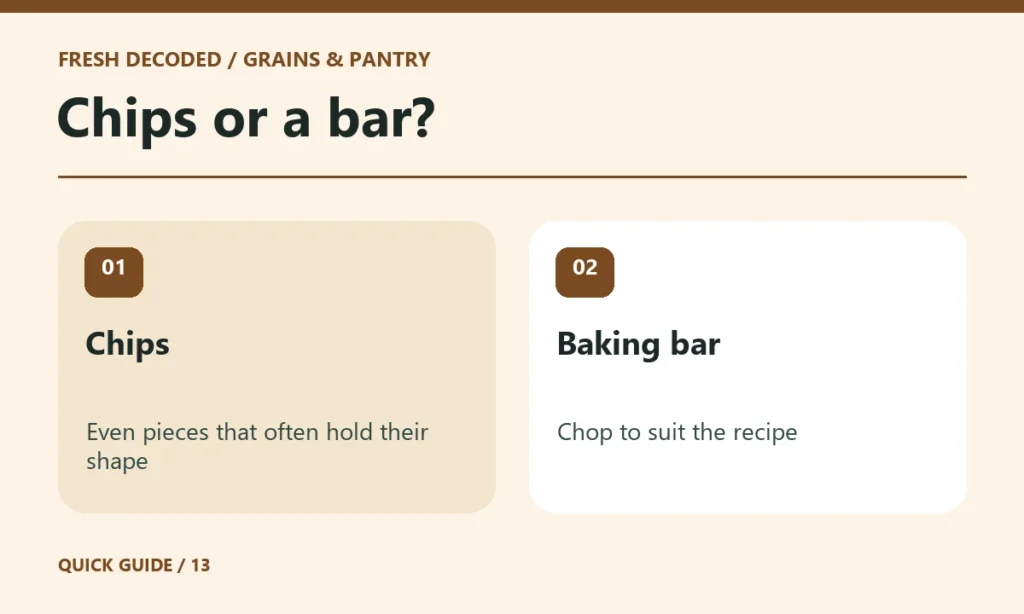
Choose chips or a baking bar by what the recipe does with the chocolate, then check sweetness, weight and whether it needs to melt.
Read the guide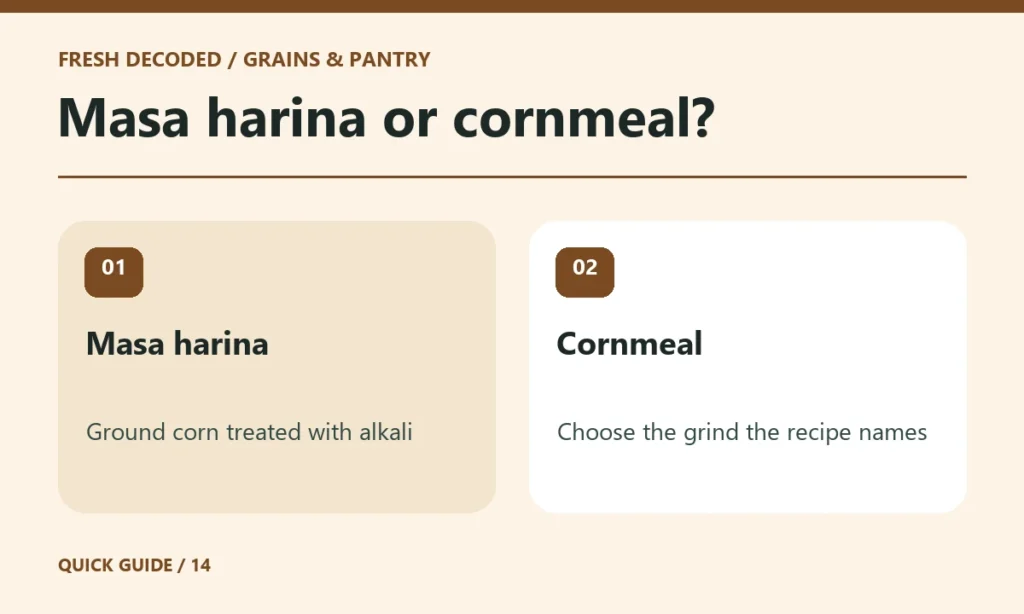
Identify nixtamalized corn flour for tortilla dough, compare it with ordinary cornmeal, and check when a recipe needs the exact product.
Read the guide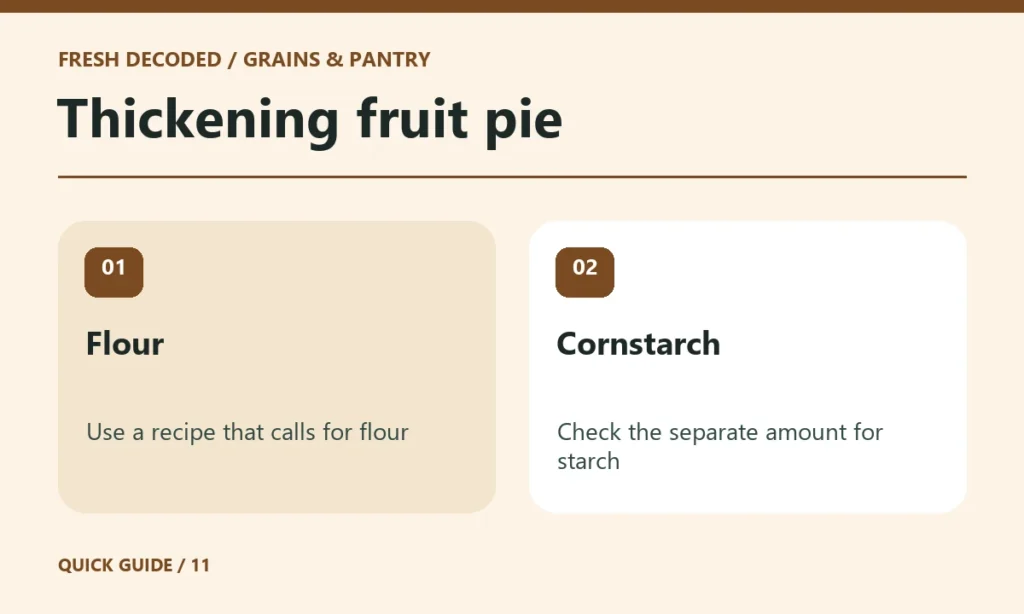
Choose a fruit pie thickener by the recipe, see why cornstarch and flour are not equal-volume swaps, and learn what to check when changing fruit.
Read the guide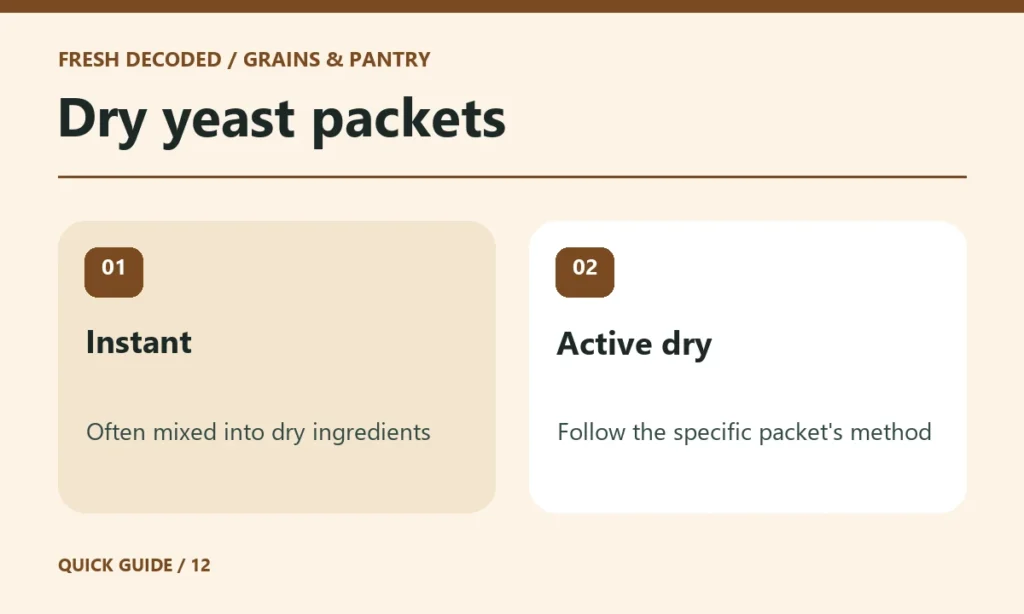
Match a dry yeast packet to your bread recipe, check the manufacturer's mixing directions, and use the dough's rise cues when timing changes.
Read the guide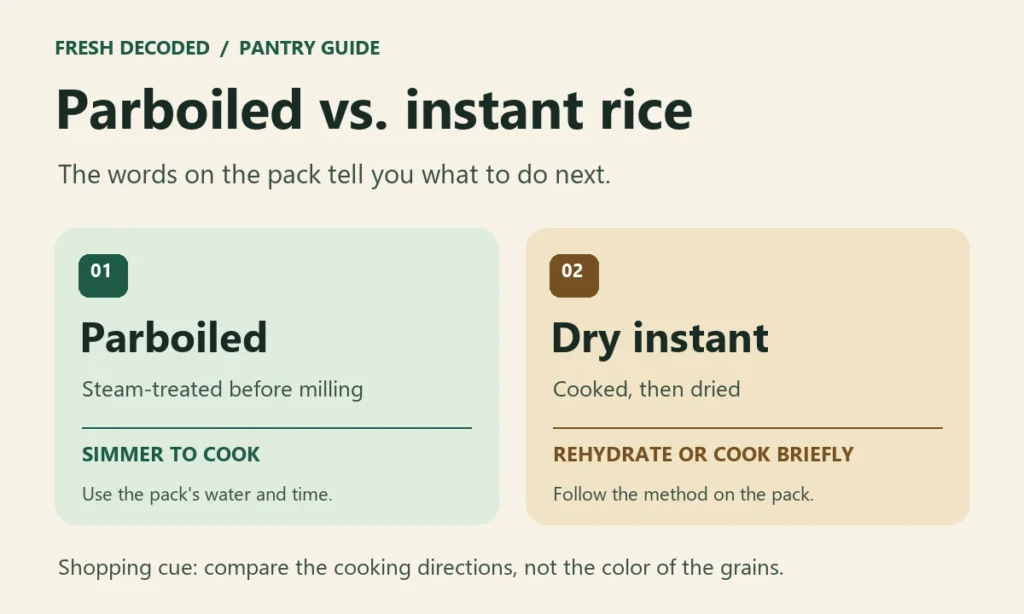
Parboiled rice still needs to simmer. Dry instant rice cooks faster. Compare package directions and see when you can swap one for the other.
Read the guide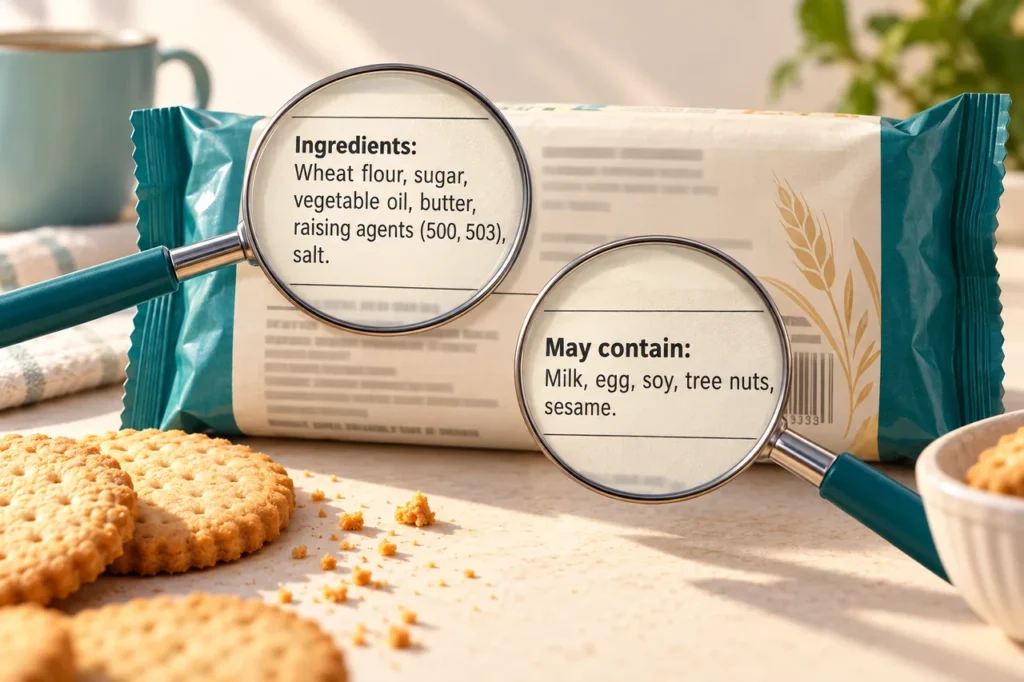
A Contains statement identifies declared major-allergen ingredients, while May Contain is advisory wording about possible cross-contact. Read the ingredient list as well. Neither the absence of a separate Contains box…
Read the guide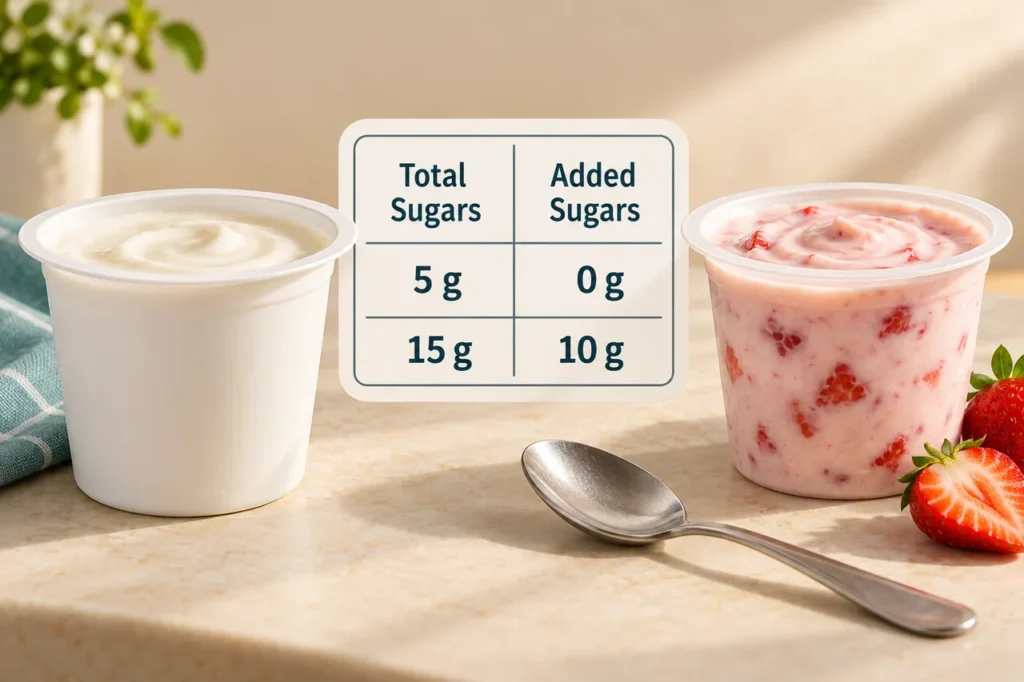
Added Sugars is included within Total Sugars on the U.S. Nutrition Facts label. Do not add the two lines together. Read the word Includes, then compare the same serving amount…
Read the guide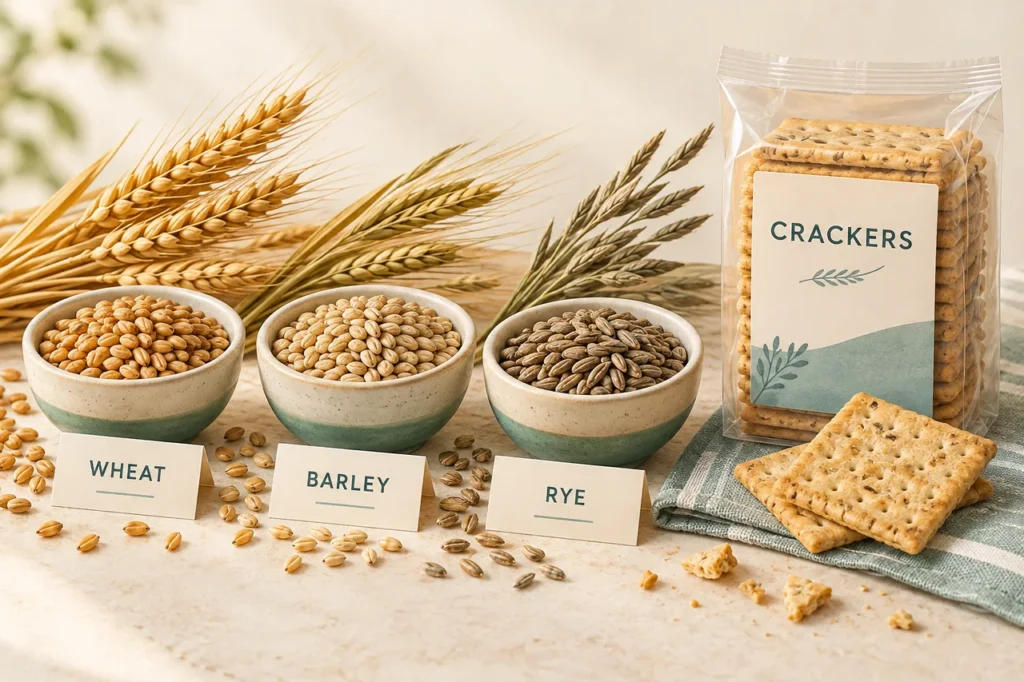
Wheat-free and gluten-free answer different ingredient questions. Gluten-related label checks extend beyond wheat to grains including barley and rye. Do not substitute one phrase for the other when selecting packaged…
Read the guide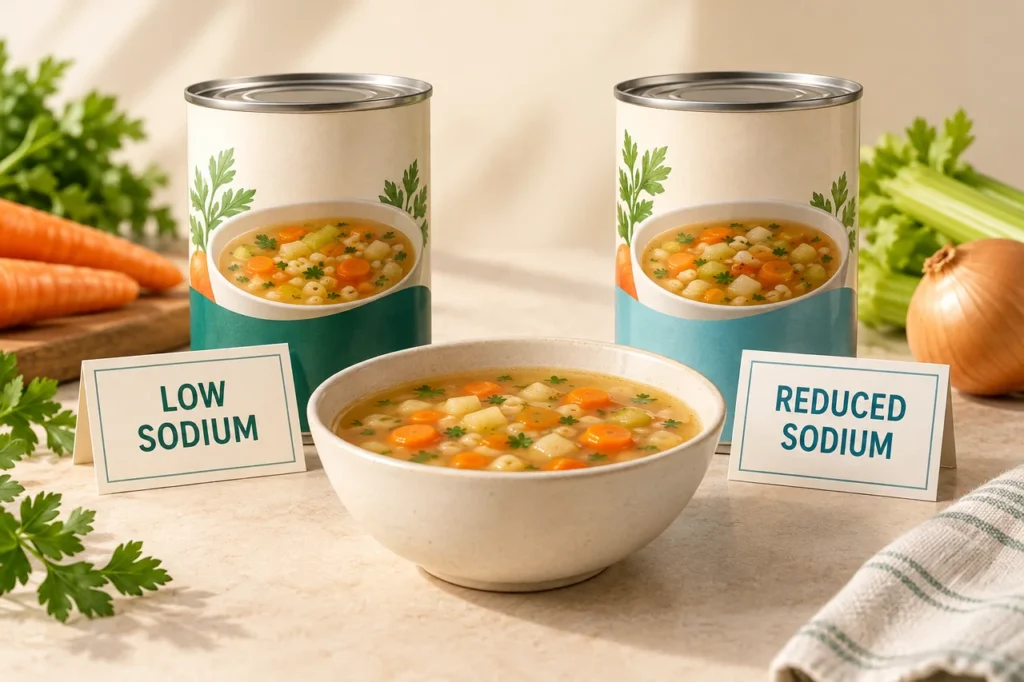
Low sodium and reduced sodium make different claims on U.S. food labels. Low describes a defined sodium level; reduced compares a product with a reference food. A reduced-sodium version is…
Read the guide