
Instant and active dry yeast are both baker's yeasts. The practical differences are how the manufacturer tells you to mix them and how the dough rises in your kitchen. Start with the exact yeast named in your bread recipe. If you switch types, check the package and the recipe's guidance instead of assuming the clock will stay the same.
Do you need to dissolve it first?
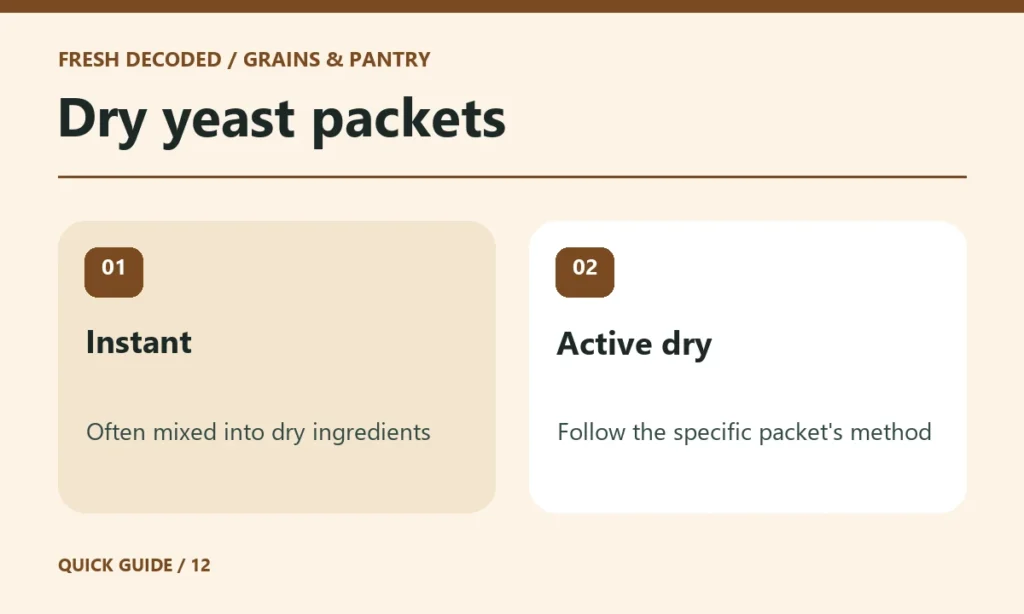
Instant yeast is generally intended to mix into dry ingredients. Modern active dry yeast can sometimes be added directly too, so “always dissolve active dry” is too broad. Check the instructions for the product you actually buy. A recipe may deliberately begin by dissolving the yeast; follow that method when it is written for the packet you have.
Red Star distinguishes active dry and instant products and provides instructions for its own brands. King Arthur notes that modern active dry yeast can be mixed with flour in many recipes. These are practical directions, not a reason to ignore the exact recipe and package in front of you.
Read the rise cue rather than just the timer
Suppose your sandwich bread recipe says “rise until noticeably puffy, about 60 minutes.” The number is an estimate; the dough cue tells you when to move to the next step. If you changed yeast type or the kitchen is cooler, check the dough at the expected time and wait for the recipe's cue if necessary. Do not automatically add more yeast because the dough is slower than expected.
Shop for the method you plan to use
- Check whether the recipe calls for instant, active dry or a specific fast-rise product.
- If the package lists a recipe conversion, check whether it applies to your product and method.
- For a bread machine, read the manual's yeast and mixing instructions.
- For occasional baking, buy a quantity you can store according to the package after opening.
Baking powder is a different kind of leavener; this comparison is only between forms of dry baker's yeast.