
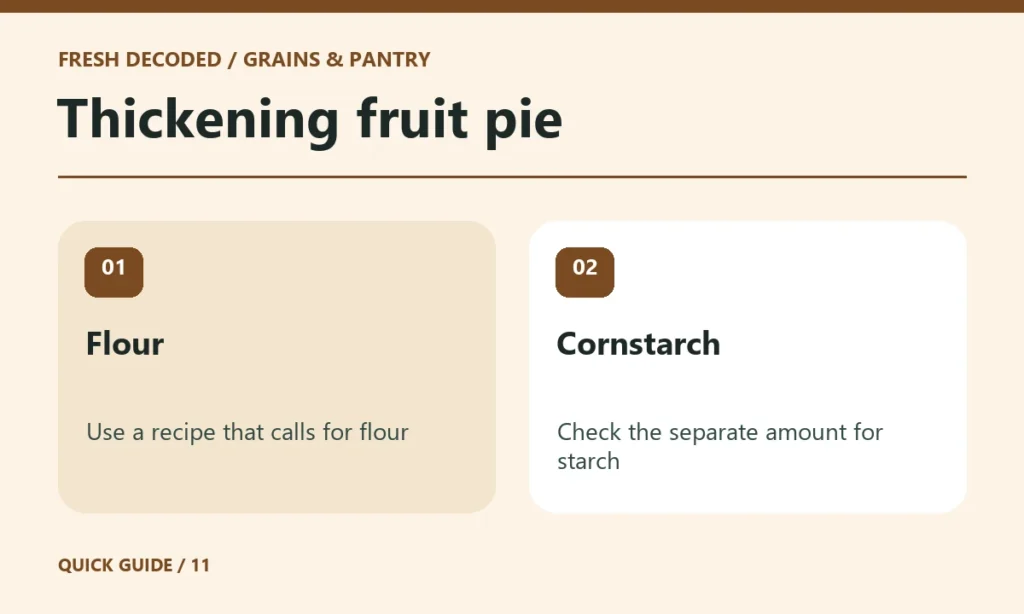
Cornstarch and all-purpose flour both thicken fruit pie filling, but they are not equal-volume swaps. Cornstarch is a concentrated starch; flour has less thickening power per spoonful. For a first bake, use a recipe or a tested guide that gives the amount for your fruit and your thickener.
Start with the fruit, not a conversion slogan
A strawberry filling and an apple filling may release different amounts of juice. A recipe built around one fruit does not automatically supply the amount of thickener for the other. King Arthur Baking's pie guide lists different amounts by fruit and thickener. Check whether the instructions measure prepared fruit by weight or volume, and whether they were developed for fresh or frozen fruit.
What a substitution can change
Flour can give a more opaque filling; cornstarch can look somewhat translucent but still cloudy. Both change the consistency. If you only have flour and a pie recipe lists cornstarch, check for a version with flour and the same fruit quantity. Replacing two tablespoons with two tablespoons is a change in thickening power, not just a change in color.
In many fruit pies, you can reduce clumping by mixing the specified thickener into the recipe's sugar before tossing with the fruit. Follow the method in your recipe. A recipe that directs you to cook the filling on the stove is not necessarily equivalent to a raw fruit filling that cooks in the oven.
Use a small recipe check before shopping
- Is the recipe for fresh fruit, frozen fruit or a prepared filling?
- Is the ingredient all-purpose flour, cornstarch or a named specialty starch?
- How does the recipe tell you to mix, bake and cool it before slicing?
This comparison is for baked fruit pies. It is not guidance for thickening a home-canned filling, where a tested preservation recipe matters.