
Bread flour usually contains more protein than all-purpose flour from the same mill. That can support a stronger gluten network in a wheat dough, but it does not make bread flour the best bag for every recipe. Choose by the recipe and the texture you want, then check the mill's specifications if you are comparing brands.
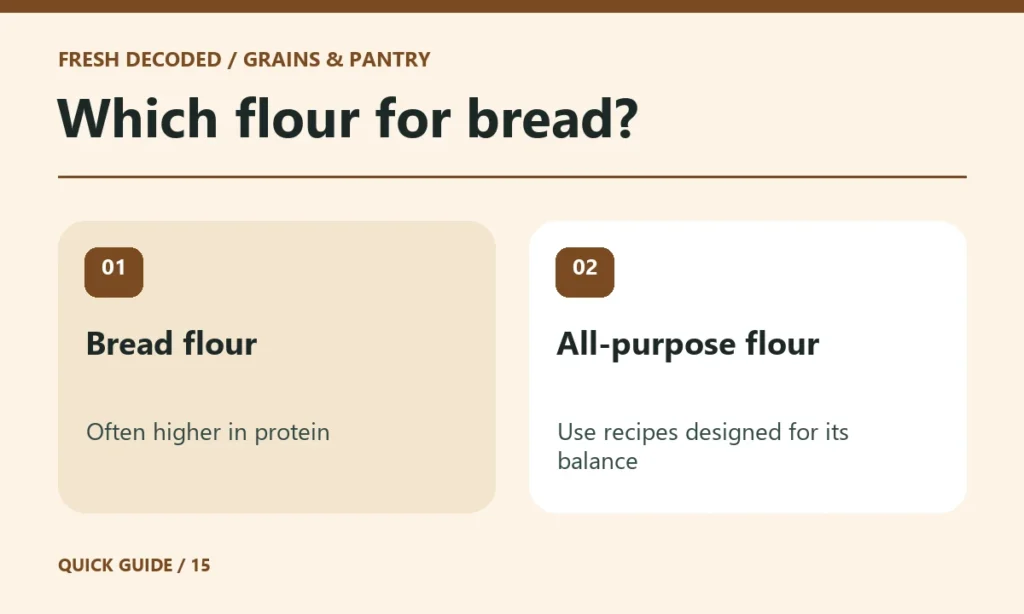
How a different bag changes a dough
A recipe that uses bread flour may be designed for a particular dough strength and water absorption. If you switch to all-purpose flour, the dough may feel different at the same water level, and the baked crumb may be less open. Conversely, a muffin recipe written for all-purpose flour may not benefit from a stronger dough. King Arthur Baking compares the two flours in baking trials and publishes their own protein figures; those figures describe its products, not all brands.
A useful first-bake decision
For a chewy pizza recipe that explicitly calls for bread flour, start with it if you want to reproduce the recipe. For sandwich bread that specifically lists all-purpose flour, use the all-purpose bag. Both can make bread when the formula is designed for them. If you only have the other kind, choose a recipe written for it before trying to redesign the water and mixing method.
Compare labels without overreading them
The nutrition panel often rounds grams of protein per serving. A mill's published flour specification can be more informative than dividing two rounded numbers and claiming an exact percentage. Check whether the product is wheat flour, a specialty blend or self-rising. Self-rising flour adds other ingredients and answers a different question.
If you do experiment with a substitution, weigh the flour, keep the rest of the recipe constant and note how the dough handles. Compare that result with the recipe as written before changing the brand and method again.
References
- King Arthur Baking: What is bread flour?
- King Arthur Baking: Bread flour and all-purpose flour comparison