
Parboiled rice still needs to cook. Dry instant rice has already been cooked and dried, so it needs much less time to prepare. The words describe processing, not grain length. If you are swapping one for the other, the first thing to check is whether the recipe measures dry rice or cooked rice.
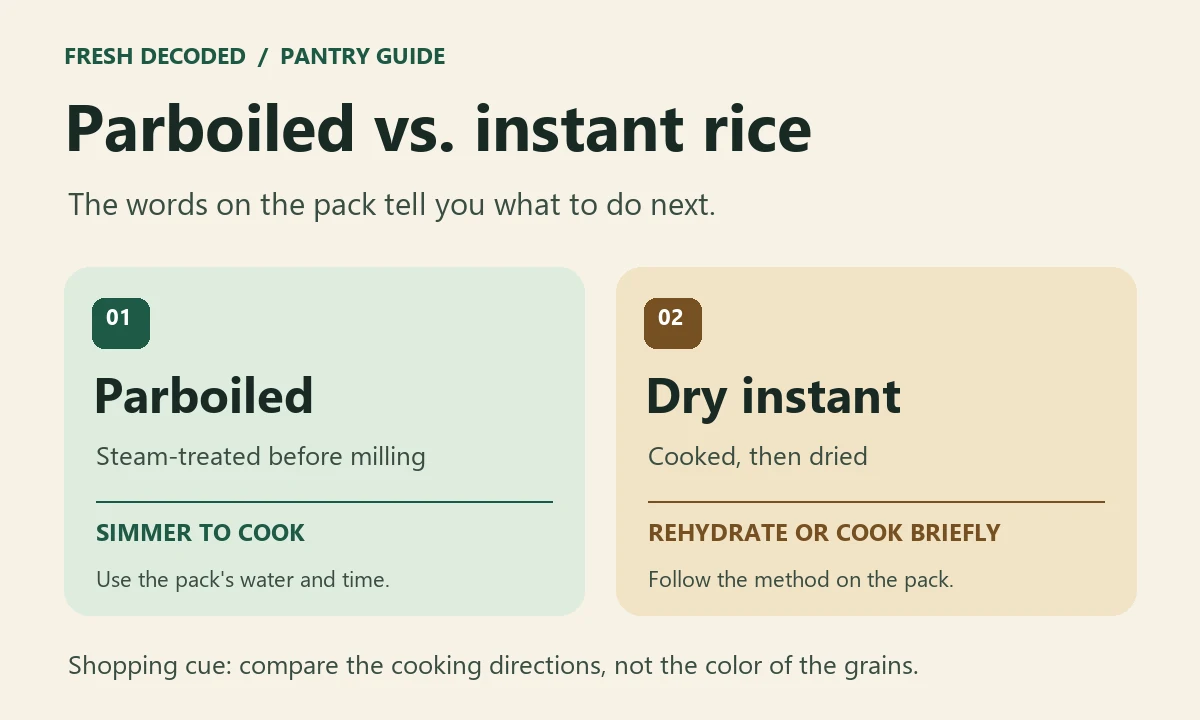
Read the verbs on the back of the pack
Parboiled (sometimes called converted): The rice is steam-treated before milling. The dry grains still need to cook in water. Look for a covered simmer in the directions. If you want a side with firm, separate grains and have time for a simmer, long-grain parboiled rice is a reasonable choice.
Dry instant or quick-cooking: The rice was cooked and then dehydrated. Some products sit covered in hot water off the heat; others simmer briefly. Follow the instructions on the specific package, especially if it is instant brown rice. The word “instant” alone does not tell you how much water to use.
Ready-to-heat pouch: This is a third option. A typical pouch already contains hydrated, cooked rice. Follow the pouch instructions instead of treating it as a box of dry instant rice.
Two packages, two different instructions
For one cup of dry rice, Mahatma’s extra-long-grain parboiled rice directions call for 2¼ cups of water and about 25 minutes of covered simmering. Minute Instant White Rice’s stovetop directions use one cup of water, followed by a five-minute covered rest off the heat once the rice has been added to boiling water. These examples show how much the method can change. They are manufacturer directions for two products, not a timing test or a universal ratio.
The five minutes in the instant example is the rest after the water boils. If dinner is on a tight clock, count the time to bring the water to a boil too. Check whether your pack gives a different method for a microwave or rice cooker.
When a substitution works
- “Serve over two cups of cooked rice.” Cook either product separately by its own directions, then measure two cups of the cooked rice. Check package yield so you start with enough.
- “Add one cup of dry rice to the skillet and simmer with the broth.” Use the type the recipe names. Changing the rice can also change the liquid and the timing for everything else in the pan. If you only have instant rice, choose a recipe written for it or serve the cooked rice alongside a dish that can be prepared separately.
- “Stir in the rice, cover, and remove from heat.” If the recipe specifies dry instant rice, dry parboiled rice is not a drop-in swap. It needs its own cooking step.
A quick shelf check
- Find the words parboiled, instant, or ready to heat near the product name.
- Check whether the instructions say to simmer, rehydrate, or heat. Use that to confirm what the front label means.
- Compare the water, the method, and the cooked yield. For a side dish, compare prices by the amount you will serve if both packs give a cooked yield. Two dry packs of the same weight do not necessarily give the same number of cooked portions.
Sources and related guides
USA Rice: forms of rice by processing distinguishes parboiled, precooked, and ready-to-heat rice. The two manufacturer links above document the exact preparation examples. The recipe swaps are hypothetical kitchen scenarios, not results of a product test.
For choosing by grain length, see how to choose rice for different dishes. For the open dry bag, see how to store uncooked rice.