
To choose good feta, look for bright white cheese with a clean, tangy smell and a texture that matches how you will use it — firm enough to cube for salads, or softer and creamier for spreading and baking. Blocks stored in brine usually taste fresher and keep better than pre-crumbled tubs. Check that the label states the milk type and that the cheese looks moist, not yellowed, dry, or slimy.
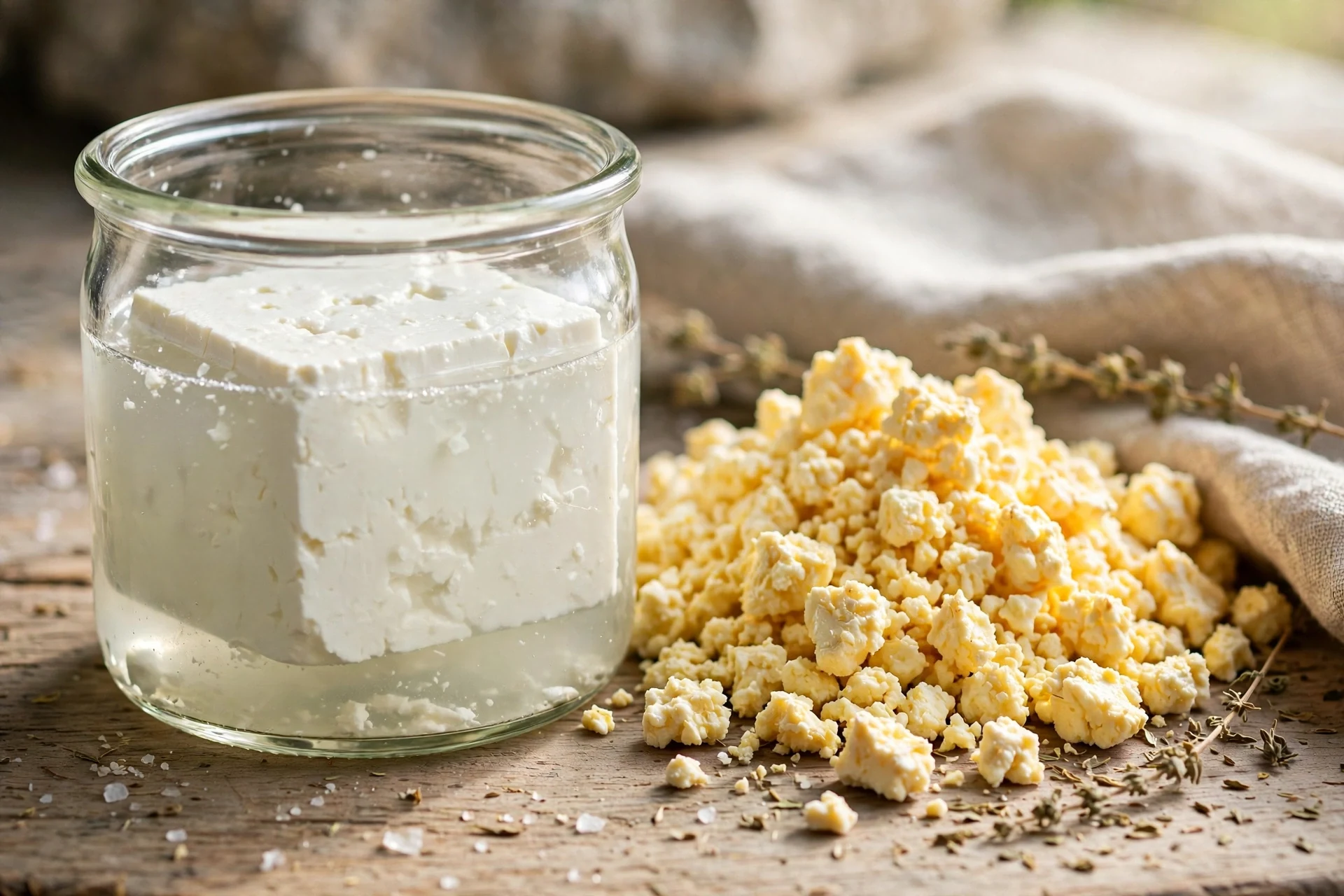
Prefer
- Bright white color with a clean, tangy aroma
- Blocks kept in brine for freshness and moisture
- Firm but slightly springy texture, not rubbery
- Label that states sheep, goat, cow, or a blend
- Moist surface with no slime or sour smell
Avoid / check more closely
- Yellowed, dried-out edges
- Slimy surface or cloudy, off-smelling brine
- Overly rubbery or squeaky texture
- Crumbles that look desiccated and dusty
- Bloated or damaged packaging
Block in brine versus crumbles
Feta is sold as blocks in brine, vacuum-packed blocks, and ready-made crumbles, and the form affects both flavor and shelf life. Brine keeps the cheese moist and seasoned, so a block fished from brine is often the freshest-tasting option and lets you cut cubes, slices, or crumbles to your own size. Crumbles are convenient for sprinkling, but they dry out faster and sometimes include anti-caking agents that mute the texture. If you are comparing soft and brined cheeses generally, the counter advice in our guide to how to choose cheese will help you judge freshness across styles. For most kitchens, a brine block is the best all-round buy.
Milk type and salt level
Traditional feta is made from sheep’s milk or a sheep-and-goat blend, which gives a rich, tangy, slightly peppery flavor. Cow’s milk feta is common and usually milder and a little less crumbly. Neither is wrong — choose by taste and by what the dish needs. Salt level also varies a lot between brands: feta is a brined cheese, so it will always be salty, but some versions are assertively so. A quick rinse or a short soak in fresh water can tame an overly salty block before crumbling. If you also buy fresh mozzarella for salads and pizzas, our guide to how to choose mozzarella makes a nice contrast in how moisture and freshness show up in a very different cheese.
Texture checks and storage at home
Good feta should hold together when cut, then crumble with gentle pressure — if it bends like rubber or feels squeaky, the texture is likely off. The surface should be moist and clean, and brine should look clear rather than cloudy. Once home, keep leftover feta submerged in its brine in a sealed container in the refrigerator, and change to fresh lightly salted water if the original brine is gone. Our guide to how to store cheese covers wrapping and fridge placement in more depth. Use opened feta within a reasonable period and discard it if it develops slime, pink patches, or a sour, yeasty smell.
Using feta well
Feta shines where its salt and tang can season a whole dish: crumbled over salads and grain bowls, baked with tomatoes and pasta, whipped with olive oil into a spread, or scattered over roasted vegetables. Because it softens rather than melting into strings, it keeps its character in hot dishes. Balance its salt by seasoning the rest of the dish lightly until the feta is in, then adjust. A firmer block cubes neatly for skewers and salads, while a creamier feta whips and spreads more smoothly.
Common questions
Is feta supposed to be crumbly?
Usually, yes — most feta crumbles readily while still feeling moist. Very creamy styles exist and are better for spreading and whipping. Choose the texture that suits your recipe rather than assuming one is higher quality.
Why is my feta so salty?
Feta is stored in brine, so saltiness is part of the style, though brands vary. Rinsing the block briefly or soaking it in fresh water for a short time can reduce surface salt before use.
How long does feta keep once opened?
Kept in brine and refrigerated, an opened block generally keeps well for about a week or more, while dry crumbles have a shorter useful life. Discard feta with slime, discoloration, or a sour smell.
References
U.S. Food and Drug Administration — Safe Food Handling. Reference for safe handling, storage, and spoilage signs.
Prepared October 21, 2026 with AI assistance. Cited sources do not endorse the entire article.