
To choose good cheese, match the type to your use — fresh cheeses for spreading, aged cheeses for grating and flavor. Check the date, look at the texture through the package, and give it a sniff if the counter allows: good cheese smells clean and characteristic, never sour or ammoniated. Buy from cases that are cold and clean, with steady turnover.
Prefer
- Cheese appropriate to your dish (fresh, soft, semi-hard, hard)
- Intact packaging with clear dates
- Expected texture: firm blocks, creamy soft cheeses, no unexpected sliminess
- Clean, characteristic smell — nutty, milky, or tangy as suits the type
- Well-chilled, clean display cases with good turnover
Avoid / check more closely
- Sour, ammonia-like, or rotten smells
- Slimy surfaces on cheeses that should be dry
- Pink or orange discoloration on fresh cheeses
- Bloated packaging
- Crumbly texture in cheeses meant to be smooth
Reading cheese labels
The ingredient list should be short: milk, cultures, salt, and enzymes (rennet) for most natural cheeses. “Pasteurized process cheese” and “cheese food” are different products with more additives — fine for melting, but not the same as natural cheese. Check milk type (cow, goat, sheep) since it drives flavor, and note aged varieties list their aging time, which usually means deeper flavor.
Texture and freshness by type
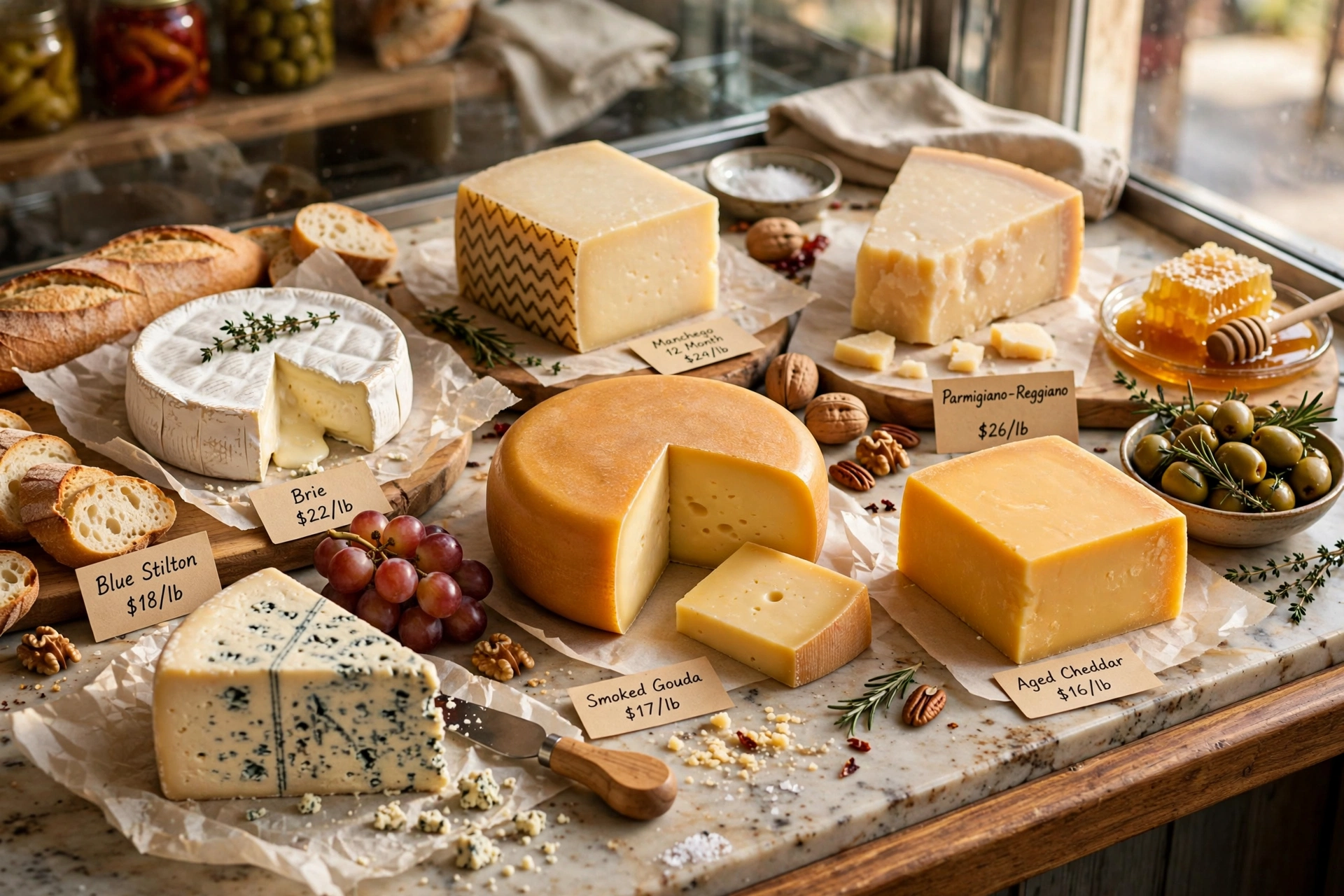
Fresh cheeses like mozzarella and ricotta should look moist but not watery, with clean milky smells — they are the most perishable, so check dates carefully. Soft-ripened cheeses (brie, camembert) should give slightly when pressed; hard and aged cheeses (parmesan, aged cheddar) should feel firm and dense. A few mold varieties have intentional rinds — blue veins in blue cheese are normal, but unexpected fuzzy mold on a cheddar block is not.
Storing cheese at home
Wrap cheese in wax or parchment paper, then loosely in plastic — it needs to breathe a little while staying protected from drying out. Refrigerate promptly and keep soft cheeses coldest. Most hard cheeses keep for weeks; fresh cheeses last only days. If hard cheese develops surface mold, you can cut it away generously; soft cheeses with mold should be discarded.
Common questions
Can I cut mold off cheese?
On hard cheeses, cut at least an inch around and below the mold. Discard soft, shredded, or crumbled cheeses with mold.
Should cheese be served cold?
Most cheeses taste best at room temperature — take them out about 30–60 minutes before serving.
How long does opened cheese last?
Fresh cheeses a few days; soft cheeses one to two weeks; hard cheeses several weeks when wrapped well and refrigerated.
References
U.S. Food and Drug Administration — Food Labeling & Nutrition. Reference for how dairy labels present ingredients, dates, and nutrition information.
Prepared October 11, 2026 with AI assistance. Cited sources do not endorse the entire article.