
A carton of liquid egg whites is not a carton of liquid whole eggs. Whole-egg products include yolk and white; whites-only products omit the yolk. The cartons can look similar, so read the product name and ingredients before using a conversion chart.
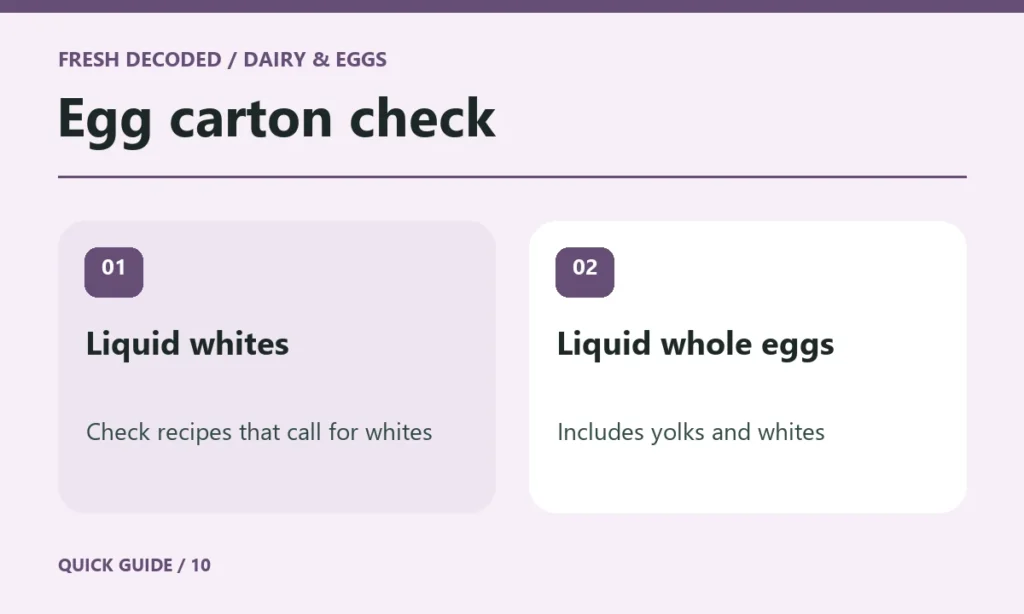
Match the egg to its job
If a muffin recipe asks for two whole eggs, use a whole-egg product if the recipe and carton support that substitution. A carton that says its volume equals two egg whites is answering a different question. The same amount of whites cannot supply the yolk that the original recipe includes.
If a frosting, meringue or other recipe depends on whipped whites, check whether the carton says its product can be used for whipping. Do not assume that being liquid egg whites is enough to match the recipe's preparation. For an omelet, check whether you want plain whites, plain whole eggs, or a prepared egg mixture with seasoning or other ingredients.
Work from the carton you have
Look for the specific equivalent it gives: one large whole egg, one egg white, or a measured serving. A serving on the nutrition panel is not automatically a recipe conversion. If the manufacturer supplies an equivalent for the exact product and your recipe asks for three eggs of that type, multiply the stated measure by three. Use the carton or recipe guidance rather than a scoop from a different brand.
Burnbrae Farms lists liquid whole eggs and liquid egg products as separate products; some are formulated with additional ingredients. This is why comparing the wording and ingredient declaration is more reliable than comparing carton size.
Before you put it in the cart
- Confirm whether the recipe specifies whites, yolks or whole eggs.
- Read the exact carton name and any added ingredients.
- Match the stated equivalent and preparation instructions.
- Check the keep-refrigerated and after-opening directions for that product.
Pasteurization is another label detail, separate from whether the carton contains yolk. See the linked guide if the recipe will not be cooked.