
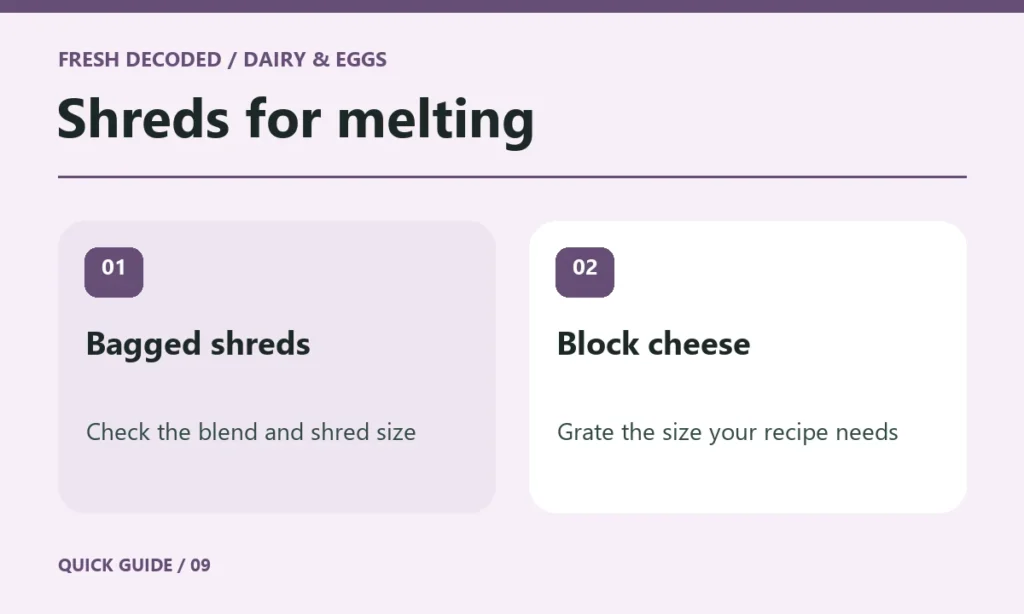
A bag of shredded cheese saves grating time. A block lets you choose the size of the shreds. If the texture of a sauce or topping matters, compare the cheese variety and ingredients before assuming the only difference is the bag.
Read beyond the front name
Compare the ingredient lists on the block and the shredded product. Bagged shreds may include an anti-caking ingredient to help keep pieces apart; for example, one Tillamook shredded blend lists potato starch. Do not assume all brands use the same ingredient or that every bagged shred melts poorly. The cheese blend and your cooking method can matter too.
Check whether “cheddar” is the only cheese named. A blend may include two or three varieties or different aging levels. If the recipe was written for one cheese, the blend can change flavor even if the package has the same weight and the shreds look similar.
Decide which job the cheese is doing
- Finishing a tray of nachos: A bag of shreds makes it easy to scatter the topping evenly. Compare fine and thick shreds based on the coverage you want.
- Making a smooth sauce from a block-cheese recipe: Grate the specified cheese. That keeps the cheese variety and shred form closer to the recipe rather than changing several things at once.
- Buying for a small household: Compare the amount you expect to use before the package needs to be finished. A larger block is only better value if it fits your plan.
Weigh first if you are comparing
A cup of finely grated cheese can pack differently from a cup of thick shreds. Use the recipe's weight when it provides one; it is easier to reproduce. If experimenting, make one change at a time and keep notes about the cheese and method. You will learn more about your recipe than by comparing two unrelated bags and attributing every difference to the anti-caking ingredient.