
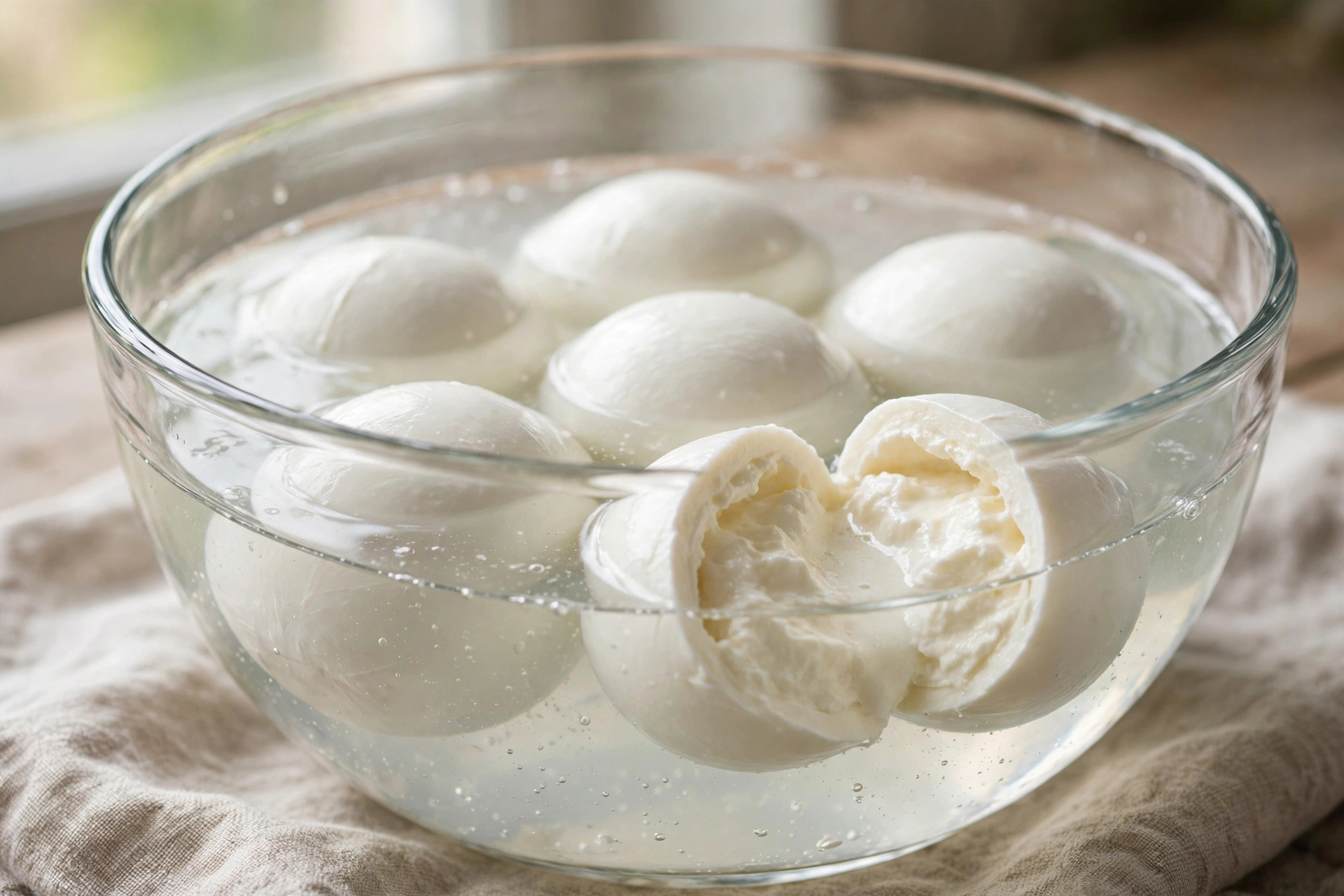
To choose good mozzarella, decide first whether you want fresh mozzarella (soft balls in liquid) or low-moisture mozzarella (firm blocks for melting). Fresh mozzarella should smell faintly milky and sweet, feel tender and delicate, and sit in clear or slightly cloudy whey — never sour-smelling or slimy. Low-moisture mozzarella should feel firm and springy with a clean dairy smell. Avoid any mozzarella that smells sour or sharp, tastes bitter, or is past its date.
Prefer
- Faintly sweet, milky smell
- Tender, delicate texture (fresh) or firm springiness (low-moisture)
- Clear to slightly cloudy packing liquid
- The freshest date on the shelf
- Unbroken, intact packaging
Avoid / check more closely
- Sour, sharp, or yeasty smell
- Slimy surface film
- Yellowed or dried-out exterior
- Bitter or soapy taste
- Bloated or leaking packaging
Fresh vs. low-moisture: buy for the job
These are effectively two different cheeses. Fresh mozzarella — the soft white balls (fior di latte, or buffalo mozzarella made from buffalo milk) floating in whey — is for eating fresh: caprese salads, sandwiches, pizzas finished after baking. It should taste of sweet milk with a delicate, almost creamy center. Low-moisture mozzarella — the firm block or pre-shredded bag — is engineered for melting on pizza and baked dishes. Buying fresh mozzarella for pizza topping often ends watery; buying low-moisture for caprese tastes rubbery. Match the type to your dish first, then judge quality within that type.
Freshness signs for fresh mozzarella
Fresh mozzarella is highly perishable, so the date matters more than with aged cheese. The balls should look plump and porcelain-white, floating in liquid that is clear or only slightly milky — very cloudy or yellowed whey suggests age. The texture should yield gently, like a water balloon, not feel rubbery or grainy. Smell it: sweet milk, perhaps faintly tangy, is right; sourness means it has turned. Buffalo mozzarella (mozzarella di bufana) is richer and pricier — worth it for raw preparations, less noticeable when cooked.
What to check on low-moisture mozzarella
The block should feel firm and uniform, with a smooth, pale surface — no cracks, yellowing, or dried patches. Pre-shredded mozzarella contains anti-caking starch that slightly dulls melting; for the best pull, shred a block yourself. Check the ingredient list if it matters to you: shorter lists with milk, salt, cultures, and enzymes are the traditional make. Either way, the cheese should smell clean and dairy-fresh, never sharp or sour.
Storing mozzarella at home
Keep fresh mozzarella in its original liquid in the refrigerator and use it within a few days of opening — it deteriorates quickly once exposed to air. Do not freeze fresh mozzarella; the texture suffers badly. Low-moisture mozzarella keeps for weeks unopened in the fridge; once opened, wrap tightly and use within a week or two. It freezes reasonably well for cooking use: shred first, freeze in portions, and expect slightly softer melting after thawing.
Common questions
Why is my fresh mozzarella rubbery?
Usually it is past its prime or was stored too cold for too long. Very fresh mozzarella is tender and yielding; rubberiness develops with age. Serving it at room temperature rather than fridge-cold also helps the texture.
Can I use the whey it comes in?
The packing liquid is mostly water with a little milk protein — it is safe but not particularly flavorful. Some cooks add a splash to pizza dough, but most simply discard it.
Is buffalo mozzarella worth the price?
For raw eating, many people think so — it is creamier and more flavorful than cow’s-milk fior di latte. For cooking, where heat mutes the differences, regular fresh mozzarella is the economical choice.
References
U.S. Food and Drug Administration — Selecting and Serving Produce Safely. Reference for selecting and handling fresh foods safely.
Prepared October 13, 2026 with AI assistance. Cited sources do not endorse the entire article.