
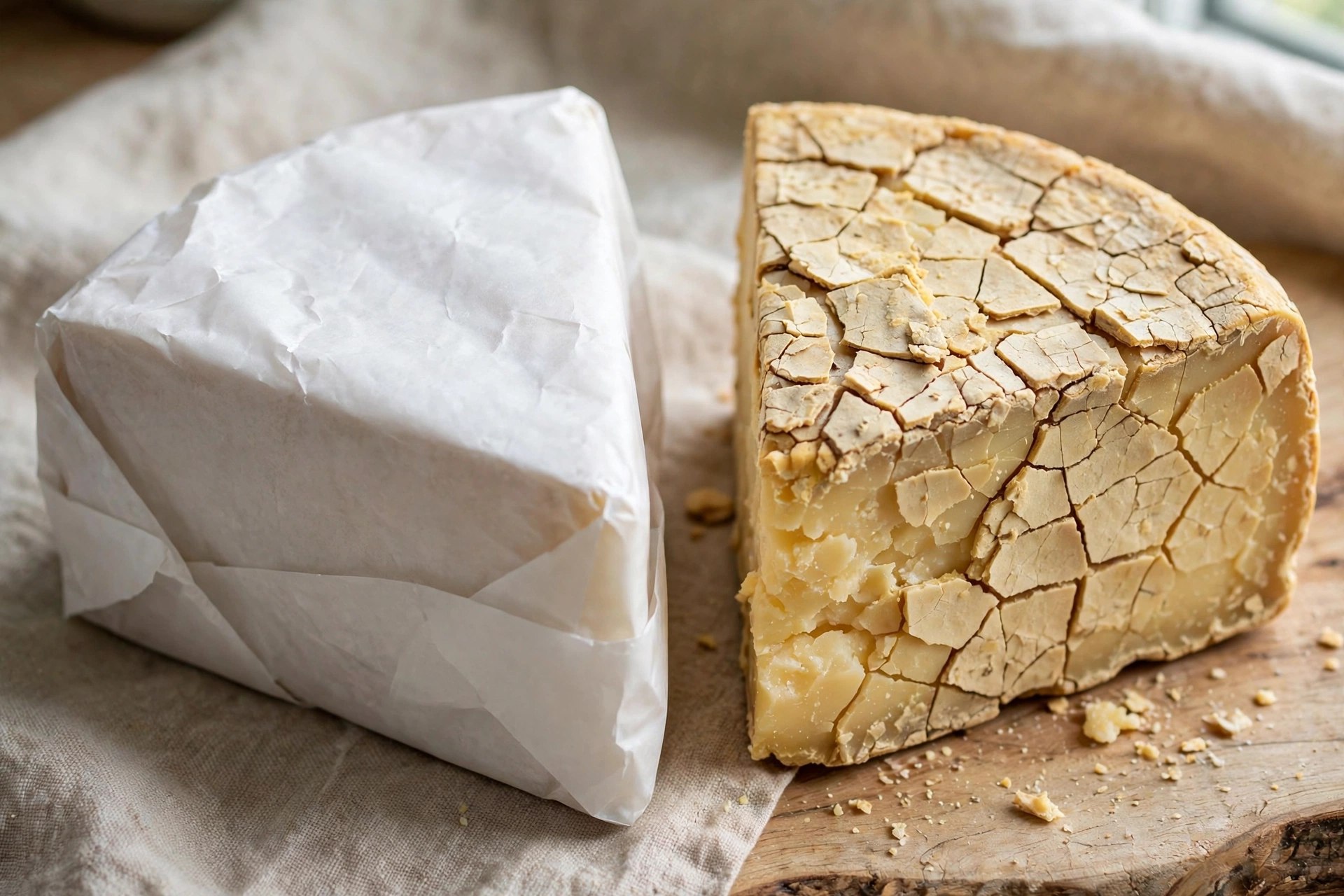
To store cheese well, wrap it so it can breathe but not dry out: wax paper or parchment first, then a loose outer layer of foil or a container. Refrigerate promptly and keep cheese in the vegetable drawer or a dedicated spot away from strong-smelling foods. Let cheese come to room temperature for 20–30 minutes before serving for the best flavor. Avoid wrapping cheese tightly in plastic wrap alone, which traps moisture and encourages off flavors and sliminess.
Prefer
- Wax paper or parchment as the inner wrap
- A loose outer layer of foil or a container
- Prompt refrigeration after serving
- Re-wrapping in fresh paper every few days
- Room-temperature rest before serving
Avoid / check more closely
- Tight plastic wrap as the only layer
- Leaving cheese out for hours
- Storing near strong-smelling foods unwrapped
- Freezing delicate soft cheeses
- Keeping the original vacuum pack open for weeks
The two-layer wrap method
Cheese is alive in a slow way — it needs a little airflow but loses moisture to dry fridge air. The best home method mimics the cheese shop: wrap the cut faces in wax paper or parchment, which lets the cheese breathe, then add a loose layer of aluminum foil or place it in a container to slow drying. Plastic wrap alone suffocates the surface, trapping ammonia and moisture that turn the flavor sharp and the texture slimy. Re-wrap in fresh paper every few days, since the old paper absorbs moisture and odors. This simple routine keeps most cheeses tasting good for one to two weeks.
Different cheeses, different rules
Hard cheeses like Parmesan and aged cheddar are the most forgiving — they keep for weeks properly wrapped and can even have small mold spots trimmed away, since mold cannot easily penetrate their dense bodies. Semi-soft cheeses like Gouda and Swiss need the full two-layer treatment and last one to two weeks. Soft cheeses — Brie, fresh mozzarella, goat cheese — are the most perishable: keep them cold, eat within a few days of opening, and discard at the first sign of off smells or unusual color. Blue cheeses are the exception where mold is the point; just keep them wrapped so their aroma does not migrate.
When to trim and when to toss
On hard cheeses, you can cut away mold with at least an inch of margin around and below the spot — this advice applies to a solid hard cheese, not sliced, shredded or crumbled cheese. Keep the knife out of the mold and use fresh wrap afterward. For soft, shredded, or sliced cheeses, mold means the whole piece should go, because contamination spreads invisibly through the moisture. Discard any cheese that smells strongly of ammonia (beyond the normal aroma of washed-rind styles), tastes bitter or soapy, or shows pink, black, or unusual discoloration. Fresh cheeses like ricotta and cottage cheese should be tossed at the first sign of trouble, never trimmed.
Freezing cheese: what works
Freezing is a backup, not an ideal method. Hard and semi-hard cheeses freeze acceptably for cooking — grate or cube them first, wrap tightly, and use within two to three months. Thawed cheese turns crumbly, so save it for sauces, soups, and baked dishes rather than the cheese board. Soft cheeses generally freeze poorly: Brie becomes watery, and fresh mozzarella loses its delicate texture. Cream cheese can be frozen but turns grainy — fine for cooking, not for spreading. Always thaw cheese in the fridge, never on the counter.
Common questions
How long can cheese sit out?
For cheese requiring refrigeration, the general maximum is two hours out of refrigeration, reduced to one hour above 90°F (32°C); include preparation and serving time together. Take cheese out 20–30 minutes before eating for flavor, then rewrap and refrigerate the rest promptly.
Can I cut mold off cheese?
On hard cheeses, yes — trim at least an inch around the mold. On soft, shredded, or crumbled cheeses, discard the whole piece.
Why does my cheese taste like chemicals?
An unusual chemical or ammonia odor has several possible causes; wrapping alone cannot establish the cause or make suspect cheese safe. Do not taste questionable cheese. Follow the product instructions and discard it if you suspect spoilage or do not know whether it was stored safely.
References
U.S. Food and Drug Administration — Safe Food Handling. Reference for storing foods safely at home.
Prepared October 13, 2026 with AI assistance. Cited sources do not endorse the entire article.
Correction — October 21, 2026
Clarified hard-cheese trimming boundaries, hot-weather holding time and the limits of smell or taste. Sources: USDA FSIS: mold and cheese; USDA FSIS: the two-hour rule.