
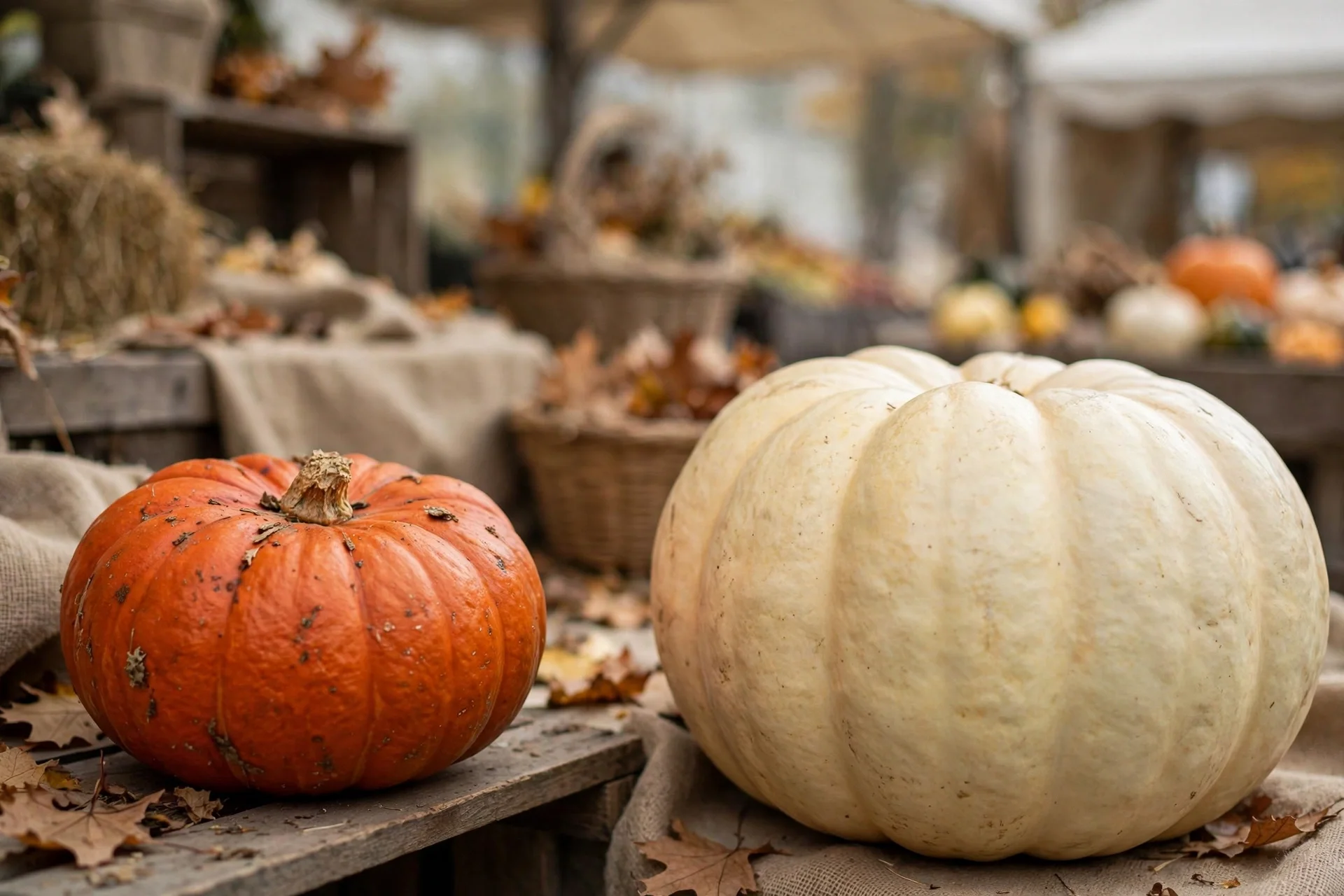
To choose a pumpkin for cooking, pick a small variety labeled as a sugar, pie, or cooking pumpkin that feels heavy for its size, has deep, even color, and sounds firm when you tap it. Small cooking pumpkins typically weigh a few pounds and have denser, sweeter flesh than large carving pumpkins, which are bred for size and thin walls rather than flavor. Avoid any pumpkin with soft spots, cracks, or a dried, shriveled stem.
Prefer
- Small pumpkin labeled sugar, pie, or cooking variety
- Heavy feel for its size with firm, hard rind
- Deep, even color with no large green patches
- Sturdy, intact stem that is firmly attached
- Smooth rind free of soft spots, cuts, or mold
Avoid / check more closely
- Very large carving pumpkins sold for decoration or jack-o’-lanterns
- Soft spots, bruises, or weeping patches on the rind
- Cracked skin or a missing, shriveled stem
- Pale, uneven color with extensive green areas
- Light feel suggesting thin flesh and many seeds
Size and variety matter most
The single most important choice is variety. Carving pumpkins are grown to be big, hollow, and easy to cut, and their flesh tends to be watery, stringy, and mild to the point of blandness in pies and soups. Sugar or pie pumpkins are smaller — often roughly two to four pounds — with thicker, denser, sweeter flesh that cooks into a smooth puree. If the display does not label varieties, choose the smallest, heaviest pumpkins available rather than the largest, and ask staff if you are unsure, since looks alone can mislead.
The firmness and weight tests will be familiar if you have selected other hard winter squash. The guidance for how to choose butternut squash — hard rind, heavy feel, intact stem, no soft spots — applies almost point for point to cooking pumpkins, because both are winter squash judged the same way in the store. Tap the pumpkin with your knuckles: a firm, slightly hollow sound is normal, while dull, soft areas suggest damage or decay underneath.
Skin, stem, and surface checks
A cooking pumpkin should have a hard, matte rind in a deep orange for orange varieties, though some excellent cooking types are tan, blue-gray, or striped — color should be even and rich for its variety rather than pale and patchy. Minor surface scarring or a flattened side where the pumpkin rested on the ground is normal and does not affect the flesh. What matters is integrity: no cracks that expose flesh, no soft or moldy patches, and no punctures, since damaged squash spoils quickly once bacteria or mold enter.
Check the stem. A firm, intact stem helps the pumpkin keep, while a stem that is shriveled, blackened, or falling out can signal age or rough handling. Handle pumpkins by the body, not the stem, since stems break off easily and leave a scar that shortens storage life. These stem and rind checks echo the advice for spaghetti squash and other winter squash: the outside is your best guide to how the inside has been treated.
Storing and using your cooking pumpkin
Whole pumpkins store well in a cool, dry place out of direct sunlight, often for several weeks, which makes them a flexible autumn purchase. Keep them off damp surfaces and check weekly for soft spots, using any pumpkin that starts to soften first. Once cut, wrap the pieces tightly, refrigerate them, and cook within a few days. For puree, roasting halved pumpkins cut-side down until tender is a common method that concentrates flavor better than boiling, and the puree freezes well for later pies, soups, and baking. The storage approach is similar in spirit to keeping sweet potatoes in a cool, dry spot rather than the refrigerator while whole.
If you only need a small amount of puree, or no fresh cooking pumpkins are available, canned pumpkin puree is a consistent alternative — just confirm the label says pure pumpkin rather than pumpkin pie mix, which contains sweeteners and spices. Fresh and canned can both produce good results; fresh gives you roasted depth and seeds to toast, while canned offers convenience and predictable texture. Either way, avoid using a pumpkin that has sat carved or cut at room temperature, since its flesh is no longer in good condition for cooking.
Common questions
Can I cook a carving pumpkin?
You can, but the results are usually watery and bland compared with a sugar pumpkin, and the texture is often stringy. If a carving pumpkin is all you have, roasting and draining the puree well can improve it, but a small cooking pumpkin is the better buy for eating.
How long does a whole pumpkin keep?
A firm, undamaged cooking pumpkin kept in a cool, dry place often keeps for several weeks. Check it regularly and use it promptly if soft spots appear. Cut pumpkin should be refrigerated and used within a few days.
What size pumpkin should I buy for a pie?
One small sugar pumpkin of roughly two to three pounds typically yields enough puree for a standard pie, though yield varies. Buying two small pumpkins gives you a margin for trimming and a second use, such as soup or muffins.
References
U.S. Food and Drug Administration — Selecting and Serving Produce Safely. Reference for produce selection, handling, and visible damage.
Prepared October 21, 2026 with AI assistance. Cited sources do not endorse the entire article.