
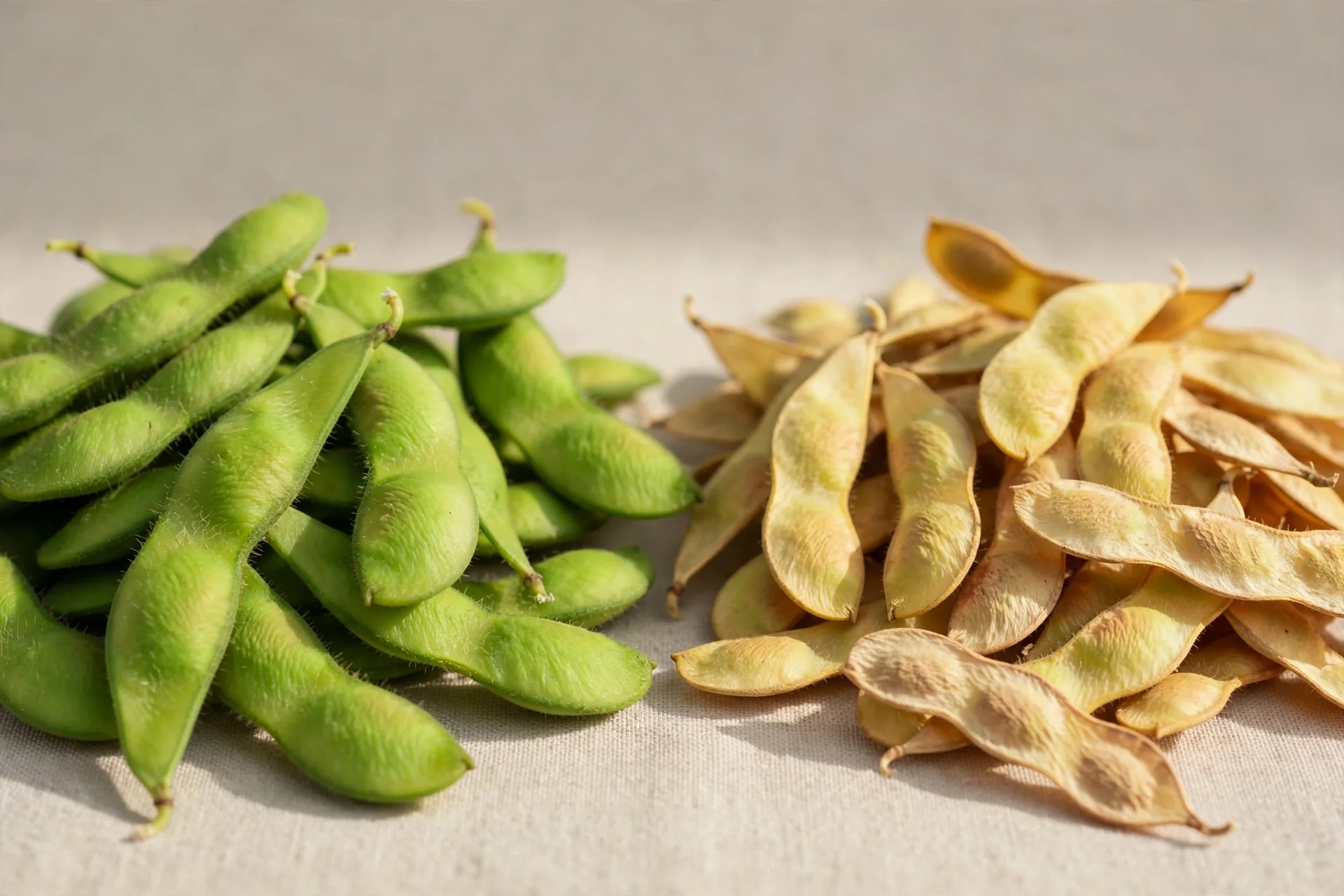
To choose edamame, look for bright green, plump pods that feel full of beans when you run your fingers along them. Fresh pods should be firm, slightly fuzzy, and free of yellowing or dark spots, while frozen edamame — the form most shoppers will find — should come in a clean, undamaged bag with pods that move freely rather than clumping in an icy block. Avoid flat, yellowing pods and bags heavy with frost or freezer burn.
Prefer
- Bright green pods with no yellowing
- Plump pods that feel full of beans
- Firm, slightly fuzzy fresh pods
- Frozen bags with loose, free-moving pods and little frost
- Clear labeling: in-pod or shelled, salted or unsalted
Avoid / check more closely
- Yellow, brown-spotted, or limp pods
- Flat pods that feel empty or papery
- Frozen bags clumped into a solid icy block
- Heavy frost or pale freezer-burned patches
- Torn bags or packs with an old, faded appearance
Fresh vs frozen: what you will actually find
In many supermarkets, edamame is primarily a frozen vegetable, sold either in the pod or shelled. Frozen quality is usually reliable because the soybeans are frozen soon after harvest, so your main job is checking the bag: it should be intact, the pods or beans should shift loosely inside, and there should be minimal frost. A bag frozen into a solid lump may have thawed and refrozen, which damages texture. Fresh edamame, found at farmers markets and some specialty stores in season, should be used quickly — buy it the day you plan to cook it if possible, and look for pods picked recently with a vivid green color.
Decide between in-pod and shelled before you shop. In-pod edamame is the classic snack form, cooked and salted in the pod and eaten by squeezing the beans out. Shelled edamame is more versatile for salads, grain bowls, and stir-fries, with no pod waste. The choice resembles the fresh-versus-convenience decision with other green vegetables — if you enjoy how to choose green beans fresh and crisp, you will probably appreciate fresh in-pod edamame in season, while frozen shelled beans are the practical everyday option.
Reading the bag and comparing options
Check the label for salt content if that matters to you, since some frozen edamame is sold pre-salted or seasoned. Plain unsalted packs give you control in the kitchen. Also note the date on the bag and choose the freshest stock available, rotating to bags at the back of the freezer case if the front bags look frosty or damaged. Organic and conventional edamame are both widely sold; condition and storage history matter more to the eating quality than the label claim alone. If you also buy legumes in pantry form, the inspection habit of checking packaging integrity transfers directly from products like canned beans — intact packaging and a sensible date first, contents second.
For fresh pods, run your thumb along the pod: you should feel two or three distinct, full beans. Pods that feel flat or papery hold small, underdeveloped beans and will disappoint. Avoid fresh pods that are yellowing, since edamame passes its best eating stage quickly after picking and yellow pods tend to be starchy and less sweet. A few minor blemishes on the pod surface are normal and do not affect the beans inside.
Cooking and storing edamame
Cook in-pod edamame briefly in well-salted boiling water or steam until the pods are bright green and the beans are tender but not soft, then drain and season while warm. Shelled edamame needs only a few minutes and can go straight into hot dishes from frozen. The quick-cooking approach is similar to other tender green vegetables such as snap peas — short cooking keeps color and texture appealing, while overcooking turns both dull and mushy.
Store fresh edamame in the refrigerator and cook it within a day or two. Frozen edamame keeps for months in the freezer; once cooked, refrigerate leftovers and use them within a few days. Do not refreeze thawed edamame you plan to eat as a snack, since texture suffers noticeably. If fresh pods start to yellow before you can cook them, shelling and freezing the beans after a brief blanch is a reasonable rescue, though freshly cooked pods will still taste best.
Common questions
Is frozen edamame as good as fresh?
For most uses, frozen edamame is very close in quality because it is frozen soon after harvest. Fresh in-pod edamame in season can have a slight edge in sweetness and texture, but frozen is consistent, convenient, and available year-round.
Do I eat the edamame pod?
The pod of standard edamame is usually not eaten — you squeeze or bite the beans out and discard the pod. Shelled edamame removes that step and is better for mixing into salads and cooked dishes.
How do I know edamame is cooked enough?
The pods turn bright green and the beans become tender with a slight bite, usually after a few minutes of boiling or steaming. Taste one bean: it should be tender and sweet, not hard, chalky, or mushy.
References
U.S. Food and Drug Administration — Selecting and Serving Produce Safely. Reference for produce selection, handling, and visible damage.
Prepared October 21, 2026 with AI assistance. Cited sources do not endorse the entire article.