
To choose good sweet potatoes, pick firm, smooth-skinned tubers with a tapered shape and no cracks, bruises, or soft spots. The skin should look clean and intact, with even color for the variety. Avoid any with sprouts, shriveling, or white liquid oozing from cuts — and skip refrigerated ones, since cold damages their texture.
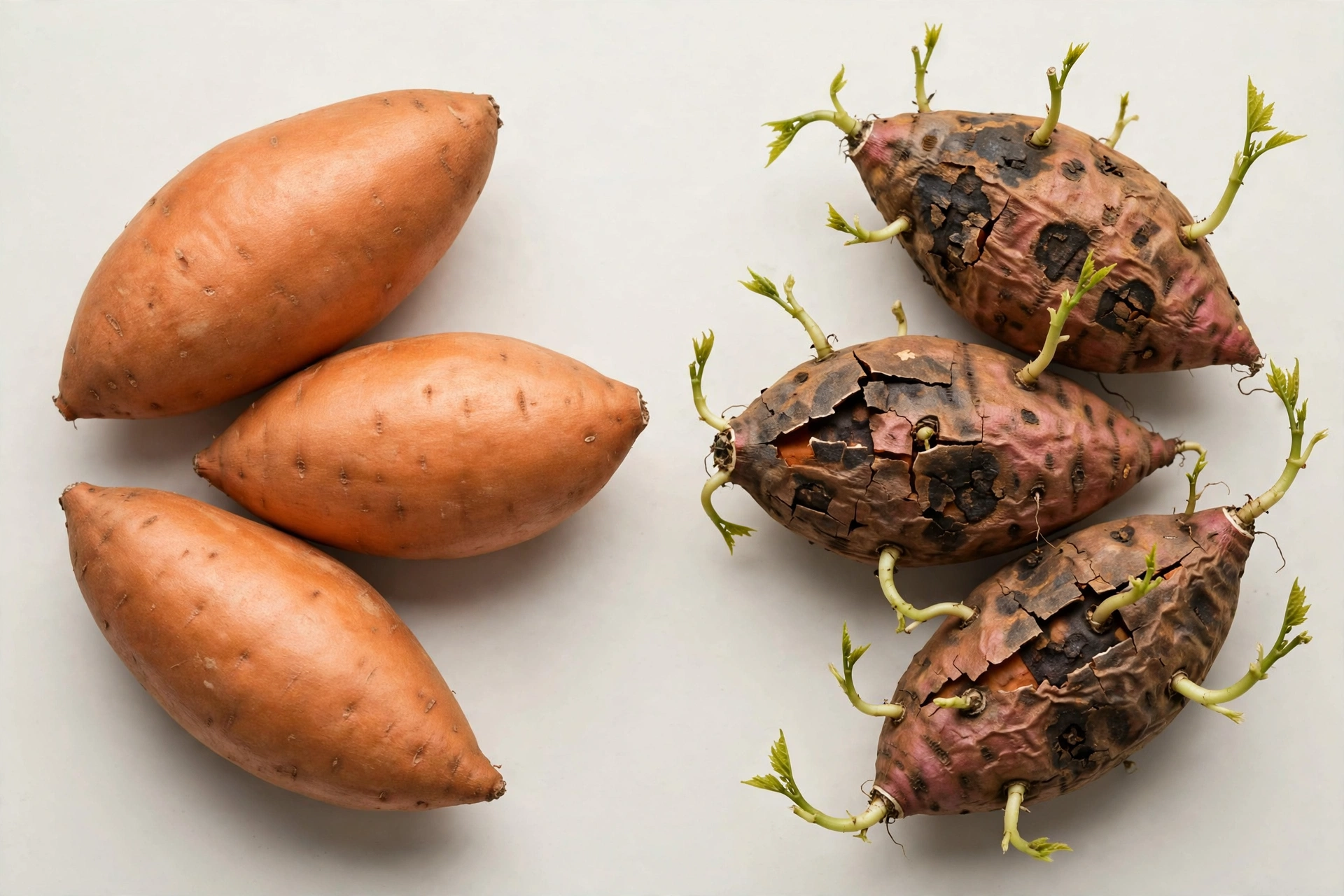
Prefer
- Firm, solid feel with no soft spots
- Smooth, clean, unbroken skin
- Tapered ends rather than bulging middles
- Even color for the variety
- Medium size for even cooking
Avoid / check more closely
- Soft, wrinkled, or shriveled tubers
- Cracks, cuts, or bruises
- Sprouts or hairy rootlets
- White sap oozing from damage
- Dark sunken spots
Firmness, skin, and shape
A good sweet potato feels dense and rock-hard — any give means decay or dehydration. The skin should be smooth and unbroken; cracks and cuts invite rot and shorten storage life. Tapered, evenly shaped tubers cook more evenly than bulbous ones with skinny ends. Medium potatoes are the most versatile — large ones can have woody centers.
Color cues and what to skip
Skin color varies by variety — copper, rose, tan, or purple — so judge evenness rather than a specific shade. Inside, deeper orange flesh is generally sweeter and richer in beta-carotene. Skip sprouting tubers (they are converting starches and losing sweetness), shriveled ones, and any with dark sunken spots. A little surface dirt is fine; damage is not.
Storing sweet potatoes at home
Store in a cool, dark, ventilated spot — never the refrigerator, where cold creates hard centers and off flavors. A dark pantry in a paper bag or basket is ideal; they keep for several weeks to a couple of months. Keep them away from onions. Cut sweet potatoes should be wrapped tightly, refrigerated, and used within a few days.
Common questions
Should I refrigerate sweet potatoes?
No — cold damages their texture and flavor. Store them cool, dark, and ventilated at room temperature.
What is the white liquid on cut sweet potatoes?
That is natural sap — harmless. But heavy oozing from cracks means damage, so choose intact tubers.
Can I eat sprouted sweet potatoes?
Small sprouts can be removed and the tuber used if still firm. Heavily sprouted or shriveled ones are past their prime.
References
U.S. Food and Drug Administration — Selecting and Serving Produce Safely. Reference for produce selection, handling, and visible damage.
Prepared October 10, 2026 with AI assistance. Cited sources do not endorse the entire article.