
To choose good garlic, pick bulbs that feel firm and heavy, with tight, dry, papery skins and cloves that do not yield when you press the bulb gently. A fresh bulb feels full and solid, with no hollow gaps between cloves. Avoid bulbs with soft or shriveled cloves, long green sprouts, dark spots, or a dusty, moldy smell — those are signs the garlic is old and its flavor will be harsh or faded.
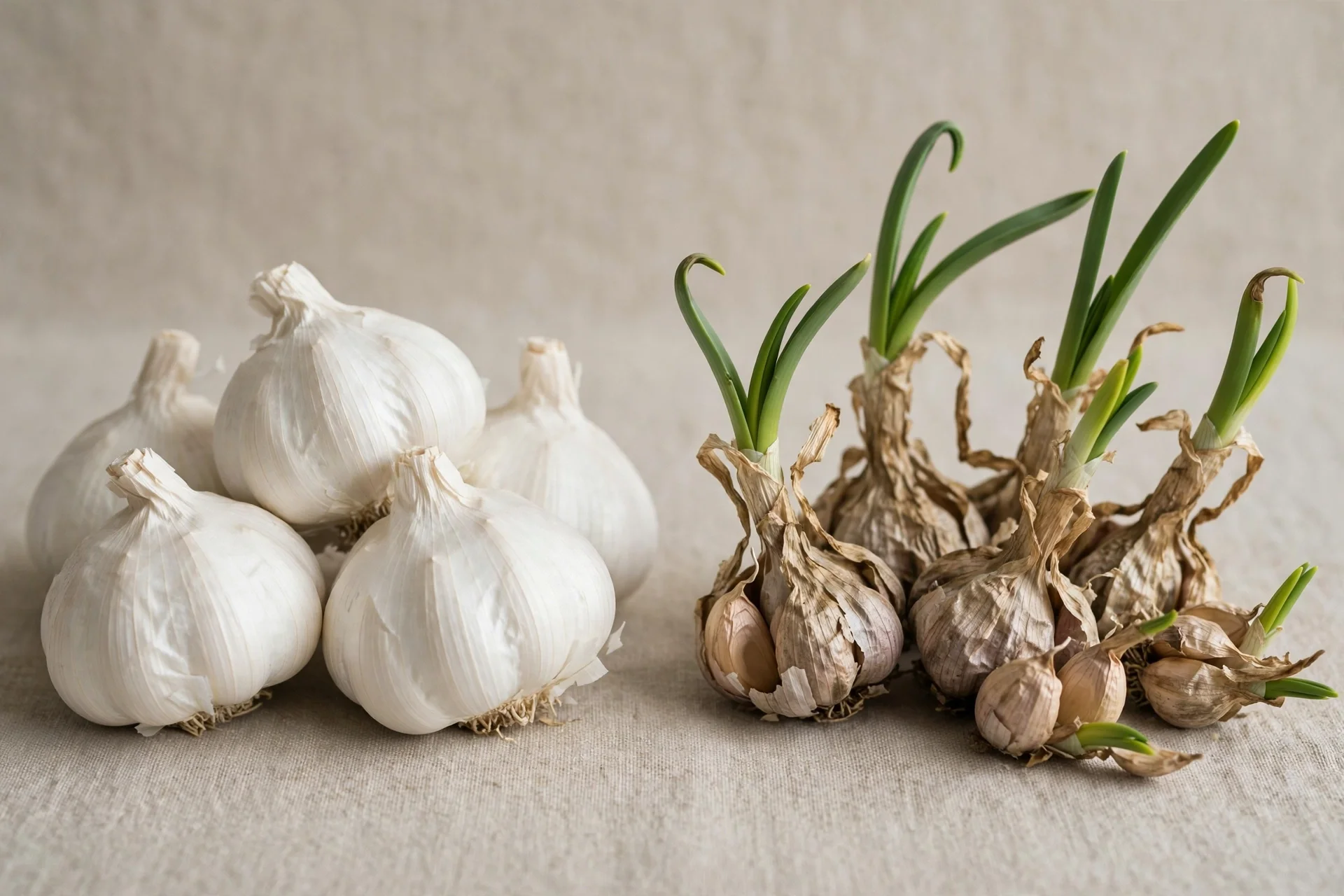
Prefer
- Firm, heavy bulb that feels full and solid
- Tight, dry, papery skin with no damp patches
- Cloves that do not give way under gentle pressure
- Clean, bright skin color for the variety
- Mild, clean garlic smell with no mustiness
Avoid / check more closely
- Soft, spongy, or shriveled cloves
- Long green sprouts pushing through the skin
- Loose, rattling cloves inside a shrunken skin
- Dark spots, powdery patches, or mold
- Musty, sour, or unusually harsh smell
The squeeze test for garlic bulbs
Garlic quality hides under papery skin, so touch matters more than looks alone. Hold the bulb and press gently all around: fresh cloves feel plump and tightly packed, and the bulb holds its shape. Old garlic feels light and loose, the skin wrinkles and gaps appear, and individual cloves may feel small, soft, or shriveled when you press them through the skin. Weight is a reliable shortcut — among bulbs of similar size, choose the heaviest, since moisture loss is what makes old garlic light.
The same firmness-first logic applies to many long-keeping vegetables. Shoppers who have learned how to choose potatoes will recognize the pattern: firm, heavy, clean-skinned, and free of sprouts or green and dark patches is the combination you want in both cases. For garlic, also check the root end at the base of the bulb — it should look dry and clean, not dark, fuzzy, or crumbling.
Sprouts, spots, and other signs of old garlic
A small green sprout inside a clove is common in stored garlic and mainly affects flavor: the sprout tastes bitter, and the clove feeding it becomes milder and eventually shriveled. Long sprouts breaking through the top of the bulb tell you the garlic has been stored a long time and is well past its best texture. Many cooks split cloves and remove the green germ for a less bitter result, but bulbs whose cloves are soft, rubbery, or deeply sprouted are better replaced than rescued.
Dark spots and powdery patches deserve a closer look. A few papery blemishes on the outer skin are harmless, but black or blue-green powdery areas, especially with a musty smell, suggest mold growth and the bulb should be discarded. Garlic shares its allium family habits with onions and their relatives — the freshness checks for leeks about clean bases, no slime, and no yellowing are a useful cross-reference for what fresh alliums should look and smell like in general.
Buying forms and storing garlic at home
Whole bulbs keep longest and are usually the best value. Pre-peeled cloves are convenient but perishable — choose packs that look plump and pale, smell clean, and carry a date that suits your plans, and refrigerate them. Jarred minced garlic is shelf-stable before opening but has a different, generally milder and sometimes slightly acidic flavor from added ingredients, so read the label if that matters to you. Elephant garlic, despite the name, is a milder relative of the leek and behaves differently in recipes, so do not buy it expecting standard garlic intensity.
Store whole bulbs in a cool, dark, ventilated place — a mesh bag or open basket in the pantry is ideal — and they should keep for several weeks to a few months depending on freshness at purchase. Do not refrigerate whole unpeeled bulbs for long storage, since cold and humidity can encourage sprouting. Keep garlic away from moisture, break bulbs open only when you are ready to use the cloves, and use opened bulbs within about ten days. Like other pungent pantry staples covered in how to store spices, garlic keeps its character best away from heat, light, and steam.
Common questions
Is sprouted garlic safe to eat?
Sprouted garlic is generally considered safe if the cloves are still firm and free of mold, though the sprouts taste bitter and the cloves lose pungency. Remove the green germ before using, and discard bulbs that are soft, moldy, or musty-smelling.
Why is my garlic soft and shriveled?
That is age and moisture loss. As garlic sits, cloves dry, shrink, and soften, and the skin loosens around them. Very old garlic has faded or harsh flavor, so for dishes where garlic is central, start with a fresh, firm bulb.
Should I buy pre-peeled garlic?
Pre-peeled cloves save time and can be a practical choice if the pack looks plump and clean and you will use it soon. They do not keep like whole bulbs, so refrigerate them, follow the pack date, and discard any cloves that become slimy or develop an off smell.
References
U.S. Food and Drug Administration — Selecting and Serving Produce Safely. Reference for produce selection, handling, and visible damage.
Prepared October 21, 2026 with AI assistance. Cited sources do not endorse the entire article.