
To choose a good spaghetti squash, pick it up — it should feel heavy for its size, which signals dense, moist flesh inside. The rind should be rock-hard (your fingernail should not dent it) with a deep, even golden-yellow color. Check that the stem is intact, dry, and firmly attached. Avoid squash with soft spots, cracks, green patches, or a missing stem with a soft scar.
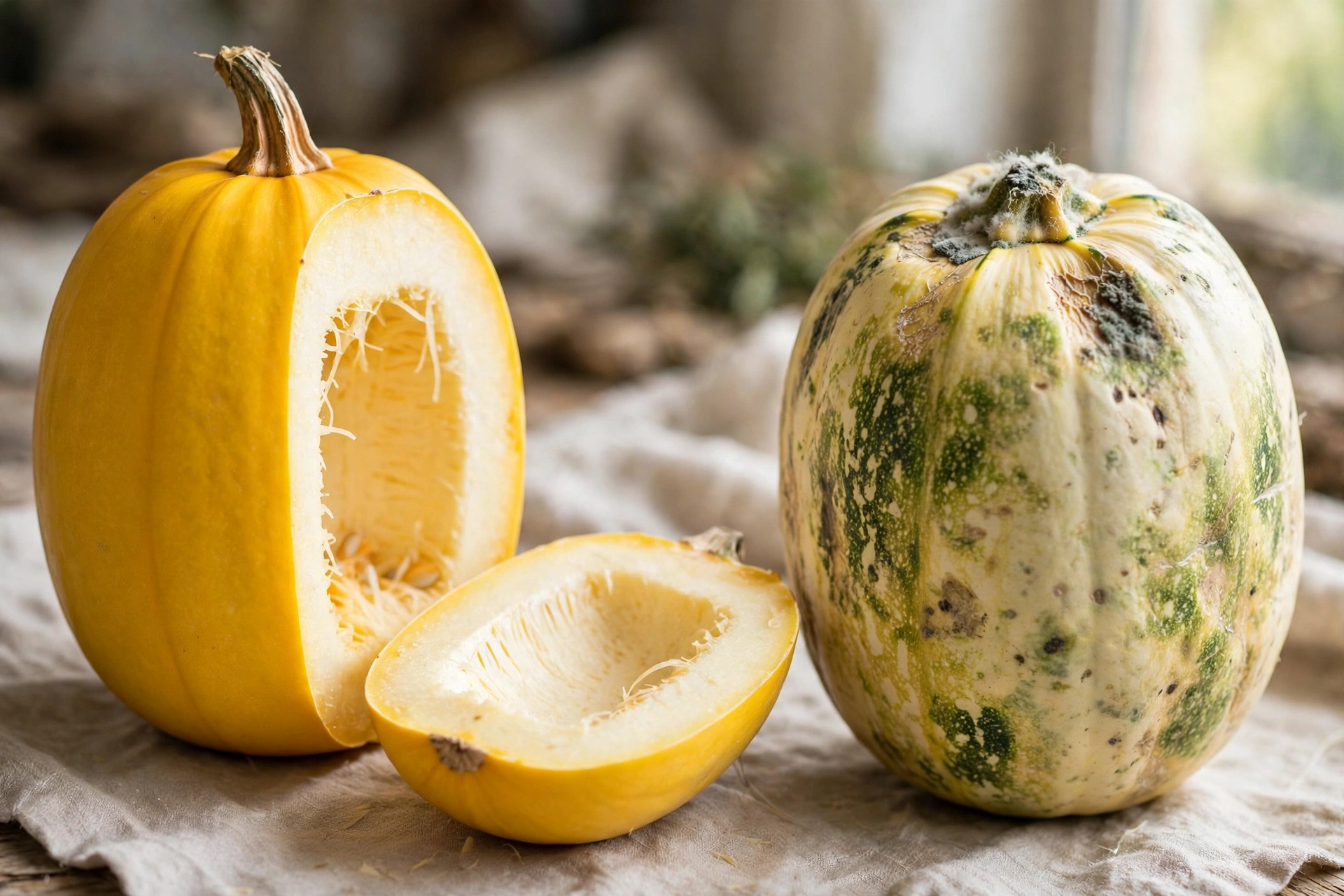
Prefer
- Heavy feel for the size
- Rock-hard rind that resists a fingernail
- Deep, even golden-yellow color
- Intact, dry, firmly attached stem
- Smooth, unblemished surface
Avoid / check more closely
- Soft spots or spongy areas
- Cracks, cuts, or punctures in the rind
- Green patches, a sign of underripeness
- Missing stem with a soft or moldy scar
- Light-feeling squash that seems dried out
Weight and rind hardness
Winter squash quality starts with two tests: heft and hardness. A heavier squash of the same size has denser, moister flesh that will shred into better “noodles” after cooking. The rind should be so hard that pressing your thumbnail into it leaves no mark — a soft rind means the squash was picked underripe or is deteriorating. Give the whole surface a once-over with your hands: any soft, sunken, or spongy patch is a reject, since decay spreads inward from those spots. Small surface scratches are harmless, but cracks or punctures are not.
Color and stem clues
Ripe spaghetti squash wears a deep, uniform golden yellow. Pale, whitish, or green-tinged areas suggest it was harvested before fully maturing, and the flesh inside will be blander with fewer strands. The stem is a freshness and handling indicator: it should be present, dry, and firmly attached. A missing stem leaves a scar that can turn soft or moldy — check that spot carefully, and pass if it feels tender or looks dark and wet. A little dirt on the rind is fine and washes off; mold is not.
Size, season, and what is inside
Spaghetti squash ranges from small personal sizes to large ones weighing several pounds — choose based on how many you are feeding, since a cut squash keeps far less well than a whole one. It is a fall and winter squash, at its peak from early fall through winter, when the flavor is sweetest. Inside, ripe flesh is pale yellow and separates into spaghetti-like strands when cooked and scraped with a fork. Underripe squash yields fewer, crunchier strands, which is another reason to choose deep color and hard rind.
Storing spaghetti squash at home
Whole spaghetti squash is a storage champion: keep it in a cool, dry, ventilated spot (not the refrigerator) and it lasts one to three months. A pantry corner or countertop away from heat works well. Do not stack heavy items on it. Once cut, wrap the pieces tightly or store in a covered container in the fridge and use within four to five days. Cooked strands keep about four days refrigerated and freeze well for longer storage.
Common questions
How do I know if a spaghetti squash is bad?
Soft spots, a mushy or moldy stem scar, cracks leaking liquid, or an off smell all mean it is past its best. A firm, hard-rinded squash with no soft areas is fine.
Should spaghetti squash be refrigerated?
Not while whole — cool room temperature is better, and it keeps for months. Refrigerate only after cutting or cooking.
Why are my strands crunchy instead of tender?
Crunchy strands usually mean undercooking or an underripe squash. Choosing a deep-yellow, heavy, hard-rinded squash and cooking it until the rind gives slightly under pressure solves both.
References
U.S. Food and Drug Administration — Selecting and Serving Produce Safely. Reference for produce selection, handling, and visible damage.
Prepared October 13, 2026 with AI assistance. Cited sources do not endorse the entire article.