
To choose blue cheese you will enjoy, start with style: mild, creamy blues are spreadable and gently tangy, while firmer, longer-aged blues are sharper, saltier, and more crumbly. Good blue cheese should smell pungent but pleasant — earthy and savory rather than harsh or ammonia-like — with blue-green veining spread through the paste and a rind that looks intact and dry.
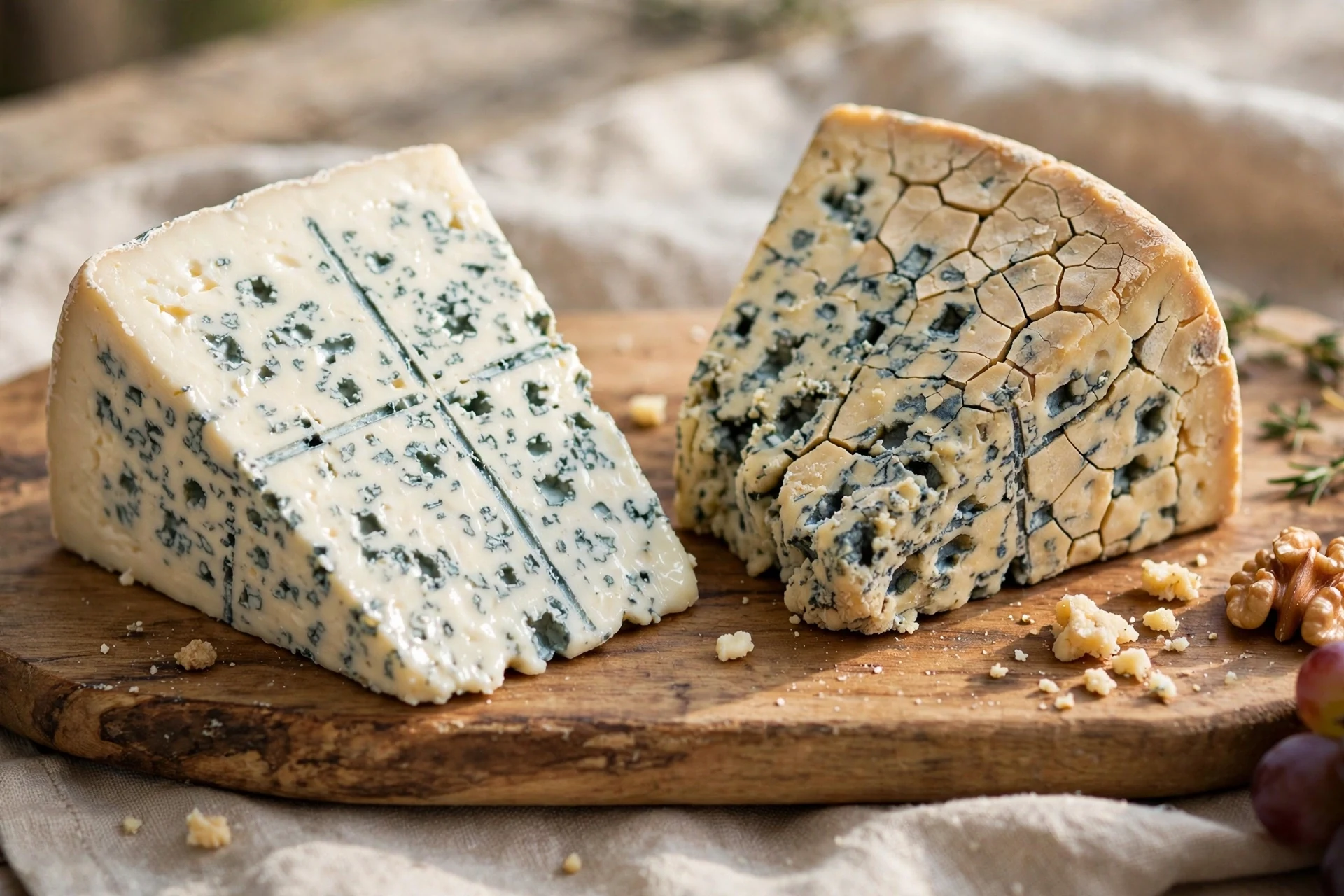
Prefer
- Even blue-green veining through a moist, intact paste
- Aroma that is pungent but savory, not harsh
- Texture that matches the style, creamy or crumbly
- Intact rind with no slimy patches
- A clear label naming the style and milk type
Avoid / check more closely
- Strong ammonia smell that stings the nose
- Pink, black, or fuzzy patches on the cut surface
- Dry, cracked paste on a cheese meant to be creamy
- Slimy or wet rind
- Wedges with no date or origin information
Know the main styles before you shop
Blue cheeses range widely. Soft, high-moisture styles are mild and spreadable, ideal for people trying blue cheese for the first time. Semi-firm wedges balance creaminess and bite and work well on a cheese board or crumbled over salads. Firm, well-aged blues are the most intense — salty, sharp, and best used in smaller amounts. If you are building general confidence at the cheese counter, our broader guide to how to choose cheese covers labels, texture, and freshness checks that apply here too. When a shop offers a taste, take it: blue cheese is the category where a small sample tells you the most.
Veining, rind, and aroma
The blue-green veins are mold cultures introduced during cheesemaking, and in a good wedge they run fairly evenly through the interior rather than clustering only near the rind. The paste around the veins should look moist and sound, not browned or dried out. A natural rind may look rough and rustic, which is normal, but it should not feel slimy. Smell the cheese if you can: a bold, earthy aroma is expected, while a sharp ammonia note often means the cheese is overripe. Shoppers sometimes worry about surface mold on hard cheeses generally, and our explainer on whether you can cut mold off cheese helps separate normal rinds and veining from growth that means a cheese should be discarded.
Buying the right amount and storing it
Blue cheese flavor intensifies as it sits, so buy smaller wedges more often rather than a large piece you will keep for weeks. Pre-cut wedges should be wrapped well with no exposed, dried faces. At home, wrap blue cheese so it can breathe lightly without drying, keep it away from mild foods it can perfume, and use it within a reasonable window for the style. Detailed wrapping and placement advice is in our guide to how to store cheese, which is worth reading before a holiday cheese purchase. Let blue cheese sit at room temperature briefly before serving so the texture softens and the aroma opens up.
Pairing and using blue cheese
Blue cheese pairs naturally with sweet and crunchy contrasts — honey, pears, apples, walnuts, and crusty bread all soften its salt and intensity. Crumbled over a green salad or a burger, a little goes a long way. In dressings and sauces, milder creamy blues melt smoothly and give a gentler result, while firmer blues deliver a stronger finish. If a recipe simply says “blue cheese” without a style, a mid-strength semi-firm wedge is usually the safest, most versatile choice.
Common questions
Is the mold in blue cheese safe to eat?
The blue-green veining is an intentional part of the cheese and is meant to be eaten. What you want to avoid is unexpected fuzzy growth in pink, black, or bright colors on the cut surface, slime, or a harsh ammonia smell.
Which blue cheese is mildest for beginners?
Soft, creamy styles are generally the mildest and most approachable. Ask the counter for their creamiest blue, taste if possible, and serve it with honey or fruit to balance the tang.
How long does blue cheese keep?
It varies by style, but opened blue cheese is best used within one to two weeks for flavor and texture. Keep it wrapped, refrigerated, and trust smell and surface appearance — when in doubt about unexpected mold or slime, discard it.
References
U.S. Food and Drug Administration — Safe Food Handling. Reference for safe handling, storage, and spoilage signs.
Prepared October 21, 2026 with AI assistance. Cited sources do not endorse the entire article.