
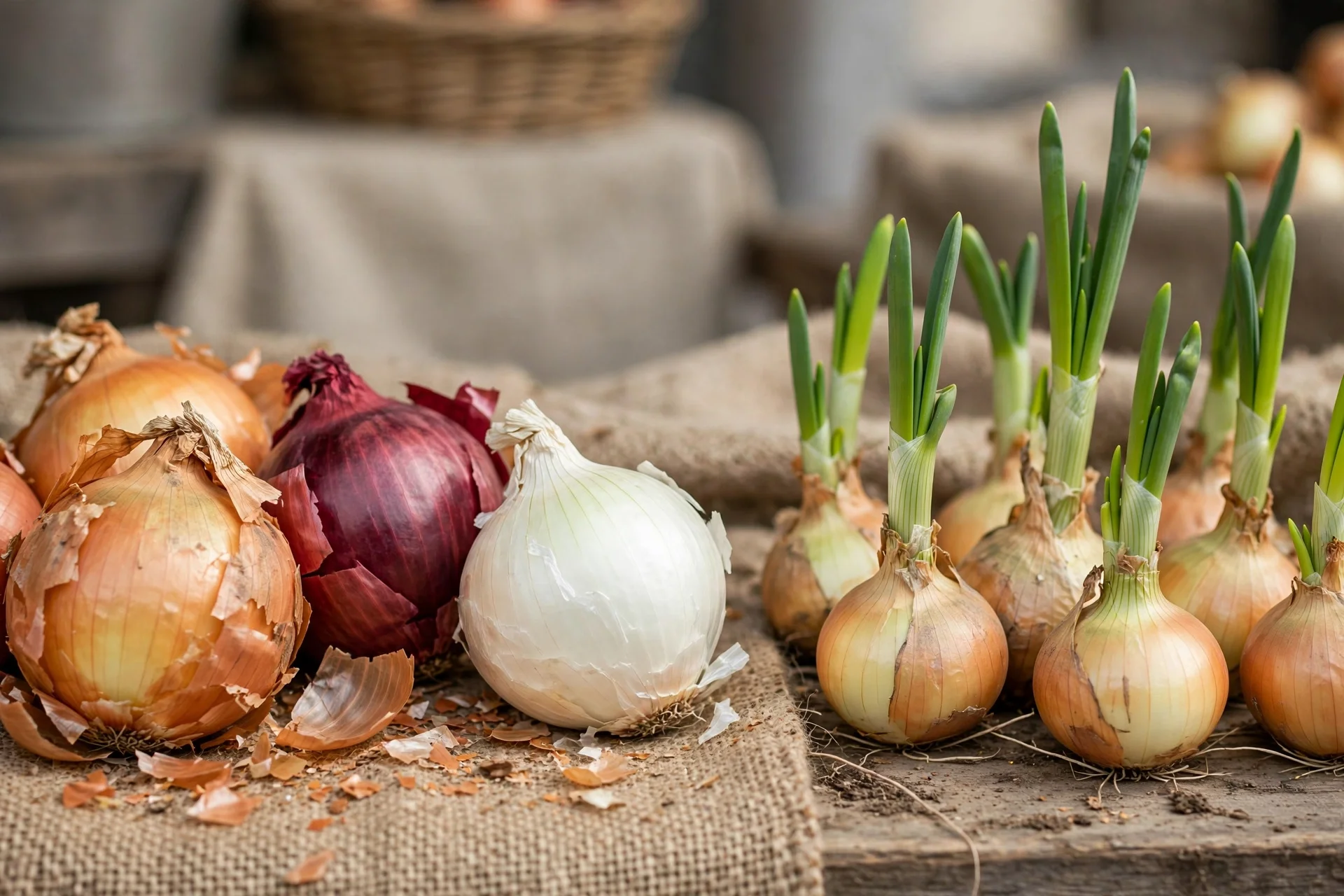
To choose good onions, pick bulbs that feel firm and heavy for their size, with dry, papery skins and no soft spots, sprouts, or strong sour smell — whatever the color. Yellow onions are the versatile all-round choice, red onions are often used raw for their color and milder bite, white onions are crisp and pungent, and sweet onions are large, mild, and more perishable. Match the type to your dish first, then judge each bulb on firmness and skin.
Prefer
- Firm, heavy bulbs with no soft or hollow spots
- Dry, papery skins that rustle when handled
- Tight, dry neck with no moisture
- Clean root end with no mold or dark patches
- Type matched to use: sweet or red for raw, yellow for cooking
Avoid / check more closely
- Green sprouts growing from the top
- Soft spots, bruising, or a spongy feel
- Damp, thick, or slimy skins
- Strong sour or musty smell
- Cut, damaged, or moldy bulbs in pre-cut packs
Choosing by type: yellow, red, white, and sweet
Color is your first decision because onion types behave differently in the kitchen. Yellow onions are the default for cooking — they balance sharpness and sweetness and hold up in soups, sauces, and caramelizing. Red onions bring color and a somewhat milder raw bite, which is why they appear in salads and sandwiches, though their color fades with long cooking. White onions are crisp and assertive, common in salsas and dishes where a clean, pungent onion flavor is wanted. Sweet onions, such as Vidalia or Walla Walla types, are bred and grown for mildness and higher moisture; they are excellent raw but spoil faster and are less suited to long storage.
Once you have chosen the type, apply the same firmness checks you would use for other bulb and allium vegetables. The squeeze test described for how to choose leeks — firm, fresh, and free of slime or yellowing — translates well here: an onion should feel like a solid ball with no give. A light shake that rattles suggests the bulb has shrunk inside its skin from age.
Skins, necks, sprouts, and storage life
The outer skin records how the onion was cured and stored. Good storage onions wear thin, dry, papery skins; thick, damp, or leathery skins suggest poor curing and a shorter life at home. Check the neck where the top was cut: it should be dry, thin, and sealed. A thick, soft neck traps moisture and invites mold. Small green sprouts are not a safety emergency, but they signal an older onion whose flavor and texture are declining, since the bulb is feeding the sprout from its own stores.
Think about storage before you buy a large bag. Regular yellow and red onions keep for weeks in a cool, dark, ventilated place, while sweet onions, with their higher moisture, are better refrigerated or used sooner. Keep onions away from potatoes in storage, because potatoes release moisture and gases that can encourage onions to sprout and soften — separate baskets in the same pantry are a simple fix. For bagged onions, look through the mesh for sprouts and soft bulbs before buying, since one decaying onion can affect its neighbors.
Using onions well once you get them home
At the store, pick through the bin rather than taking only the top layer, and avoid bulbs with cuts that expose the flesh. If you buy pre-cut onions for convenience, choose packs that look dry and bright, smell neutral, and carry a date that fits your plans, and use them promptly. Whole bulbs are almost always the better value and keep far longer. Onion size matters less than condition, though very large sweet onions are handy when you need thick slices for grilling or sandwiches, and smaller yellow onions suit everyday cooking where you rarely need a whole large bulb. The same buy-for-the-dish thinking helps with how to choose bell peppers — intended use should drive the choice, not just appearance.
At home, remove onions from plastic bags so air can circulate, and check stored bulbs weekly, removing any that soften so they do not affect the rest. Cut onions should be refrigerated in a sealed container and used within a few days. If an onion has a single small soft spot, many cooks trim generously around it for cooked dishes, but bulbs that are slimy, moldy through several layers, or strongly sour-smelling should be discarded entirely.
Common questions
Which onion is best for eating raw?
Sweet onions and red onions are the most common raw choices. Sweet onions are mildest, while red onions add color and a moderate bite. Yellow and white onions can be eaten raw too, but their sharper flavor is too strong for some people in large amounts.
Are sprouted onions safe to use?
A sprouted onion is generally considered usable if the bulb is still firm and free of mold, and many people remove the green sprout and its core, which can taste bitter. If the bulb is soft, slimy, or moldy, discard it instead.
Should onions be refrigerated?
Whole storage onions usually keep best in a cool, dark, ventilated pantry spot, not the fridge. Sweet onions are the exception — their higher moisture makes refrigeration or quicker use a practical choice. Cut onions should always be refrigerated in a sealed container.
References
U.S. Food and Drug Administration — Selecting and Serving Produce Safely. Reference for produce selection, handling, and visible damage.
Prepared October 21, 2026 with AI assistance. Cited sources do not endorse the entire article.