
To choose good potatoes, pick firm, smooth-skinned tubers with no cuts, bruises, or sprouts. Avoid any with green patches — greening means exposure to light and a bitter taste — and skip soft, wrinkled, or sprouting potatoes. The potato should feel heavy and solid, never hollow or spongy.
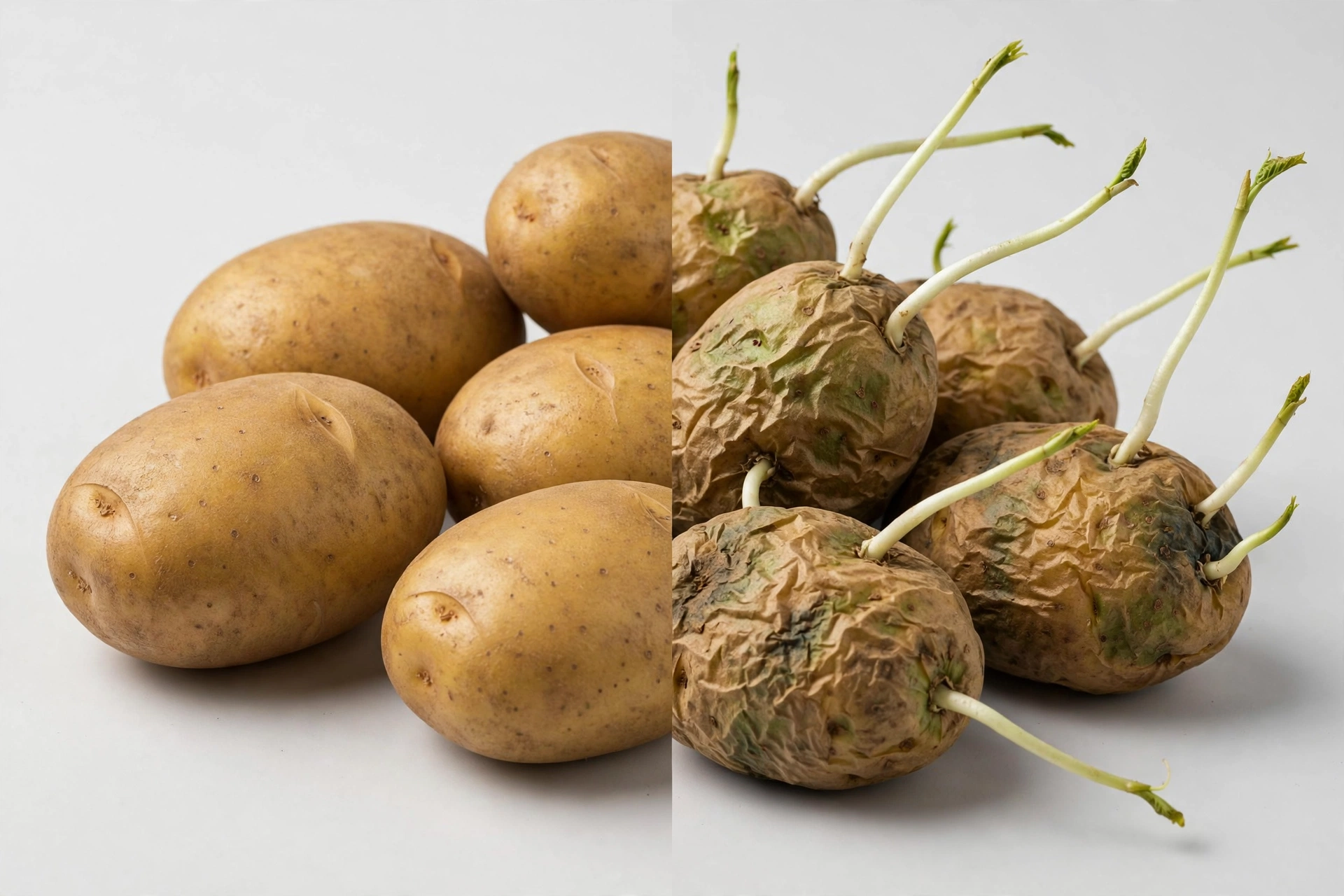
Prefer
- Firm, solid feel with no soft spots
- Smooth, clean skin appropriate to the variety
- Even color with no green patches
- No sprouts or only tiny eyes
- Good weight — dense and heavy for the size
Avoid / check more closely
- Green skin patches (light exposure)
- Sprouts growing from the eyes
- Soft, wrinkled, or shriveled tubers
- Cuts, bruises, or dark sunken spots
- Musty or rotten smells in the bag
Firmness and skin: the quality check
A good potato feels like a small stone — dense, firm, and heavy. Press it all over: the flesh should not give at all. Soft or spongy spots mean decay has started, and wrinkled skin means moisture loss from long storage. The skin should look clean and intact for the variety, whether thin-skinned reds or rough russets. Cut or bruised potatoes spoil faster, so choose unblemished ones, especially if you will store them for a while.
Green spots and sprouts: what they mean
Green patches appear when potatoes sit in light, triggering chlorophyll — and the same conditions raise levels of bitter-tasting natural compounds. Small green spots can simply be cut away generously, but extensively green potatoes taste bitter and are best avoided. Sprouts mean the potato is breaking dormancy and converting starches; small sprouts can be snapped off and the potato used, but long, prolific sprouting with shriveling means the tuber is spent. When buying bagged potatoes, sniff the bag — a musty or rotten odor means one bad potato is spoiling the rest.
Storing potatoes at home
Store potatoes in a cool, dark, well-ventilated place — light causes greening and warmth speeds sprouting. A paper bag or basket in a dark pantry is ideal; never store them in the refrigerator, where cold converts starches to sugars and changes the taste and browning. Keep potatoes away from onions, whose gases speed sprouting. Properly stored, they keep for several weeks to a couple of months.
A simple potato-shopping checklist
Before you buy, check four things: firmness (rock-hard?), skin (clean and unblemished?), color (no green?), and sprouts (none or tiny?). Choose the variety for your dish — waxy for salads, starchy for baking and mashing. These checks take seconds and work for every type.
Common questions
Are green potatoes safe to eat?
Green areas taste bitter and contain higher levels of natural compounds that can cause stomach upset in large amounts. Cut away all green parts generously; if the potato is extensively green or tastes bitter, discard it.
Should I refrigerate potatoes?
No. Cold storage converts starches to sugars, making potatoes taste sweet and brown too fast when cooked. Keep them cool, dark, and ventilated instead.
Can I eat sprouted potatoes?
If the potato is still firm, snap off the sprouts and use it — cutting away any green or soft areas. If it is shriveled and heavily sprouted, it is past its prime.
References
U.S. Food and Drug Administration — Selecting and Serving Produce Safely. Reference for produce selection, handling, and visible damage. Storage guidance reflects standard kitchen practice.
Prepared October 10, 2026 with AI assistance. Cited sources do not endorse the entire article.