To pick crisp cucumbers, choose fruit that feels firm from end to end, with evenly colored, smooth, taut skin and fresh-looking ends. Avoid cucumbers that are soft, rubbery, wrinkled, or yellowed — these are common signs of age and moisture loss. Give each cucumber a gentle squeeze along its length before it goes into your basket.
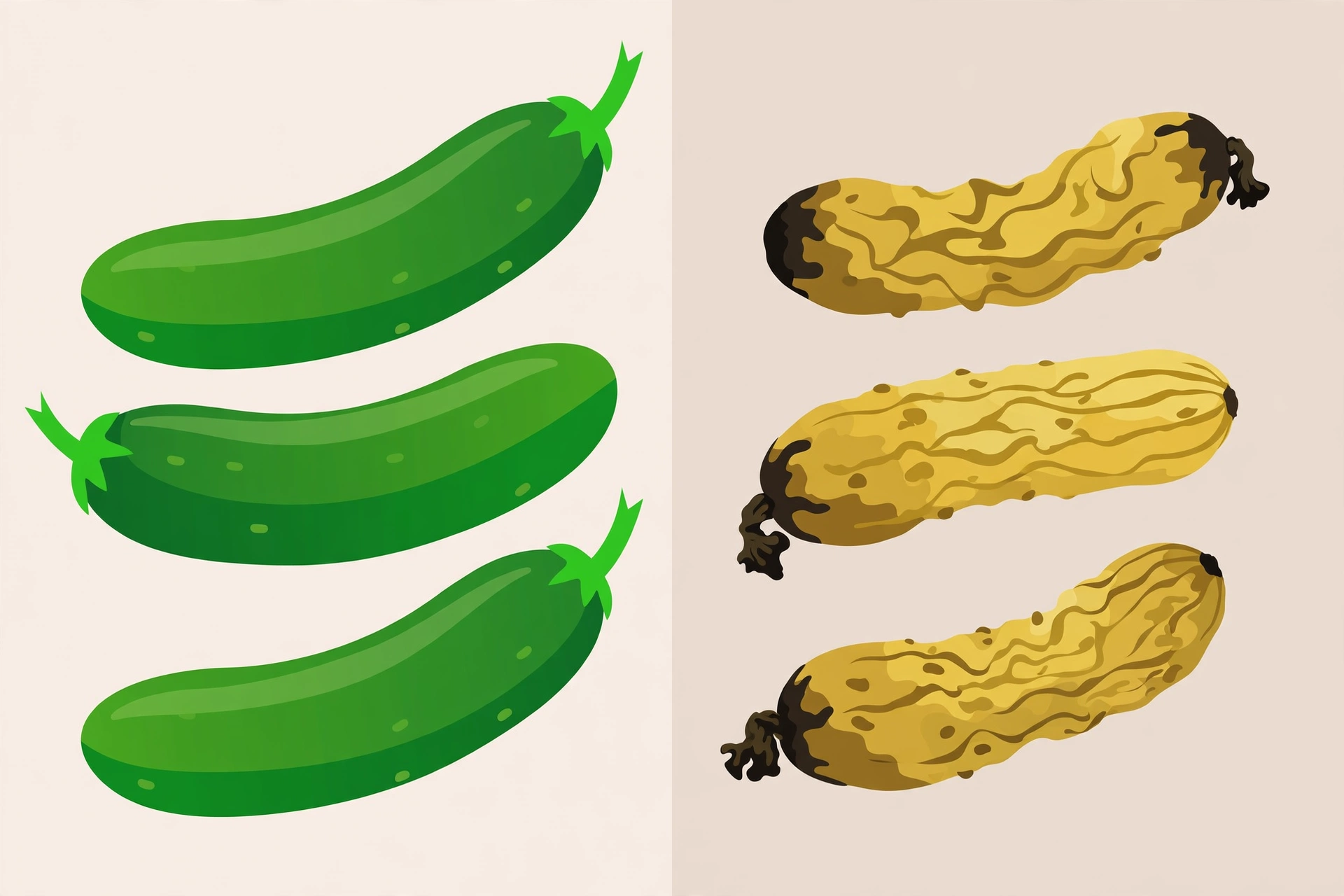
Prefer
- Firm, crisp fruit from the stem end to the blossom end
- Even, deep green color for the variety
- Smooth, taut skin without wrinkling or dull patches
- Ends that look fresh, not withered or darkened
- A clean, fresh smell when you sniff either end
- Moderately sized cucumbers rather than very oversized ones
Avoid / check more closely
- Soft, limp, or rubbery spots — especially at the ends
- Yellowing or pale, bleached-looking patches on the skin
- Wrinkled skin, a common sign of moisture loss
- A sour or off smell at either end
- Slimy or sticky surfaces
- Very oversized, bloated-feeling cucumbers with large seeds
Feel the whole cucumber, including the ends
Hold the cucumber and squeeze gently along its full length. It should feel firm and crisp all the way through — a cucumber that bends or feels rubbery is usually past its best. Pay special attention to the ends, because softening often starts there: press each end lightly and skip any cucumber with a soft or sunken tip. A very large, heavy cucumber is not automatically better; oversized fruit often has big seeds and a less crisp texture, so medium sizes are usually the safer pick for salads and snacking.
Read the color and the skin
Look for an even, deep green color that suits the variety — English cucumbers run darker, while some pickling types are lighter. Yellowing is one of the most reliable visual clues that a cucumber is overmature, and pale, dull patches often go with age as well. Many store cucumbers are coated with a thin food-grade wax to slow moisture loss; this is normal and not a defect, but rinse the cucumber well before eating, especially if you plan to eat the skin. A few small bumps or light stripes are varietal traits, not flaws.
Check the ends and give it a sniff
Look at both ends of the cucumber. The stem end should look dry and intact rather than withered, darkened, or moldy, and the blossom end should be closed and firm. Then give each end a quick sniff: a fresh cucumber smells clean and mildly green, while a sour or fermented smell suggests spoilage is starting, even if the skin still looks acceptable. As with all produce, smell is a supporting clue — useful alongside firmness and appearance, not a guarantee on its own.
Keeping cucumbers crisp after you buy
Refrigerate cucumbers as soon as you get home, and keep them dry until you are ready to use them. Storing them near bananas, tomatoes, or apples can speed up yellowing, since these fruits release ethylene gas as they ripen. Wrap cut cucumbers tightly and refrigerate them, and try to use fresh cucumbers within a few days — crispness fades with time even under good storage. Rinse whole cucumbers under running water just before cutting or eating.
A simple cucumber-shopping checklist
Before choosing a cucumber, ask: is it firm from end to end, is the green even, and do the ends look fresh? Give it a quick sniff, pick a size that suits your dish, and buy only what you will use within a few days. This checklist helps you match the cucumber to your meal; it does not test for microorganisms or chemical residues.
Common questions
Why do cucumbers sometimes taste bitter?
Bitterness often comes from growing stress such as heat or uneven watering, and the stem end is usually the most bitter part. Trimming a slice off each end or peeling can reduce it. Bitterness is a taste issue, not a freshness test — a bitter cucumber is not necessarily an unsafe one.
Should you peel cucumbers?
That depends on the cucumber and your dish. The skin adds color and crunch, so keep it when the skin looks smooth and fresh — just rinse well first. Peel when the skin is thick, tough, or heavily waxed, or when a recipe calls for a milder texture.
Why did my cucumbers turn yellow in the fridge?
Yellowing usually means the cucumber is aging, often faster when stored next to ethylene-producing fruit like bananas or tomatoes. A yellow, soft cucumber is past its best for fresh eating — choose greener, firmer ones next time and give them their own space in the fridge.
References
- U.S. Food and Drug Administration — Selecting and Serving Produce Safely: guidance on choosing fresh produce and handling it safely at home. Dish-specific suggestions in this article are kitchen tips, not laboratory findings.
Prepared October 8, 2026 with AI assistance. Cited sources do not endorse the entire article.