
Fresh watercress has crisp, dark-green leaves, firm stems, and a clean, peppery smell. Look for bunches or bags with vivid color and no yellowing, sliminess, or wilted leaves. The leaves should feel perky and spring back when gently pressed — limp or slimy watercress is past its prime. Avoid any package with a sour or musty odor.
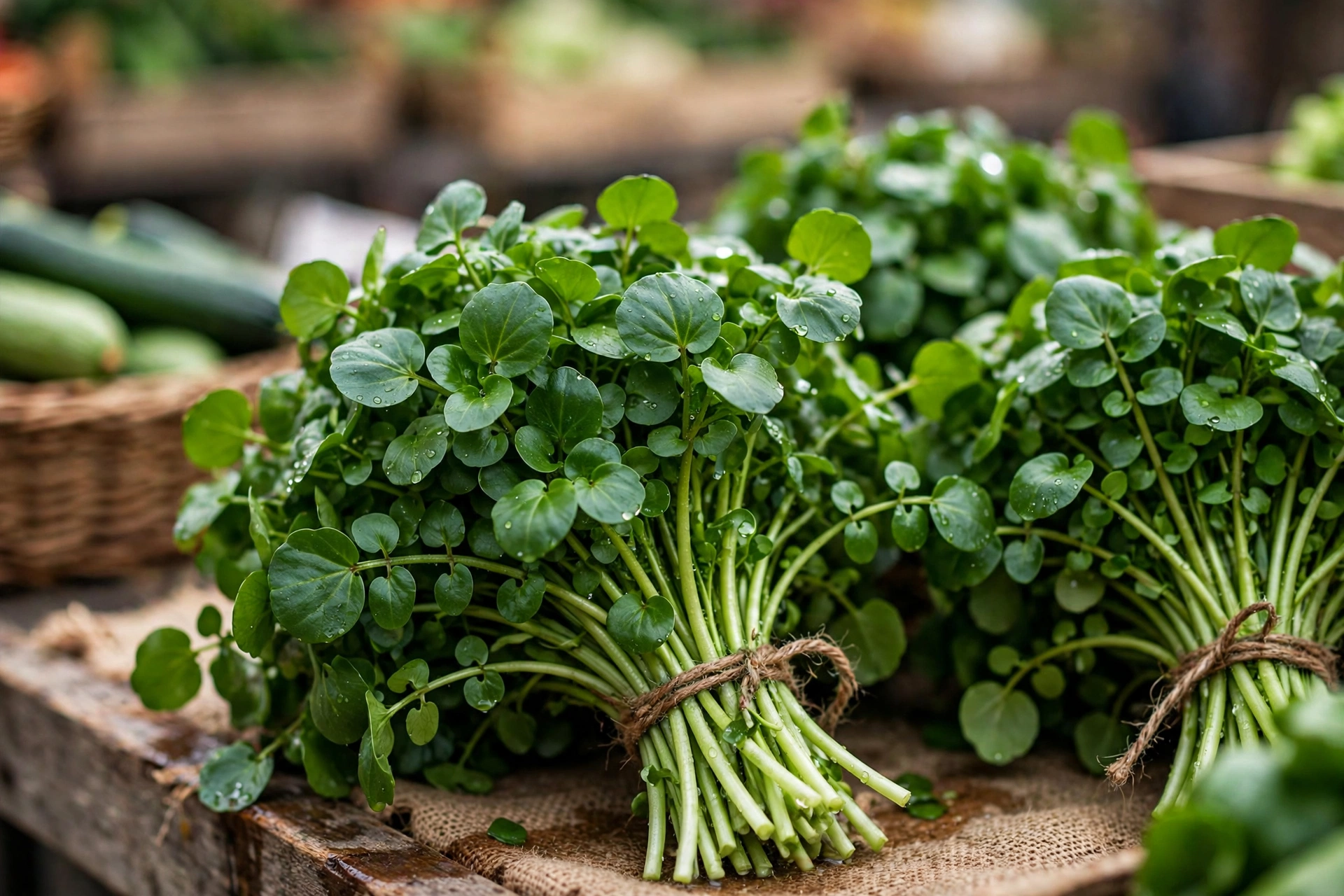
Prefer
- Vivid, dark-green leaves with no yellowing
- Crisp leaves that feel perky, not limp
- Firm, snappy stems
- Clean, peppery, fresh smell
- Leaves that look moist but never slimy
- Tightly packed bunches or well-sealed bags
Avoid / check more closely
- Yellowed or brown-spotted leaves
- Slimy or mushy texture anywhere in the bunch
- Wilted, drooping leaves and limp stems
- Sour, musty, or rotten smells
- Excess water pooling in the bag with dull leaves
The leaves tell the story
Watercress is delicate, and its leaves show age fast. Fresh leaves are a deep, glossy green and feel crisp between your fingers — they should spring back when you press them lightly, not stay dented. Yellowing is the most common sign of age: a few pale leaves deep inside a bunch can be normal, but widespread yellowing means the watercress is fading. Brown or black spots are a harder no — they signal decay rather than simple aging. Because watercress is often sold in sealed bags, look through the packaging at the leaves pressed against the plastic; if those look tired, the rest is usually worse.
Stems, moisture, and smell
Good watercress stems feel firm and snap rather than bend. Limp, rubbery stems mean the bunch has lost moisture and will wilt faster at home. A little surface moisture is normal — watercress is a water plant, after all — but sliminess is not; slimy patches mean breakdown has started, and it spreads quickly. Smell is your final check: fresh watercress smells clean, green, and faintly peppery. Any sour, swampy, or musty odor means the batch is turning. If you are choosing between bunches, pick the one whose leaves look the most upright and lively — perkiness at the store translates to a longer life in your fridge.
Storing watercress at home
Watercress is one of the most perishable greens, so plan to use it within two to three days. The classic florist trick works well: trim the stem ends and stand the bunch in a jar with an inch of cold water, loosely cover with a bag, and refrigerate. Alternatively, wrap the unwashed bunch in a slightly damp paper towel and place it in a perforated bag in the crisper drawer. Keep it away from ethylene-producing fruits like apples and bananas, which speed up yellowing. Wash watercress thoroughly just before eating, and discard any leaves that have turned slimy in storage.
Common questions
Why did my watercress turn slimy?
Sliminess comes from moisture trapped against damaged leaves — it is the first stage of decay. It can also mean the bunch was old when you bought it. Next time, choose crisp, dry-feeling leaves and store the bunch with airflow rather than sealed tight in water.
Can you eat watercress stems?
Yes — the tender upper stems are perfectly edible and carry the same peppery flavor. Thicker, woodier lower stems can be tough; trim those away and use the leafy tops and tender stems.
How long does watercress last?
Generally two to three days refrigerated, even with good storage. It is best bought close to the day you plan to use it, since it fades much faster than sturdier greens like kale.
References
U.S. Food and Drug Administration — Selecting and Serving Produce Safely. Reference for produce selection, handling, and visible damage.
Prepared October 12, 2026 with AI assistance. Cited sources do not endorse the entire article.