
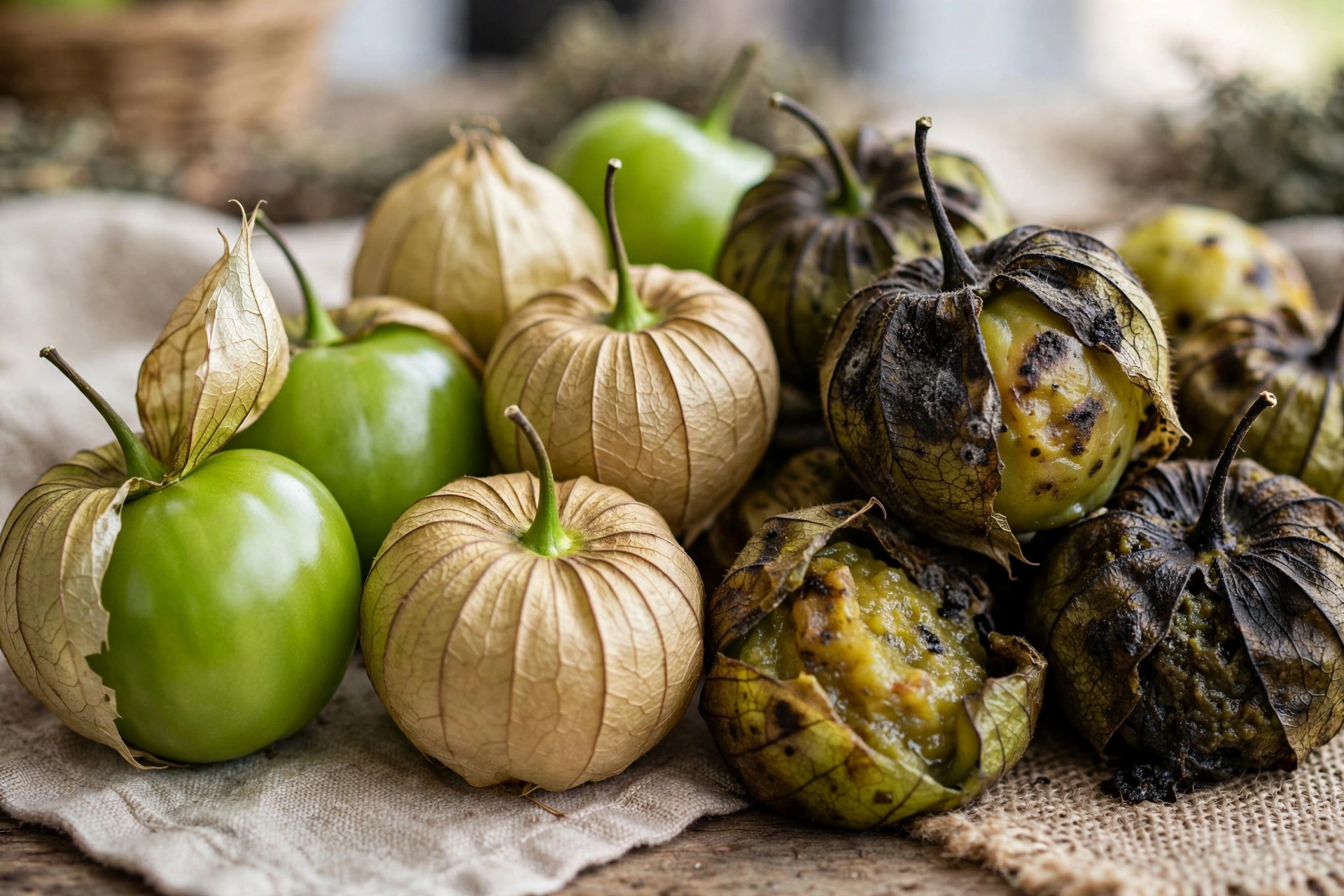
To choose fresh tomatillos, look for fruit wrapped in a dry, papery husk that fits snugly — the husk should look like parchment, not wet or moldy. Peel back a corner if you can: the fruit inside should be firm and bright green. A little natural stickiness under the husk is normal, but the fruit should not feel slimy or mushy. Avoid tomatillos with yellowing skin, soft spots, or husks that are blackened and wet.
Prefer
- Dry, papery husk that fits snugly
- Firm, bright-green fruit inside
- Plump, round, unblemished shape
- Husk that is tan and intact, not moldy
- Heavy feel for the size
Avoid / check more closely
- Mushy or soft fruit
- Yellowing or pale, dull skin
- Blackened, wet, or moldy husks
- Slimy or foul-smelling residue
- Shriveled fruit rattling loosely in the husk
The husk is the freshness wrapper
The papery husk is nature’s packaging, and its condition tells you a lot. A fresh tomatillo’s husk looks like dry parchment — tan, crisp, and closely wrapped around the fruit. As tomatillos age, the husk dries further, browns, and loosens; a fruit rattling around inside a loose husk has likely lost moisture. Wet, dark, or moldy husks are a clear reject — moisture trapped under the husk breeds mold fast. Peel the husk back slightly when the store allows it: the fruit should fill the husk fully and look glossy green underneath.
Firmness, color, and the sticky question
A good tomatillo feels firm and solid all over, like a firm grape tomato — any mushy patch means decay has started. The skin should be a vivid green; as tomatillos overripen they turn yellowish and soften, losing their characteristic tartness. Many shoppers are surprised by a sticky film under the husk — this is natural and washes off easily, not a defect. But stickiness combined with softness or an off smell is different: that signals spoilage, so choose another. Small size variations are normal; pick the firmest, greenest ones available.
What tomatillos are for
Tomatillos are the tart green backbone of salsa verde and many Mexican sauces — they are almost always cooked, which tames their acidity and deepens their flavor. Do not confuse them with green tomatoes: tomatillos are a different fruit with their own husk and a brighter, more citrusy tartness. They are available year-round in most stores. Since they are usually cooked, absolute visual perfection matters less than firmness — but firm, fresh fruit still makes noticeably better salsa.
Storing tomatillos at home
Keep tomatillos in their husks in a paper bag in the refrigerator — they last two to three weeks this way, one of the longest fridge lives in the produce aisle. The husk protects them, so do not remove it until you are ready to cook. Once husked and rinsed, use them within a few days. Do not store at room temperature for more than a day or two. Husked tomatillos also freeze well: rinse, dry, and freeze whole on a tray before bagging, and they are ready for cooked sauces straight from the freezer.
Common questions
Are tomatillos just unripe tomatoes?
No — they are a different species with a papery husk and a distinct tart, citrusy flavor. Green tomatoes are simply unripe red tomatoes and taste different.
Why are my tomatillos sticky?
A natural sticky coating under the husk is normal. Rinse it off under warm water before cooking. Stickiness plus softness or bad smell, however, means spoilage.
Can you eat tomatillos raw?
Yes, though they are quite tart raw. They shine in cooked preparations like salsa verde, where heat mellows the acidity into a bright, complex flavor.
References
U.S. Food and Drug Administration — Selecting and Serving Produce Safely. Reference for produce selection, handling, and visible damage.
Prepared October 13, 2026 with AI assistance. Cited sources do not endorse the entire article.