
To choose fresh Swiss chard, look for bunches with crisp, firm stalks and leaves that look vibrant, unwilted, and deeply colored. The stalks — white, red, yellow, or rainbow — should snap crisply rather than bend, and the leaves should feel supple, not papery. Give the bunch a quick look-over for brown spots, holes, or slimy areas. Avoid chard that looks limp, yellowed, or dried out at the cut ends.
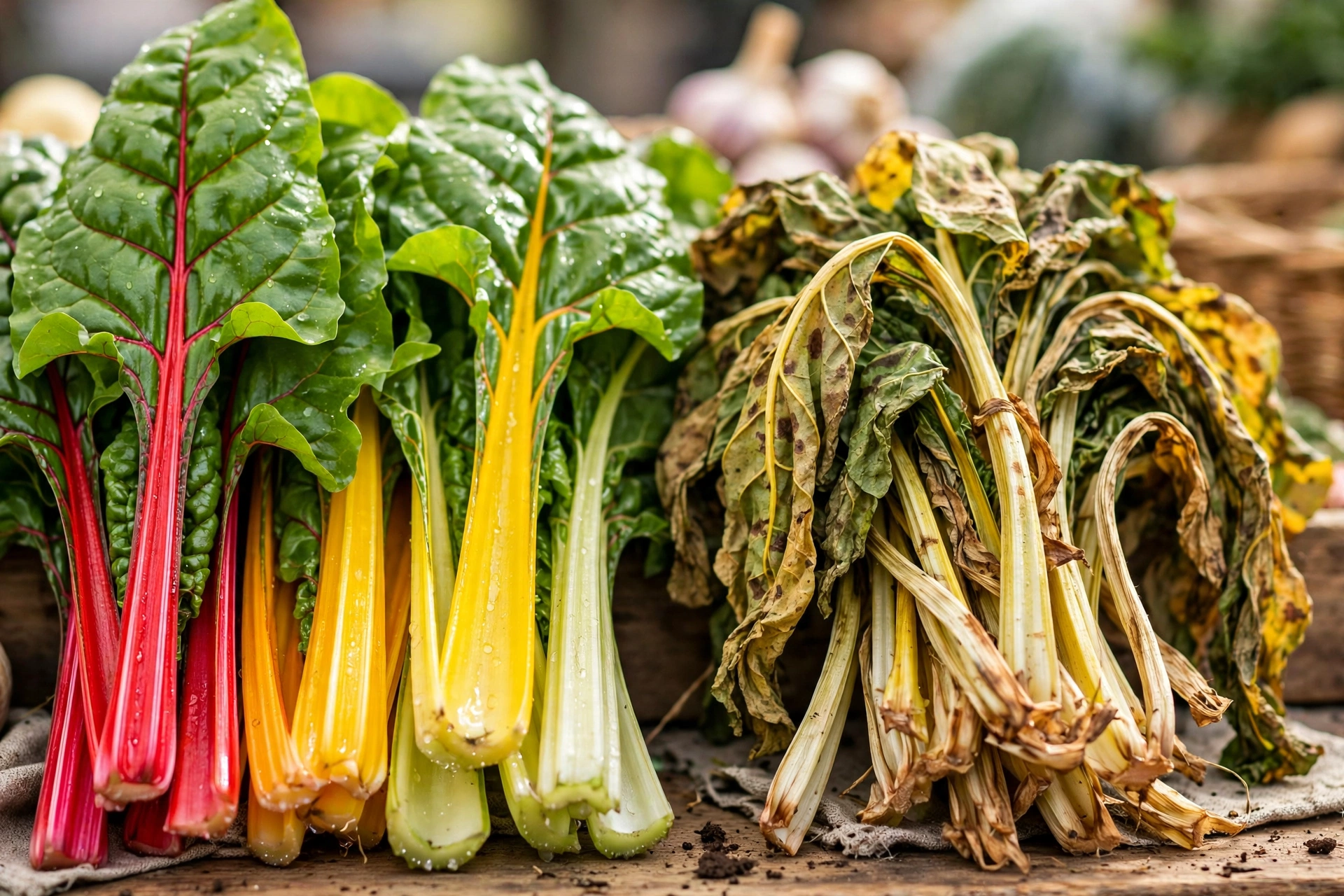
Prefer
- Crisp stalks that snap rather than bend
- Vibrant, unwilted, deeply colored leaves
- Bright stalk colors: white, red, or yellow
- Moist, fresh-looking cut ends
- Clean leaves without holes or spots
Avoid / check more closely
- Limp stalks or drooping leaves
- Yellowing or browning leaf edges
- Brown spots, holes, or slimy patches
- Dried-out, woody cut ends
- Faded, dull leaf color
Stalks are the freshness gauge
Swiss chard stalks tell you more than the leaves do. A fresh stalk feels rigid and snaps cleanly when bent — like celery — while an old one bends limply or feels rubbery. Check the cut ends at the bottom of the bunch: they should look moist and freshly cut, not dried, brown, or hollow. Stalk color varies by variety — Fordhook Giant has white stalks, Ruby Red has crimson ones, Bright Lights mixes red, yellow, and orange — but whatever the color, it should look vivid rather than faded. Thick stalks are fine as long as they are crisp; thickness alone does not mean toughness in chard.
Leaf inspection
The leaves should look alive: glossy or richly matte, deeply green (or red-tinged in red varieties), and flat or gently ruffled without wilting. Small holes from insects are cosmetic and common in organic chard — a few are fine, but extensive damage means the leaves will spoil faster. Avoid bunches with yellow patches, which indicate age, or any slimy or darkened areas, which signal decay. The leaves bruise easily, so handle bunches gently and do not squeeze them. A bunch that looks perky and hydrated in the store will keep far better at home.
When to buy and what to expect
Swiss chard is a cool-season green, at its best in spring and fall, though it is available year-round in most stores. Both the leaves and stalks are edible — the stalks need a little more cooking time, so many recipes separate them. Chard tastes mild and earthy, less bitter than kale, which makes it a friendly introduction to cooking greens. Buy it the day you plan to cook it or shortly before, since leafy greens decline faster than any other vegetable category.
Storing Swiss chard at home
Refrigerate chard as soon as you get home — do not leave it on the counter. Wrap the unwashed bunch loosely in a damp paper towel inside a perforated or loosely closed bag in the crisper drawer; it keeps three to five days this way. Do not wash before storing, since surface moisture speeds decay. If the leaves wilt slightly, a 10-minute soak in ice water often revives them. Use the stalks within the same timeframe; once they go limp, they are past their best.
Common questions
Can you eat Swiss chard stalks?
Yes — the stalks are entirely edible and delicious. They need a few extra minutes of cooking compared to the leaves, so add them to the pan first.
What is the difference between Swiss chard and rainbow chard?
Rainbow chard is simply a mix of varieties with different stalk colors (red, yellow, orange, white) sold together. The flavor is the same; it is mostly about appearance.
Why is my chard bitter?
Chard is naturally mild, but older or heat-stressed leaves can taste stronger. Choosing young, vibrant bunches and cooking them promptly keeps the flavor sweet and gentle.
References
U.S. Food and Drug Administration — Selecting and Serving Produce Safely. Reference for produce selection, handling, and visible damage.
Prepared October 13, 2026 with AI assistance. Cited sources do not endorse the entire article.