
To choose good parsnips, look for roots that are firm and smooth with creamy white to pale yellow skin and no soft spots. Pick small to medium parsnips — very thick, oversized ones often have a tough, woody core. The root should feel heavy and solid, with a clean tapered shape and fresh-looking top. Avoid parsnips that feel soft, rubbery, or shriveled, show dark spots or cracks, or have a very thick woody-looking top end.
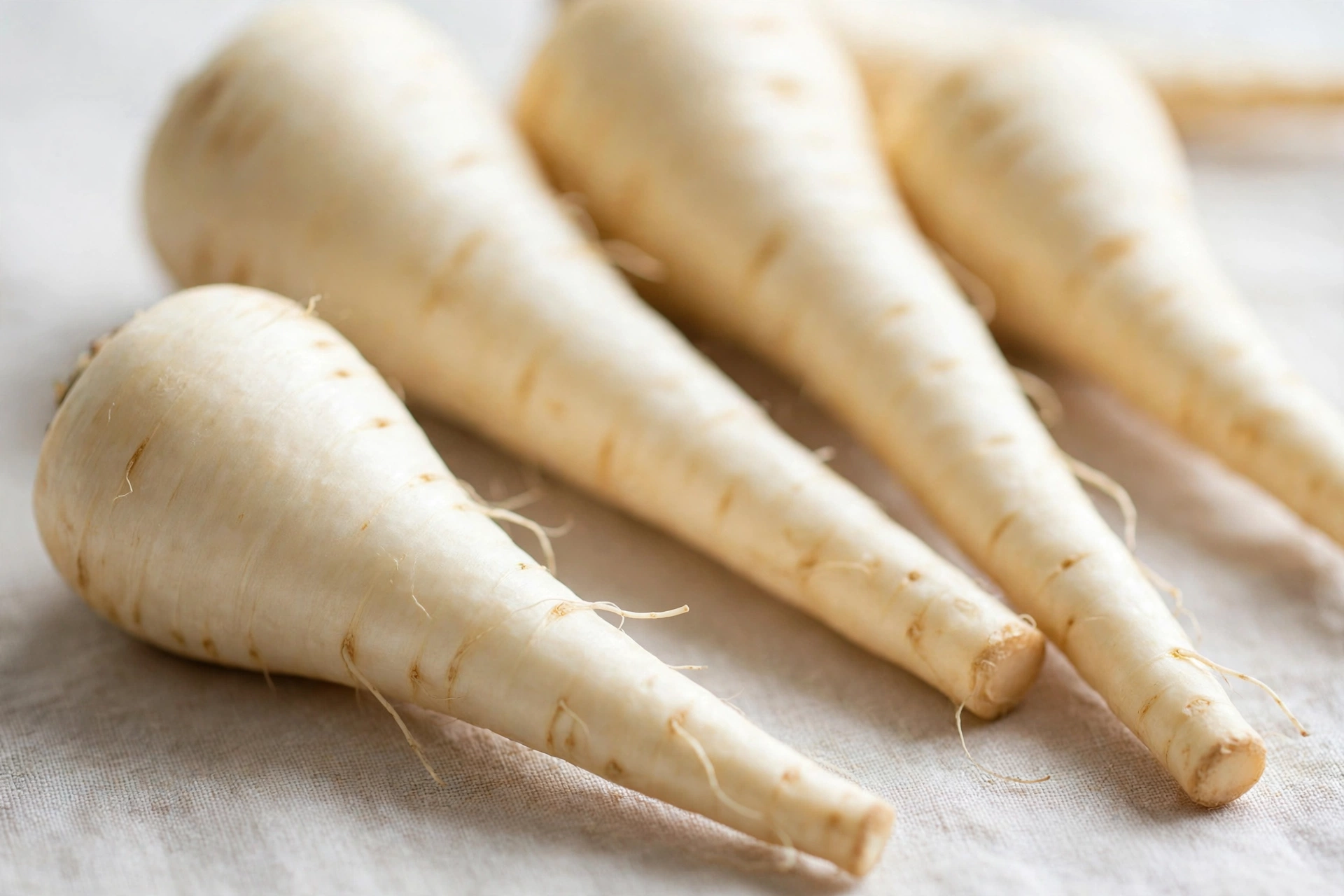
Prefer
- Firm, rigid roots with no bend
- Smooth, creamy white to pale yellow skin
- Small to medium size for tenderness
- Heavy, solid feel
- Clean, tapered shape with a fresh top
Avoid / check more closely
- Soft, rubbery, or bendable roots
- Shriveled or wrinkled skin
- Dark spots, cracks, or deep blemishes
- Oversized roots with very thick tops
- Sour or off smell
Firmness is everything
Parsnips are dense roots, and firmness is the single best quality signal. A fresh parsnip feels rigid — try bending it gently and it should not flex at all. If it bends like rubber, it has lost moisture and will taste bland and cook up limp. The skin should look smooth and taut, creamy white to pale yellow; wrinkling or shriveling means dehydration. Small dark speckles are usually cosmetic, but avoid deep dark spots, cracks, or any mushy areas, which indicate decay. The top end, where the greens were cut, should look reasonably fresh rather than dried out or moldy.
Size matters more than with carrots
With parsnips, bigger is not better. Small to medium roots — roughly six to eight inches long and not much thicker than an inch or two at the top — are the most tender and sweet, with a soft edible core. Oversized parsnips develop a thick, fibrous woody core that stays tough no matter how long you cook it; if you end up with one, plan to cut the core out. Very thin, spindly parsnips are fine but give you little flesh for the peeling effort. For the most consistent cooking, choose roots of similar size so they finish at the same time.
Season and sweetness
Parsnips are a cool-weather crop, and their flavor actually improves after exposure to cold — frost converts some starches to sugars, making winter-harvested parsnips noticeably sweeter. That makes late fall through winter the prime season, though stored parsnips are available much of the year. Do not confuse parsnips with white carrots; parsnips are sweeter, starchier, and more aromatic, with a distinct earthy perfume you can smell at the cut top. If a parsnip smells strongly sour or unpleasant rather than earthy-sweet, pass on it.
Storing parsnips at home
Parsnips keep exceptionally well. Refrigerate them unwashed in a plastic bag in the crisper drawer, where they stay crisp for two to four weeks — sometimes longer. Do not wash before storing; surface moisture encourages decay, and any dampness should be patted dry. Keep them away from ethylene-producing fruits if you want maximum storage life. If a parsnip goes slightly limp in the fridge, a soak in ice water can restore some crispness. Trim and peel just before cooking; peeled parsnips left exposed dry out quickly, so keep cut pieces in water if there is a wait.
Common questions
Do I need to peel parsnips?
Peeling is recommended for most preparations — the skin can be slightly bitter and the outer layer is where any field grit sits. Young, thin parsnips can be scrubbed instead of peeled if you prefer. Always trim the top and tip.
What is the woody core and what do I do about it?
Large parsnips develop a tough central core that does not soften with cooking. Halve the root lengthwise and cut the core out with the tip of a knife. Choosing smaller roots avoids the problem entirely.
Can I eat parsnips raw?
They are safe to eat raw and taste sweet and crunchy grated into salads, though most people prefer them cooked — roasting brings out their sweetness especially well.
References
U.S. Food and Drug Administration — Selecting and Serving Produce Safely. Reference for produce selection, handling, and visible damage.
Prepared October 12, 2026 with AI assistance. Cited sources do not endorse the entire article.