
To choose fresh okra, pick small to medium pods — two to four inches — that snap cleanly when bent and feel firm and dry. The pods should look bright green with no brown spots or soft tips. Large, fibrous pods are tough and woody no matter how you cook them, so size matters more with okra than almost any other vegetable.
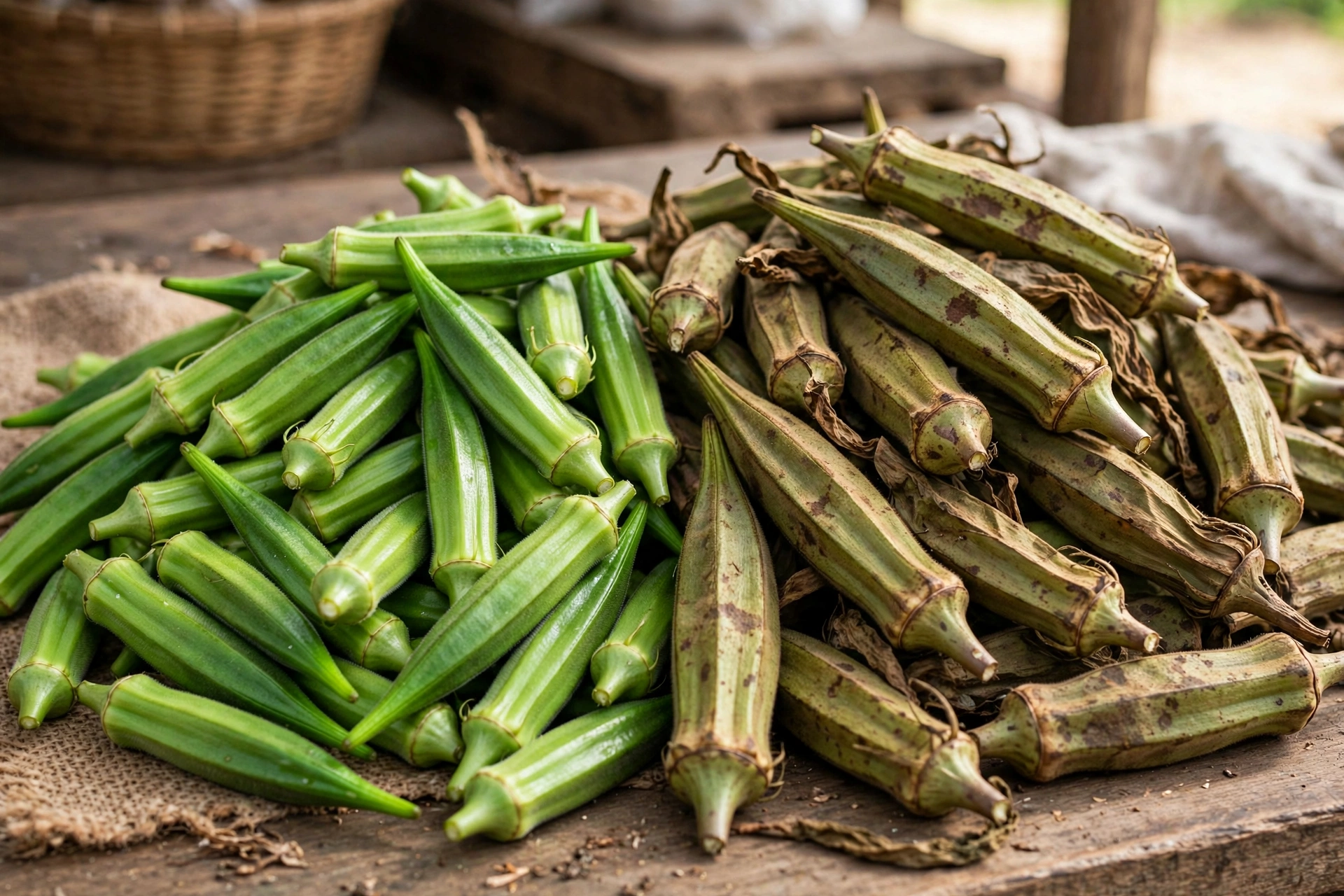
Prefer
- Small to medium pods (2–4 inches long)
- Pods that snap cleanly when bent
- Bright, even green color
- Firm, dry feel with no soft spots
- Fresh-looking cut stems
Avoid / check more closely
- Oversized pods (tough and woody)
- Limp pods that bend without snapping
- Brown spots or blackening tips
- Slimy or wet surfaces
- Wrinkled, shriveled pods
Size is everything
Okra goes from tender to tough fast. Small pods are crisp and sweet; once they grow past about four inches, the fibers turn woody and the seeds get hard — no amount of cooking fully fixes that. When you cannot snap a pod cleanly with your fingers, it is already too far gone. If only large pods are available, they still work sliced thin in long-cooked stews like gumbo, where time breaks down the texture.
Color, firmness, and the slime check
Look for bright, vivid green — dull or yellowing pods are aging. The surface should feel dry and firm; a little natural fuzz is normal, but any sliminess means decay has started. Check the stem end: it should look fresh-cut, not dried out or browned. Pods with many brown bruises have been handled roughly and will not keep well.
Storing okra at home
Refrigerate okra unwashed in a paper bag or loosely wrapped — it keeps two to three days. Do not wash until just before cooking, and never seal it in airtight plastic, which makes it slimy fast. Okra freezes well for cooking: slice, blanch briefly, chill in ice water, drain, and pack into bags. For less slime when cooking, use high heat and avoid crowding the pan.
Common questions
Can I eat oversized okra?
Sliced thin and stewed long, yes — gumbo is the classic use. For frying or quick sautés, stick with small tender pods.
Why is my okra slimy?
Okra releases mucilage when cut and cooked slowly. High-heat cooking, dry pods, and not overcrowding the pan all help reduce it.
How long does fresh okra last?
Two to three days refrigerated unwashed. It deteriorates faster than most vegetables, so buy it close to cooking day.
References
U.S. Food and Drug Administration — Selecting and Serving Produce Safely. Reference for produce selection, handling, and visible damage.
Prepared October 11, 2026 with AI assistance. Cited sources do not endorse the entire article.