
To choose crisp lettuce, look for vibrant, evenly colored leaves that look perky and hydrated — not wilted or browning at the edges. The head should feel firm and heavy for its size, and the cut core should look fresh and moist rather than brown and dried out. Give it a sniff: fresh lettuce smells clean and green, never sour.
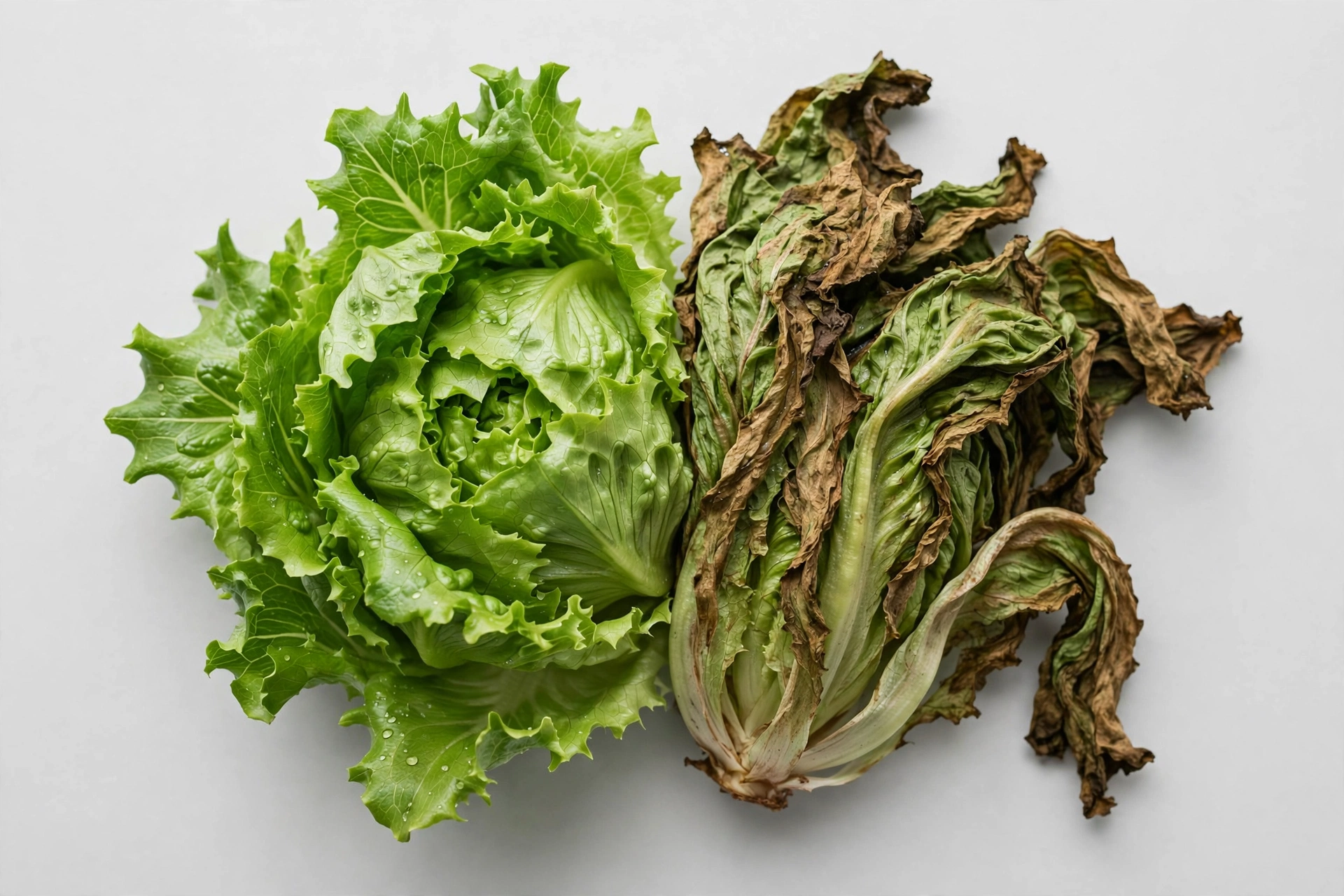
Prefer
- Vibrant, even color — deep green for romaine, bright green for butterhead
- Crisp, perky leaves with no wilting
- A firm head that feels heavy and compact
- A fresh, moist-looking cut core
- Clean smell with no sourness
Avoid / check more closely
- Browning or slimy edges on the leaves
- Wilted, limp, or dried-out outer leaves
- A brown, dried, or pinkish cut core
- Sour or off smells
- Excess water pooled in the packaging
Leaves and color: the freshness readout
Lettuce leaves are mostly water, so they show age quickly. Fresh leaves look vibrant and stand up perkily; as lettuce ages, the outer leaves wilt first, then brown at the edges. A little browning on the very outer leaves is normal handling wear — you can simply peel those off — but browning that reaches deep into the head means it is old. For romaine, look for tall, upright leaves with deep color; for butterhead and loose-leaf types, the leaves should look tender but lively, never soggy. Rusty-looking spots (russet spotting) come from ethylene exposure during storage and are a quality issue, not a safety one, but they do signal tired lettuce.
Feel the head and check the core
Pick up the head: fresh lettuce feels firm, dense, and satisfyingly heavy, while old heads feel light and loose. For iceberg and romaine hearts, a compact, solid feel is exactly what you want. Flip the head over and inspect the cut core — on fresh lettuce it looks pale, moist, and clean. A core that has turned brown, pinkish, or dried out has been sitting around, and the head will likely deteriorate fast at home. Finally, smell it: fresh lettuce has almost no odor beyond a faint green note, so any sourness is a clear reject.
Storing lettuce at home
Wash lettuce just before using it, not before storing — or if you wash ahead, dry the leaves thoroughly, since trapped moisture is the main cause of sliminess. Wrap the head loosely in a dry paper towel and place it in a perforated bag or container in the crisper drawer; the towel absorbs excess moisture and can add several days of life. Keep lettuce away from ethylene-producing fruits like apples and bananas, which speed up browning. Most heads keep four to seven days this way when they start out fresh.
A simple lettuce-shopping checklist
Before you buy, check four things: leaves (vibrant and perky?), head feel (firm and heavy?), core (fresh and moist?), and smell (clean?). Peel away one bad outer leaf rather than rejecting a whole head for it. These checks take seconds and apply to romaine, iceberg, butterhead, and loose-leaf varieties alike.
Common questions
Is slightly brown lettuce safe to eat?
Browning alone is usually just oxidation and aging — trim the browned parts and use the rest if it still smells fresh and feels crisp. Discard lettuce that is slimy, mushy, or smells sour.
Should I wash lettuce before storing?
It is better to wash just before use. If you prefer washing ahead, dry the leaves completely first — a salad spinner helps — then store with a paper towel to absorb moisture.
Why does my lettuce turn brown so fast?
The usual culprits are excess moisture, ethylene gas from nearby fruits, and warm storage. Dry leaves, a paper towel wrap, the crisper drawer, and distance from apples and bananas all slow browning.
References
U.S. Food and Drug Administration — Selecting and Serving Produce Safely. Reference for produce selection, handling, and visible damage. Storage guidance reflects standard kitchen practice.
Prepared October 9, 2026 with AI assistance. Cited sources do not endorse the entire article.