
To choose a good jicama, pick it up — it should feel firm and heavy for its size, which signals crisp, juicy flesh inside. The thin tan skin should look smooth and unblemished, without cracks or soft spots. Choose medium-sized roots, which tend to be sweeter and crisper than very large ones. Avoid jicama that feels soft, looks shriveled, or has dark blemishes and cracks in the skin.
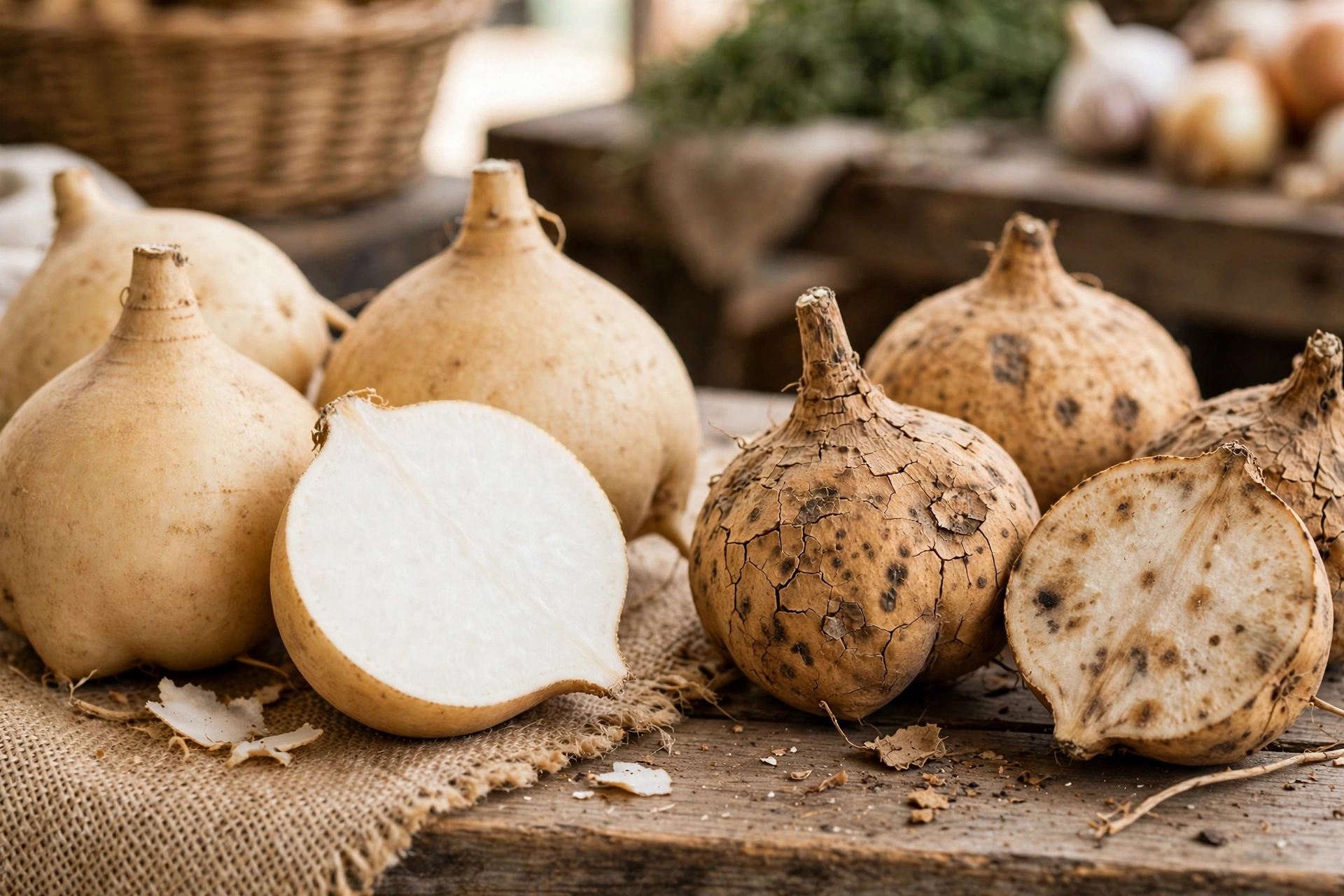
Prefer
- Firm, solid feel with no soft spots
- Heavy for its size — a juiciness clue
- Smooth, unblemished tan skin
- Medium size rather than oversized
- Dry, intact skin with no cracks
Avoid / check more closely
- Soft or spongy areas when squeezed
- Shriveled or wrinkled skin
- Dark blemishes, cracks, or wet spots
- Very large roots, which can be woody
- Sprouting or moldy patches
Firmness and weight come first
Jicama quality is all about texture, and you can judge it before buying. A fresh jicama feels rock-solid when you squeeze it — any softness or give means the flesh is breaking down inside. Weight matters too: a heavier root of the same size holds more moisture and will be crisper and juicier. Very large jicama roots may look like a bargain, but they are often woodier and less sweet than medium ones, so choose roots roughly the size of a large apple or small grapefruit for the best eating quality.
Skin inspection
The papery tan skin should look smooth, dry, and intact. Small surface marks are harmless, but avoid roots with deep cracks, which let in air and speed up drying, or dark sunken spots that may indicate rot underneath. The skin should not look shriveled or loose — that means the root has lost moisture in storage. Check the top where the stem was attached: it should look clean and dry, not moldy or mushy. Since jicama is always peeled before eating, minor cosmetic flaws on the skin are fine as long as the flesh beneath is firm.
What jicama should taste like
Fresh jicama tastes mildly sweet, crisp, and juicy — often compared to a cross between an apple and a water chestnut. If you have never bought it before, know that the whole root is peeled and eaten raw in sticks or cubes, or added to salads and slaws. It is available year-round in most stores, with no strong season. A good jicama needs no ripening: what you feel in the store is what you get, so choose carefully and skip any root that feels less than perfectly firm.
Storing jicama at home
An uncut jicama keeps two to three weeks in the refrigerator — store it uncovered or loosely wrapped in the crisper drawer, since sealed plastic can trap moisture. Do not freeze whole jicama; the texture turns mushy. Once peeled and cut, jicama dries out quickly: store sticks or cubes in water in a covered container in the fridge and use within a day or two for the best crunch. A squeeze of lime juice in the water helps keep the cut surfaces bright.
Common questions
Do you eat jicama skin?
No — peel it away completely before eating. The skin is tough and fibrous. Only the crisp white flesh inside is eaten.
Why is my jicama woody?
Woodiness usually comes from oversized, overmature roots or long storage. Choosing medium-sized, firm, heavy roots and using them within a couple of weeks avoids it.
Can jicama be cooked?
Yes. It stays crisp in stir-fries and soups, which makes it popular as a water-chestnut substitute. It is most commonly eaten raw, though, where its crunch shines.
References
U.S. Food and Drug Administration — Selecting and Serving Produce Safely. Reference for produce selection, handling, and visible damage.
Prepared October 13, 2026 with AI assistance. Cited sources do not endorse the entire article.