
To choose fresh collard greens, look for bunches with large, dark green leaves that feel firm and smooth, not limp or leathery. The leaves should be free of yellowing, with sturdy pale stems and no slimy spots. Lift the bunch — fresh collards feel substantial and the leaves spring back when bent gently. Avoid bunches with yellow or brown patches, many holes, wilted leaves, or a sour smell, which all signal age or poor handling.
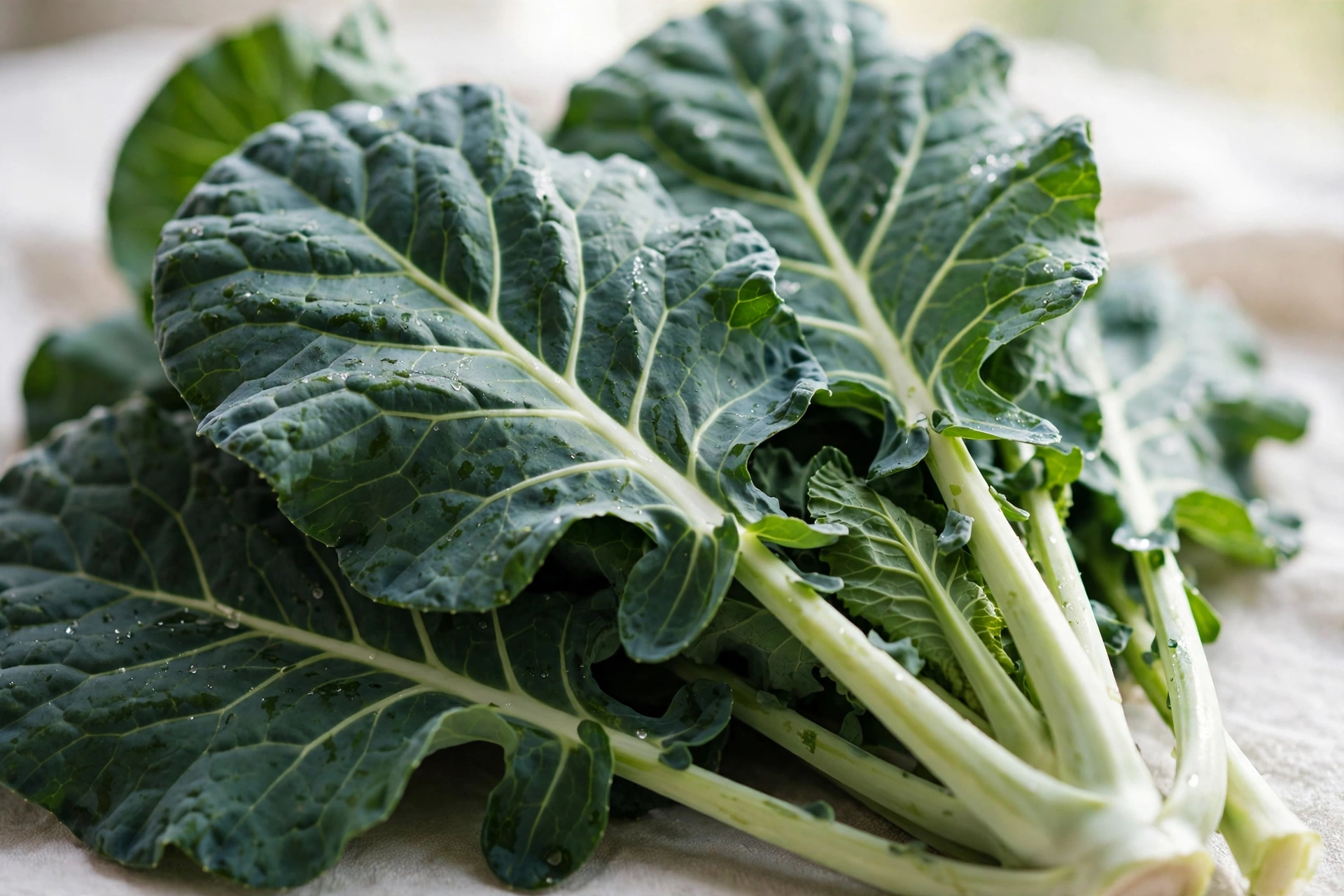
Prefer
- Large, dark green, firm leaves
- Smooth leaf surface with a slight sheen
- Sturdy, pale green stems
- Bunch that feels heavy and substantial
- Clean, fresh vegetal smell
Avoid / check more closely
- Yellowing leaves or brown edges
- Wilted, limp, or leathery texture
- Many holes or ragged insect damage
- Slimy spots or dark mushy patches
- Sour or rotten smell
Leaf color and texture tell the story
Collard leaves should be a deep, rich green — the darker the better, generally, since pale or yellow-green leaves are often older or were grown under stress. Run your eye over the whole bunch: the color should be even, without yellow blotches or browning at the edges, which are the first signs of decline. Touch a leaf: fresh collards feel firm, smooth, and slightly waxy, and the leaf springs back when you bend it gently. Leaves that feel limp, papery, or leathery have lost moisture and will cook up tough rather than tender. A light natural waxiness is normal and not a flaw.
Stems, holes, and bunch inspection
The stems should be sturdy and pale green to whitish, snapping crisply rather than bending like rope. Thick central ribs are normal on collards — they soften with cooking. Small holes from field insects are common and cosmetic; a hole or two per leaf is no reason to reject a bunch. But widespread ragged damage, especially with darkened edges, suggests the greens sat too long or were poorly handled. Check where the leaves were cut or bound: the cut ends should look reasonably fresh, not dried to a dark brown stub or slimy. Give the bunch a sniff — fresh collards smell clean and green, while a sour note means decay has started.
Size, season, and bagged vs. bunched
Collards are a cool-season green, sweetest after a light frost, so fall through early spring is prime time — though they are available year-round in most stores. Medium leaves are often the sweet spot: very large, thick leaves can be tougher and need longer cooking, while small tender leaves cook quickly but give you less for the bunch. Bagged pre-cut collards are convenient; choose bags with uniformly dark green pieces and no yellowing, and check the bottom of the bag where moisture collects. Whole bunches let you inspect better and usually stay fresh longer.
Storing collard greens at home
Refrigerate collards unwashed in a plastic bag in the crisper drawer — they keep about five days, sometimes a little longer. Do not wash until you are ready to cook; added moisture shortens their life. If the leaves are damp from the store, pat them dry or line the bag with a paper towel. For longer keeping, blanch the leaves briefly, chill in ice water, drain well, and freeze — frozen collards keep for months and go straight into pots. Remove any yellowing leaves before storing so they do not affect the rest of the bunch.
Common questions
Do I need to remove the stems?
The thick central stem and rib can be tough, so most cooks strip the leaf from it or slice it thin. Tender young stems can be chopped and cooked along with the leaves — they just need a little extra time.
Why are my collards tough after cooking?
Usually undercooking or old, leathery leaves. Fresh, firm collards become tender with sufficient simmering time. Very mature leaves with thick ribs naturally need longer than young tender ones.
Can I eat collard greens raw?
Young, tender collard leaves can be used raw in wraps or shredded in salads, but mature leaves are quite sturdy and bitter raw. Most people prefer them cooked, which mellows the flavor.
References
U.S. Food and Drug Administration — Selecting and Serving Produce Safely. Reference for produce selection, handling, and visible damage.
Prepared October 12, 2026 with AI assistance. Cited sources do not endorse the entire article.