
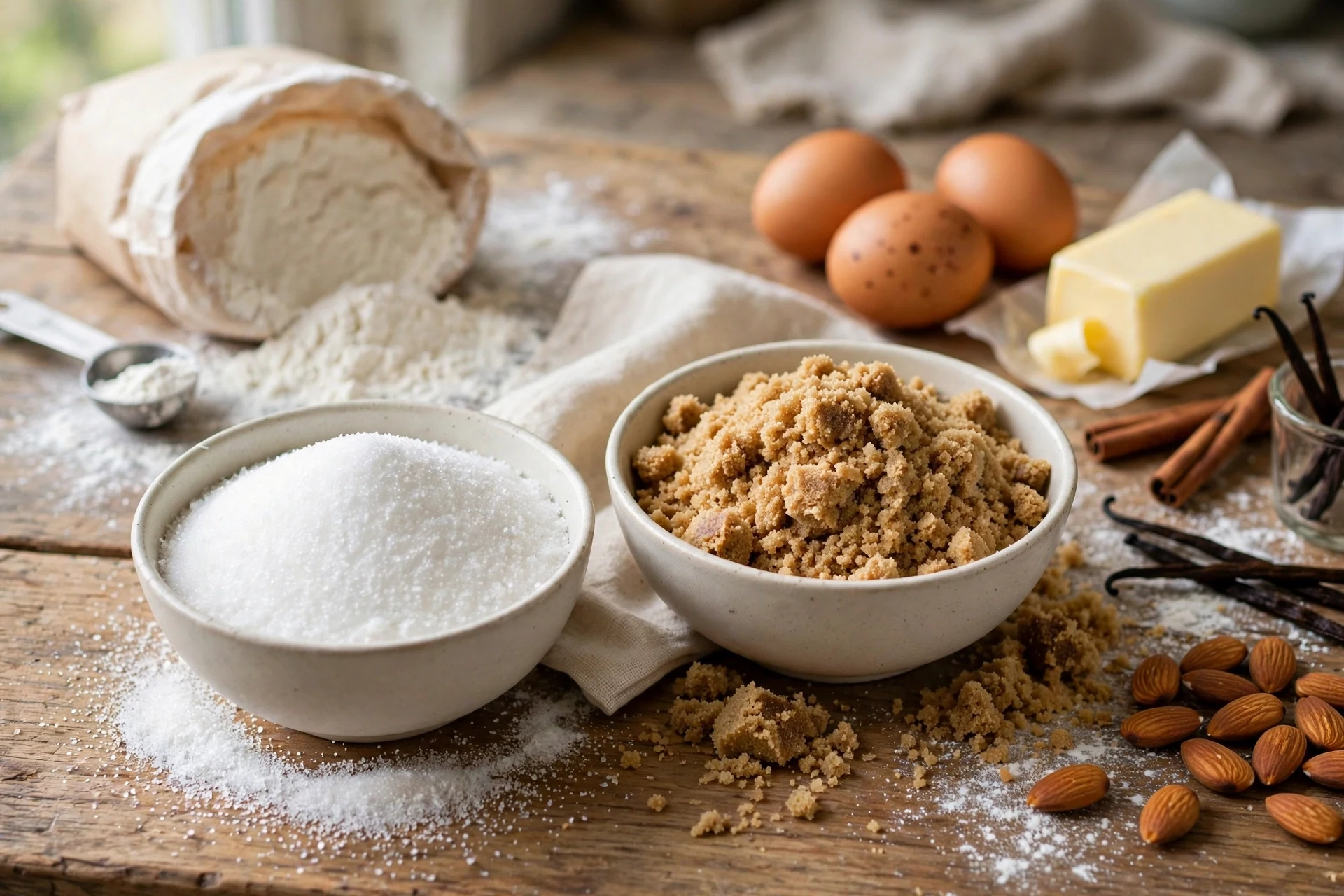
The difference between white and brown sugar is molasses. Brown sugar is white sugar with molasses added back, which gives it moisture, a deeper caramel-like flavor, and a soft, packable texture. Swapping them changes chewiness in cookies, color in sauces, and tenderness in baked goods — sometimes a little, sometimes enough to matter.
Choose white sugar when…
- You want a clean, neutral sweetness
- You are making meringues, angel food cake, or pale bakes
- The recipe needs a crisp texture
- You are sweetening drinks where flavor clarity matters
- Color of the finished dish should stay light
Choose brown sugar when…
- You want chewiness in cookies and blondies
- You are making barbecue sauce, baked beans, or glazes
- A warm, caramel-like depth suits the recipe
- The recipe calls for it by name and texture matters
- You want extra moisture in the crumb
What molasses changes: moisture, acidity, and spread
Molasses does three jobs in brown sugar: it adds flavor, holds moisture, and brings mild acidity. That acidity can react with baking soda to give lift, and the extra moisture makes cookies spread differently and stay chewier than an all-white-sugar batch. Light brown sugar contains less molasses and tastes gentler; dark brown sugar has more and gives a stronger, almost toffee-like note. Natural sweeteners each behave differently in the kitchen, and if you also cook with liquid sweeteners, our guide to how to choose honey is a useful companion for the other jar in the pantry.
Where the swap works — and where it does not
In many everyday recipes — oatmeal, crumbles, quick sauces, and most cookie doughs — swapping white for brown (or a mix) changes flavor and chew in ways many bakers actually enjoy, and the recipe still succeeds. Be more careful where structure is delicate: meringues, white cakes, and clear syrups rely on white sugar’s neutrality and predictable behavior. Leavening is the other place precision counts, which is why it helps to understand baking soda vs. baking powder before you start improvising — brown sugar’s acidity interacts with soda in a way white sugar does not.
Measuring and storing both sugars
Brown sugar is measured packed: press it firmly into the cup until it holds the cup’s shape when turned out, unless a recipe says otherwise. White granulated sugar is simply spooned or scooped and leveled. Store brown sugar in an airtight container so it stays soft; if it hardens into a block, a sealed container with a piece of bread or a damp terracotta saver can soften it again over a day or so. Keep white sugar dry and sealed away from strong odors. Pantry sweeteners last a long time when dry, a point that also applies to the syrups covered in our guide to how to choose maple syrup.
Making your own brown sugar in a pinch
If a recipe needs brown sugar and the bag is empty, you can make a workable substitute: stir about one tablespoon of molasses into one cup of white granulated sugar for light brown, or two tablespoons for dark, mixing until evenly colored and moist. The result behaves very much like store-bought brown sugar in cookies and sauces. Conversely, if you only have brown sugar for a white-sugar recipe, expect a slightly deeper color and flavor and a touch more moisture — acceptable in rustic bakes, less ideal in pale, delicate ones.
Common questions
Is brown sugar healthier than white sugar?
Not meaningfully. Brown sugar contains trace minerals from molasses, but the amounts are negligible in normal servings, and both are used by the body as sugar. Choose between them for flavor and texture.
Can I swap them one-to-one?
By volume, generally yes for everyday baking and sauces. Expect changes in moisture, chew, color, and flavor, and be cautious in delicate recipes like meringues and white cakes.
Why did my brown sugar turn into a rock?
Brown sugar hardens as its molasses coating loses moisture to the air. Store it airtight, and soften a hardened block in a sealed container with a bread slice or a soaked terracotta disc.
References
U.S. Food and Drug Administration — Safe Food Handling. Reference for safe handling, storage, and spoilage signs.
Prepared October 21, 2026 with AI assistance. Cited sources do not endorse the entire article.