
To choose good honey, read the ingredient list — real honey lists one ingredient: honey. Blends cut with corn syrup or added flavors will say so on the label. Crystallization (honey turning grainy or solid) is completely normal and actually a sign of minimally processed honey, not spoilage. Choose clear labeling about floral source and origin over vague “honey blend” descriptions.
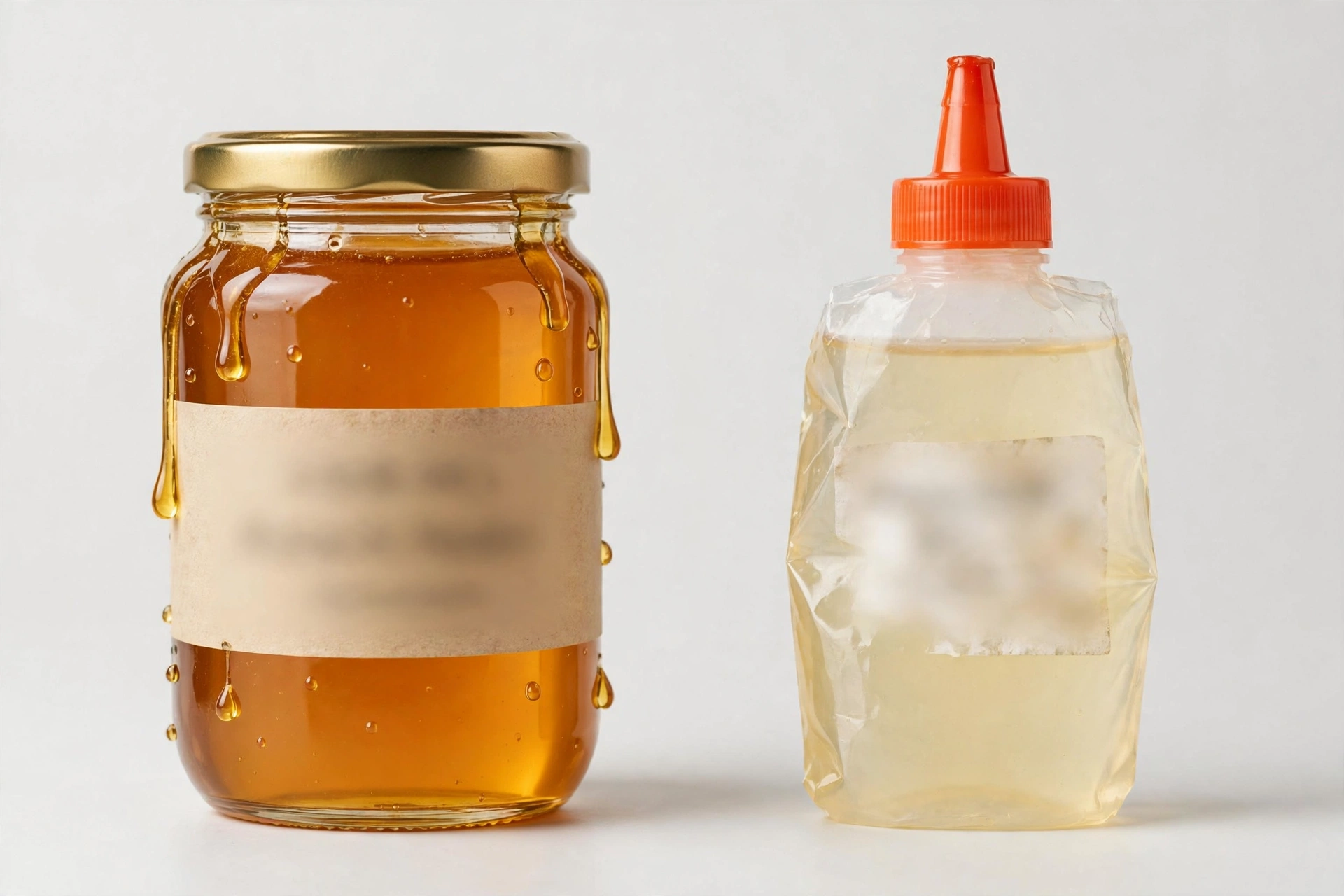
Prefer
- One ingredient on the label: honey
- Named floral source (clover, wildflower, orange blossom) and origin
- Clear, honest labeling with no syrup additives
- Crystallized honey — a natural sign of minimal processing
Avoid / check more closely
- “Honey blend,” “honey-flavored syrup,” or added corn/rice syrup in ingredients
- No ingredient list at all
- Vague origin statements with no floral source
- Suspiciously cheap prices for large “pure honey” jugs
- Foam, sour smell, or fermentation bubbles (rare, but a reject)
Read the label first
The single most useful thing you can do is flip the jar and read the ingredients. Genuine honey contains exactly one ingredient. Products labeled “honey blend,” “honey-flavored,” or listing corn syrup, rice syrup, or added flavors are diluted products — legal to sell, but not the same thing, and usually priced to look like a bargain next to real honey. Labels naming a floral source (clover, buckwheat, orange blossom) and a specific origin come from traceable supply chains and tend to be more reliable. Raw or unfiltered on the label means the honey was not heated or finely filtered — a style preference, not a safety requirement.
Crystallization is normal — foam is not
Many shoppers mistake crystallized honey for spoiled honey. In reality, crystallization is natural: glucose separates from water over time, especially in high-glucose varieties like clover, and it happens faster in cool storage. It is actually a good sign — heavily processed or diluted honeys crystallize less predictably. To reliquefy, warm the jar gently in warm (not boiling) water. What you should not see is foam on top, a sour or fermented smell, or active bubbling — those rare signs suggest excess moisture and fermentation, and that jar is worth skipping.
Color, clarity, and storing honey
Honey color ranges from nearly clear to dark amber depending on floral source, and darker honeys usually have stronger flavors — color alone says nothing about purity. At home, store honey at room temperature in a sealed jar; refrigeration speeds up crystallization without adding any benefit. Honey essentially never spoils thanks to its low moisture and acidity — archaeologists have tasted edible honey from ancient tombs. Keep the lid closed and utensils dry, and a jar lasts indefinitely.
A simple honey-shopping checklist
Before you buy, check three things: ingredients (just honey?), labeling (floral source and origin named?), and price realism (too cheap for the size?). Do not fear the crystallized jar — it is often the least processed one on the shelf. These label habits take seconds and steer you to the real thing.
Common questions
Is crystallized honey bad?
No — crystallization is a natural process and a sign of minimally processed honey. Warm the jar gently in warm water to reliquefy it, or simply spread it as is.
Does raw honey need refrigeration?
No. Store all honey at room temperature in a sealed container. Refrigeration only speeds crystallization and makes the honey hard to pour.
Can honey really last forever?
Practically, yes. Honey’s low moisture and natural acidity make it inhospitable to microbes. Kept sealed and dry, it stays safe indefinitely — though flavor is best within a couple of years.
References
U.S. Food and Drug Administration — Food Labeling & Nutrition. Reference for how food labels and ingredient lists work. Honey handling guidance reflects established food-science practice.
Prepared October 9, 2026 with AI assistance. Cited sources do not endorse the entire article.