
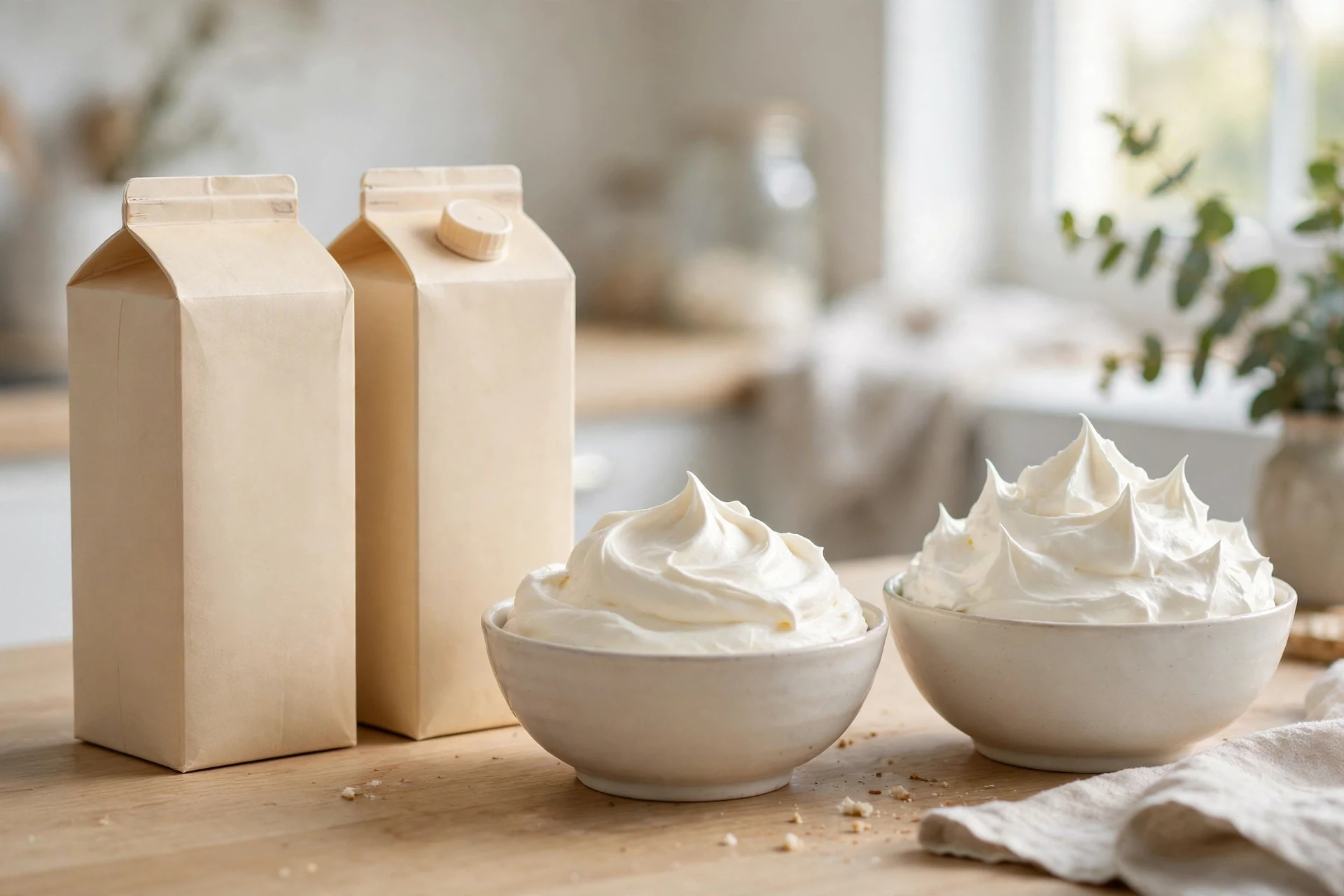
The difference between heavy cream and whipping cream is fat content. Heavy cream — also labeled heavy whipping cream — contains at least 36% milk fat, while regular whipping cream contains roughly 30–35%. That small gap matters most for whipped cream that needs to hold stiff peaks and for rich sauces; in most cooking, the two are interchangeable.
Choose heavy cream when…
- You need whipped cream that holds firm, lasting peaks
- You are piping decorations or topping a dessert in advance
- You want the richest texture in sauces and ganache
- The label says heavy cream or heavy whipping cream, 36% fat or more
- You are making ice cream or a set dessert
Choose whipping cream when…
- You want a lighter, softer dollop for fruit or coffee drinks
- You are stirring cream into soups or pan sauces
- It is the only cream available — most cooking still works
- You prefer a slightly less rich result
- The label says whipping cream, around 30–35% fat
Fat percentages and the names on the carton
Cream naming is confusing because “heavy whipping cream” and “whipping cream” sound almost identical. Heavy cream and heavy whipping cream are the same product category: at least 36% fat, and often 38–40% in practice. Plain whipping cream sits a step below, at about 30–35% fat. Always read the smaller print and, where given, the nutrition panel rather than relying on the big words alone. These label distinctions are similar to those you meet with other dairy staples, and our guide to how to choose milk shows the same habit of checking fat and date information before you buy.
Whipping performance: peaks, stability, and overwhipping
Higher fat means whipped cream that forms stiffer peaks, pipes cleanly, and resists weeping for longer — which is why heavy cream is the safer pick for frostings, filled cakes, and make-ahead toppings. Whipping cream beats up lighter and softer, lovely for a casual spoonful over berries but quicker to slump. With either type, start with cold cream and a cold bowl, and stop as soon as you reach the texture you want: push too far and the cream turns grainy and heads toward butter. If you enjoy tangy dairy toppings as an alternative, our guide to how to choose sour cream explains another carton worth knowing in the same aisle.
Cooking and baking swaps
In soups, sauces, mashed potatoes, scrambled eggs, and most baked goods, heavy and whipping cream swap one-for-one with barely noticeable differences — the higher-fat version simply tastes a little richer and thickens slightly faster. Heavy cream is also a touch more stable in hot sauces and less likely to split when simmered. Where the swap matters most is anywhere the cream must hold air or set a structure: whipped toppings, mousses, and ganache ratios written for a specific fat level. Home bakers who also keep spreadable cheeses for frostings may find our guide to how to choose cream cheese useful for the companion ingredient in many of the same recipes.
Dates, storage, and freshness checks
Cream is sold pasteurized and often ultra-pasteurized, which gives unopened cartons a longer refrigerated life — but once opened, plan to use it within several days to a week. Fresh cream should pour smoothly and smell clean and slightly sweet; lumps that do not shake out, a sour smell, or a bitter taste mean it should be discarded. Keep cream in the coldest part of the fridge rather than the door, and do not leave the carton out during a long cooking session. Freezing cream is possible for later cooking use, though the texture separates and it will not whip well afterward.
Common questions
Are heavy cream and heavy whipping cream the same?
Yes, for shopping purposes they are the same category — both contain at least 36% milk fat. The naming varies by brand, so check the fat percentage and ingredient list if you need to be certain.
Can I whip regular whipping cream?
Yes. It whips into soft, light peaks that are perfect for casual desserts. It just will not hold stiff, piped shapes as long as heavy cream, so serve it sooner after whipping.
Can I substitute milk for cream?
In some sauces you can, with a little butter added for richness, but milk will not whip and gives a thinner result. For whipped toppings and set desserts, there is no true milk substitute — use the cream the recipe specifies.
References
U.S. Food and Drug Administration — Safe Food Handling. Reference for safe handling, storage, and spoilage signs.
Prepared October 21, 2026 with AI assistance. Cited sources do not endorse the entire article.