
To choose good cream cheese, look for a bright white color and a smooth, even texture with no cracks or yellowing. The foil seal under the lid should be intact — a broken or puffy seal is a reason to pick another tub. Check the date, and once opened, give it a sniff: fresh cream cheese smells mildly tangy and clean, never sour or yeasty. Avoid tubs with a beige tint, grainy texture, or dried-out edges.
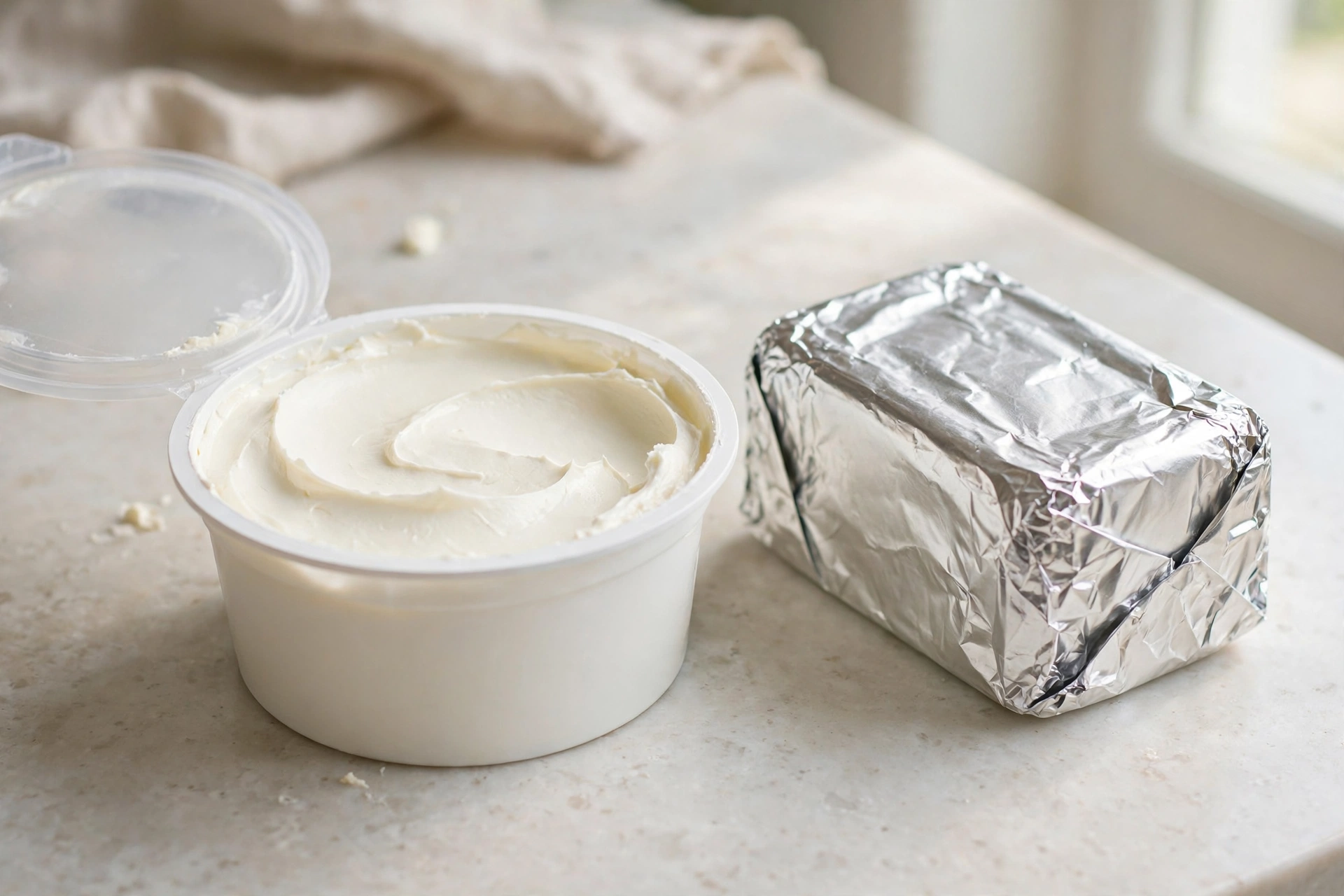
Prefer
- Bright white, even color with no yellowing
- Smooth, creamy texture with no lumps or cracks
- Foil seal fully intact under the lid
- Firm but spreadable feel
- A date comfortably within the printed range
Avoid / check more closely
- Yellow, beige, or gray tints
- Grainy, lumpy, or separated texture
- Cracked or dried-out surface
- Bulging lid or broken foil seal
- Sour, yeasty, or otherwise off smells
Check the seal and the surface
The foil seal is your first line of defense. It should lie flat and unbroken across the top of the tub; a puffed-up or torn seal can mean the product was mishandled or is past its best. Peel it back and look at the surface: it should be smooth and uniform. Fine cracks or a dried, shrunken surface suggest age or temperature swings in the store case. A little liquid on top is usually just whey and not a problem on its own, but combined with off smells or discoloration it is a sign to skip that tub.
Texture and color tell the story
Good cream cheese is dense, smooth, and evenly white. Yellowing — especially around the edges — often comes from oxidation or age, and a grainy or curdled feel can mean it froze and thawed in transit or sat too long. The block form sold in foil bricks should feel firm and slice cleanly; the tub form should look creamy and hold soft peaks. Either way, trust a fresh, mildly tangy smell. Cream cheese rarely “smells strong” when fresh, so any sharp sourness is worth heeding.
Storing cream cheese at home
Keep cream cheese refrigerated at all times, and press the lid — or better, plastic wrap directly on the surface — to limit air exposure after opening. Use opened cream cheese within about two weeks for the best quality. Freezing is possible but generally not recommended for spreading or bagels, since thawed cream cheese often turns grainy; it works better in cooked dishes where texture matters less. Never leave it out on the counter for more than a couple of hours.
Common questions
Can you freeze cream cheese?
You can, but the texture usually suffers — thawed cream cheese tends to turn grainy and watery. It is fine for cooked recipes like sauces or baked dishes, but not ideal for spreading.
Is a slight yellow tint okay?
A very slight cream tint can be normal for some brands, but distinct yellowing, especially at the edges, usually signals age or oxidation. When in doubt, go by smell and date as well.
How long does cream cheese last after opening?
About two weeks in the refrigerator with the lid kept tight. If you see mold, pink or yellow spots, or it smells strongly sour, discard it.
References
U.S. Food and Drug Administration — Buy, Store & Serve Safe Food. Reference for dairy selection, handling, and storage.
Prepared October 12, 2026 with AI assistance. Cited sources do not endorse the entire article.