
If your tortilla recipe calls for masa harina, look for those words or an explicit description of nixtamalized corn flour. Ordinary cornmeal is not the same ingredient, even if it is ground very fine and sits next to the masa harina on the shelf.
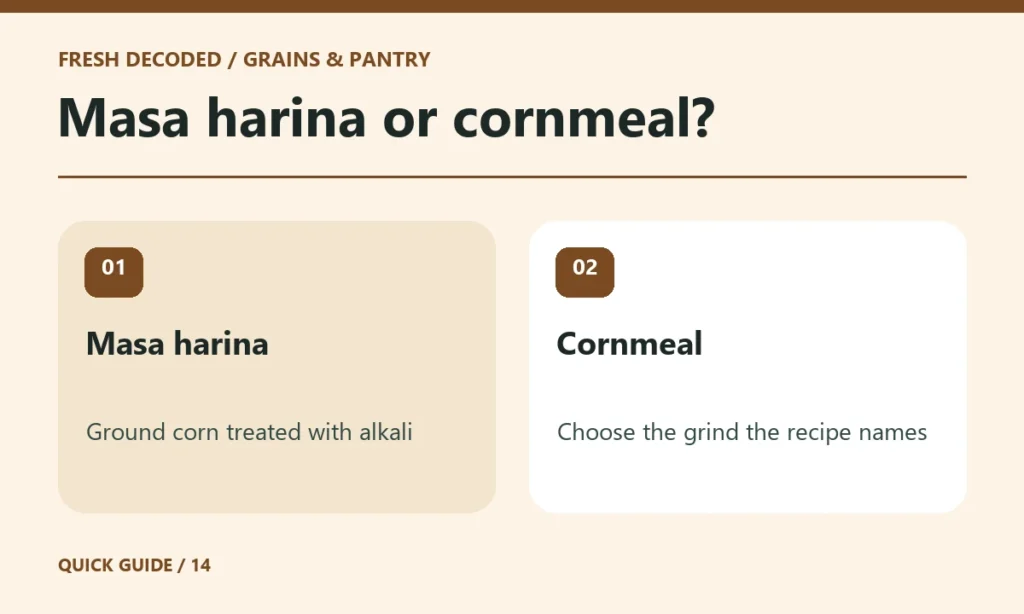
The difference is the treatment, not just the grind
Masa harina is a dried flour made from corn treated with an alkaline solution in a process called nixtamalization. The treatment changes how the ground corn behaves when you add water. King Arthur Baking's corn tortilla recipe explains why ordinary cornmeal or corn flour is not a straight substitute. The words “fine” or “stone ground” on a cornmeal bag do not identify that treatment.
Look for a preparation example on the package, but read the ingredient description too. A tortilla image is helpful context, not a substitute for the product name. “Corn flour” can describe different products in different markets. If the pack doesn't clearly name masa harina or explain the treatment, ask the seller or buy the product your recipe specifies.
Two recipes, two shopping decisions
For a water-and-masa tortilla dough, choose masa harina and follow the water and resting instructions of the recipe or package. Ordinary cornmeal will not reproduce the same dough just because you use the same weight.
For cornbread that calls for medium-grind cornmeal, buy that grind first. A bag of masa harina can appear in recipes designed around it, but switching it into an unrelated cornbread changes the flavor and the way the batter takes up water.
What to check before opening the bag
- Confirm the recipe says masa harina or cornmeal, and note any grind requirement.
- Check that you bought dry flour, not prepared fresh masa dough.
- Use the recipe's amount and water guidance instead of combining instructions from two different packages.
Store the dry ingredient as its manufacturer directs. This guide compares dough behavior, not the safety of an individual package.