To choose leafy greens, inspect the stems, the bottom of the bunch, and a few inner leaves, not just the attractive leaves on top. Prefer greens with a texture suited to your dish and avoid wet, mushy decay. Buy an amount you can realistically use instead of choosing the largest bunch by default.
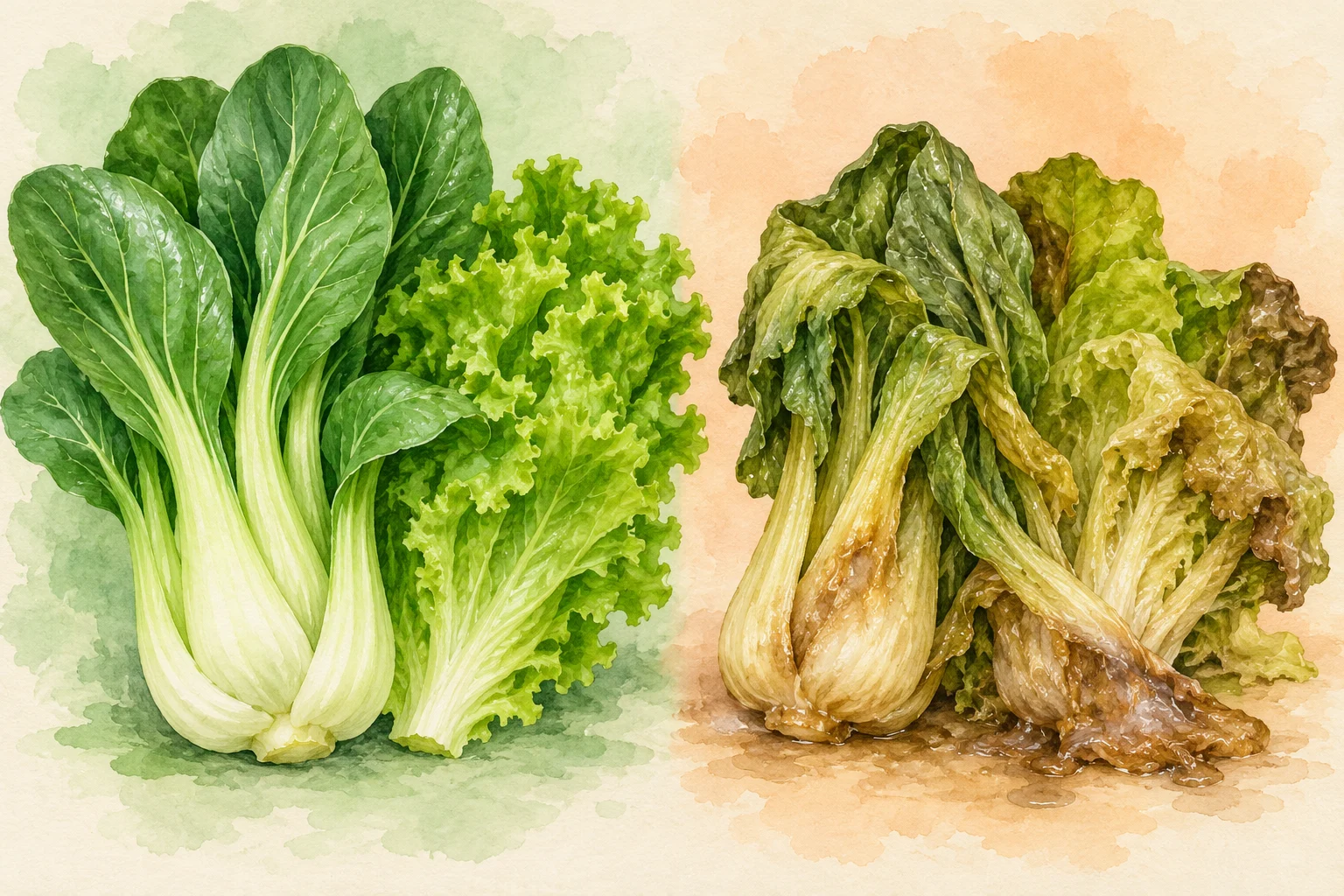
Prefer
- Leaves and stems with a firm texture
- No pooled liquid at the bottom
- An amount that fits your meal plan
Avoid / check more closely
- Wet, mushy or slimy leaves
- Many bruised or decaying sections
- Attractive outer leaves hiding damage inside
Inspect the leaves inside the bunch
A bunch can be arranged with the best-looking leaves on the outside. If the seller allows it, gently check the base, stems, and some inner leaves. Slightly limp leaves may affect crunch; wet, mushy or decaying leaves are a different issue. Avoid labeling a whole bunch 'bad' based on one imperfect leaf.
Choose greens for salads, stir-fries, or soup
Wraps, salads, and stir-fries call for different textures. For a dish that needs crunch, select suitable leaves and stems. For soup, you may care more about tenderness and the parts you can use. Ask the name of unfamiliar greens instead of guessing from appearance. A smaller amount you will finish can be better than a large bunch left unused.
Look for pooled liquid and damaged packaging
Liquid at the bottom of a bag can make it easy to overlook damaged leaves inside. View the bag from several sides and read the instructions on prepared greens. Holes, color, and shine do not establish the origin of the vegetables or prove they are free of pesticide residues. Those visual clues cannot replace testing.
Handle and wash greens after shopping
Keep greens separate from raw meat in your shopping bags. Remove damaged leaves, rinse under running water, and use clean utensils. Do not use household soap to wash food. Put the greens you intend to use first where you can see them in the refrigerator; this can help avoid buying more while older greens are still there.
Plan the amount before you buy
Note how much your household actually uses for one meal. After a few trips, you will know which bunch sizes work and which vegetables often go unused. This habit does not require perfect-looking produce. It helps match purchases to your needs and reduce waste. Attractive vegetables still need correct handling and storage.
References
FDA — 7 Tips for Cleaning Fruits, Vegetables
Reference for cleaning principles. Texture can help assess quality, but does not confirm safety.
Prepared October 8, 2026 with AI assistance. Cited sources do not endorse the entire article.