
Wheat-free and gluten-free answer different ingredient questions. Gluten-related label checks extend beyond wheat to grains including barley and rye. Do not substitute one phrase for the other when selecting packaged food for a specific requirement.
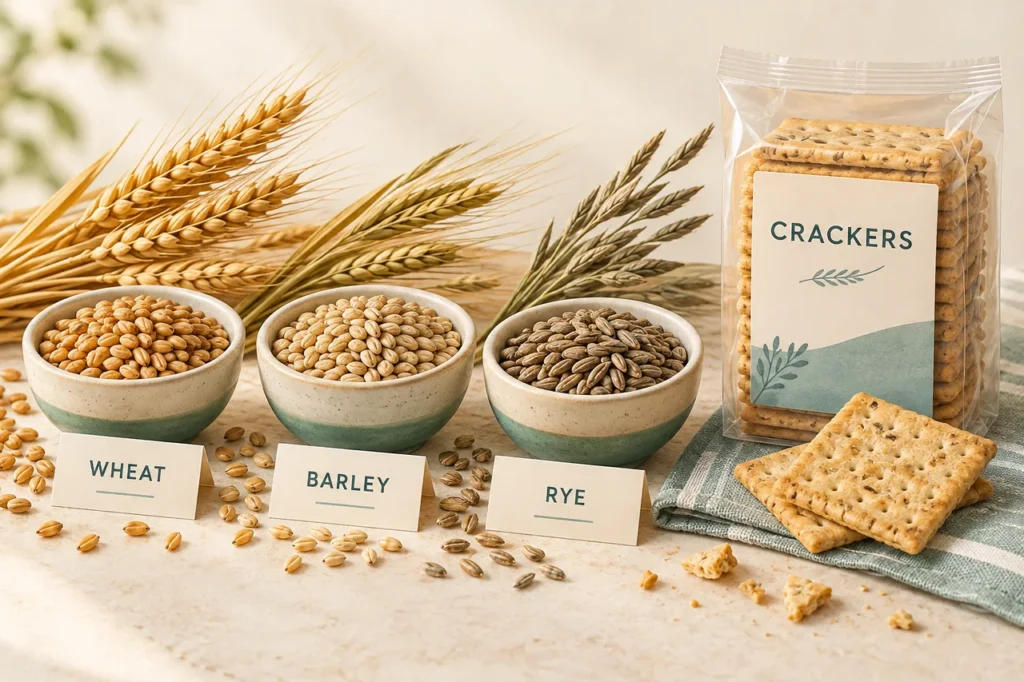
Illustrated packages and any label numbers are fictional teaching examples, not product specifications or evidence of safety. Follow the actual product instructions.
Useful checks
- Name the actual requirement
- Read all grains in the ingredient list
- Keep allergen and gluten-free checks separate
Common mistakes
- Treating wheat-free as a gluten-free guarantee
- Assuming a missing certification logo proves gluten is present
Start with the exact requirement you are shopping for
A shopping list that says avoid wheat is not the same label instruction as look for gluten-free. Wheat is one named grain, while gluten-related rules address additional grains and specific processing conditions. Write the actual requirement down before shopping. This article explains packaging terminology; it does not determine which foods are appropriate for someone with a diagnosed condition.
Look for the defined gluten-free claim
FDA sets conditions for voluntary gluten-free claims on FDA-regulated packaged foods, including a limit below 20 parts per million of gluten and restrictions on certain ingredients. The claim is not a promise of absolute zero or a home measurement anyone can verify by looking. Requirements can differ across jurisdictions, so this explanation concerns the U.S. framework and is not a substitute for checking local labeling rules.
Why the absence of wheat is insufficient
Consider a fictional cracker whose ingredient list names barley but not wheat. Merely failing to find wheat does not establish that the cracker meets the gluten-free standard. Read the complete list and the claim appropriate to your requirement. Conversely, do not assume every food without a printed gluten-free logo contains gluten; using the claim is voluntary, and certification logos are separate from the basic wording.
Keep allergen statements as a separate check
A gluten-free statement should not replace ingredient and allergen checks for wheat avoidance. FDA addresses circumstances in which particular processed wheat-derived ingredients and explanatory labeling are relevant. If both wheat information and a gluten-free claim appear and you do not understand why, contact the producer and follow the guidance appropriate to your own needs. Do not use this article to interpret an ambiguous product as medically suitable.
A repeatable packet-reading routine
Read the full product identity, then the relevant claim, ingredient list and allergen information. Check the same variety and package you are buying today, because recipes and facilities can change. For an unpackaged item with limited information, ask staff for the original ingredient documentation. If the information still does not establish what you need to know, choose a clearly documented alternative rather than treating a similar color, shape or photograph as proof.
Common questions
Is gluten-free a promise of zero gluten?
The U.S. FDA standard includes a below-20-ppm limit and ingredient conditions. It is not a claim of an analytically absolute zero.
Can I confirm it by texture or appearance?
No. A photograph or the look of bread cannot establish compliance with the standard.
References and scope
- FDA: gluten-free labeling questions — Reference for the U.S. voluntary claim, grains, ingredient conditions and relationship to wheat labeling.
Prepared October 24, 2026 with AI assistance. References support the stated guidance and do not endorse the entire article. Shopping examples are editorial examples, not product tests or medical advice.