
Added Sugars is included within Total Sugars on the U.S. Nutrition Facts label. Do not add the two lines together. Read the word Includes, then compare the same serving amount when choosing between products.
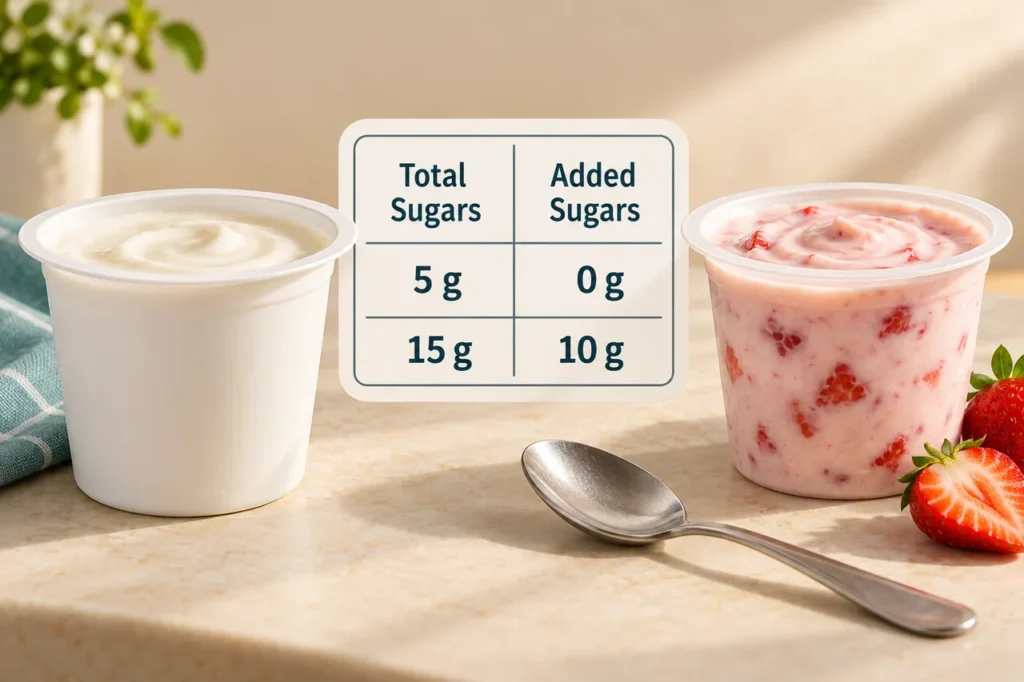
Illustrated packages and any label numbers are fictional teaching examples, not product specifications or evidence of safety. Follow the actual product instructions.
Useful checks
- Keep added sugars inside the total
- Match serving grams
- Read footnotes on single-ingredient sweeteners
Common mistakes
- Adding 12 g total and 7 g added to make 19 g
- Equating no added sugars with no total sugars
Read the indented line as part of the total
Total Sugars includes naturally present sugars and any added sugars in the product. The indented Includes line identifies the added part of that total. It is not an additional quantity sitting outside it. This is a reading convention: understanding it prevents a straightforward double-counting mistake before you compare brands, flavors or package sizes.
A simple fictional yogurt example
Imagine a yogurt label listing 12 g Total Sugars and Includes 7 g Added Sugars per serving. That serving has 12 g total, not 19 g. In this simplified example the difference, 5 g, represents sugars outside the added-sugars amount, subject to label rounding. The numbers are invented for explanation and are not a nutrition analysis of our illustration or a real yogurt brand.
Compare equal amounts rather than equal containers
A small cup and a large tub can use different serving weights. Match grams before deciding which has less added sugar for the amount you intend to eat. If you eat two label servings, multiply both total and added figures by two, while keeping the relationship between them. Do not add the already-included added value to the doubled total afterward.
Why a plain product can still show sugars
Milk and fruit can contribute naturally occurring sugars. Therefore a zero-added-sugars value does not necessarily mean zero total sugars. Read the ingredient list for the actual formula, but do not try to calculate precise sugar grams from ingredient order. An unsweetened claim, an ingredient list and a nutrition panel each provide different information. This article does not rank foods or establish a personal target.
Know when the format differs
FDA allows special presentation for single-ingredient sugars and syrups, including pure honey or maple syrup, so that the label does not imply another sugar was added to them. Their added-sugars contribution may appear through a percent Daily Value and explanatory footnote. Read that note rather than deciding that a missing ordinary Includes line means the food contributes no added sugars. Product identity and the complete panel matter more than one familiar layout.
Common questions
Can Total Sugars be larger than Added Sugars?
Yes. The total can include naturally occurring sugars as well as the added part.
Can a flavored product differ from the plain version?
Yes. Compare the actual current labels on a common serving basis rather than assuming a fixed recipe.
References and scope
- FDA: Added Sugars on the Nutrition Facts Label — Reference for the Includes relationship and special labeling of single-ingredient sugars and syrups.
Prepared October 24, 2026 with AI assistance. References support the stated guidance and do not endorse the entire article. Shopping examples are editorial examples, not product tests or medical advice.