
Low sodium and reduced sodium make different claims on U.S. food labels. Low describes a defined sodium level; reduced compares a product with a reference food. A reduced-sodium version is therefore not automatically a low-sodium product.
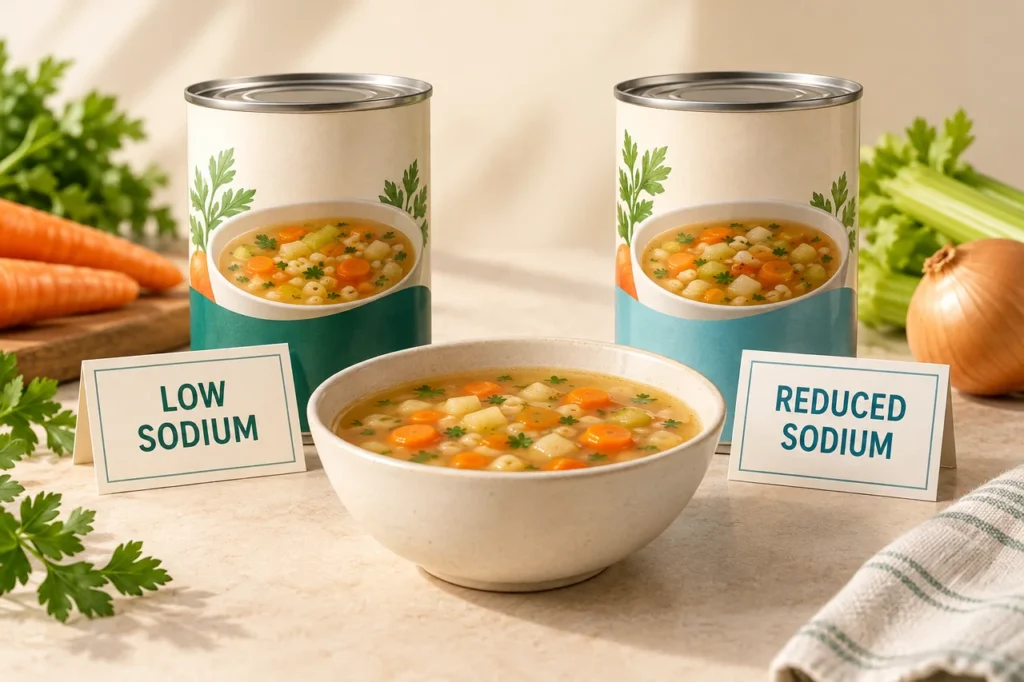
Illustrated packages and any label numbers are fictional teaching examples, not product specifications or evidence of safety. Follow the actual product instructions.
Useful checks
- Identify the reference product behind reduced
- Compare equal serving amounts
- Read sodium milligrams after the front claim
Common mistakes
- Treating reduced as a synonym for low
- Assuming no salt added means sodium-free
An absolute claim versus a comparison
FDA consumer guidance describes low sodium as 140 mg or less per serving and reduced sodium as at least 25 percent less than the regular product. Regulatory details depend on the food category and reference amount, so do not use this shopping guide as a label-compliance test. For the shopper, the key distinction is whether the claim describes a low level or a reduction from something else.
See how both claims can be true without meaning the same thing
Suppose a fictional soup has 800 mg sodium per serving and a reformulated version has 600 mg on the same serving basis. That is a 200 mg reduction, or 25 percent of 800. The reformulated soup still has much more sodium per serving than the low-sodium figure in FDA consumer guidance. A comparative improvement does not make its final amount small.
Compare the actual Nutrition Facts numbers
When two cans carry different front claims, match the serving measure and grams before comparing milligrams. Also check whether the soup is condensed and the label numbers are as sold or as prepared. Adding ingredients changes the final dish. A larger can of a lower-sodium product can still contribute more total sodium if you use much more of it. Our serving-math guide explains that separate calculation.
No salt added is another question
FDA distinguishes no-salt-added wording from a sodium-free promise. Ingredients can contain sodium even where salt is not added during processing. Read the sodium line rather than treating all phrases with salt or sodium as interchangeable. Conversely, do not infer the amount of sodium by how salty a food seems in a photograph or from the darkness of a sauce.
Use the label for a specific kitchen decision
If you intend to season a soup yourself, compare products on the same preparation basis and check how much of each the recipe uses. Choose the option that fits the recipe and your preferences, then consider the other salty ingredients too. This article explains labels and arithmetic; it does not set an individual sodium target or give a diet for a medical condition. Follow professional instructions where those apply.
Common questions
Can two reduced-sodium products contain different amounts?
Yes. Their original reference foods and serving measures may differ; compare the actual sodium values.
Does a percentage reduction tell me the final milligrams?
Only when you also know the reference amount and the serving basis.
References and scope
- FDA: Sodium in Your Diet — Reference for consumer explanations of low, reduced and no-salt-added claims. Example soup values are fictional.
Prepared October 24, 2026 with AI assistance. References support the stated guidance and do not endorse the entire article. Shopping examples are editorial examples, not product tests or medical advice.