
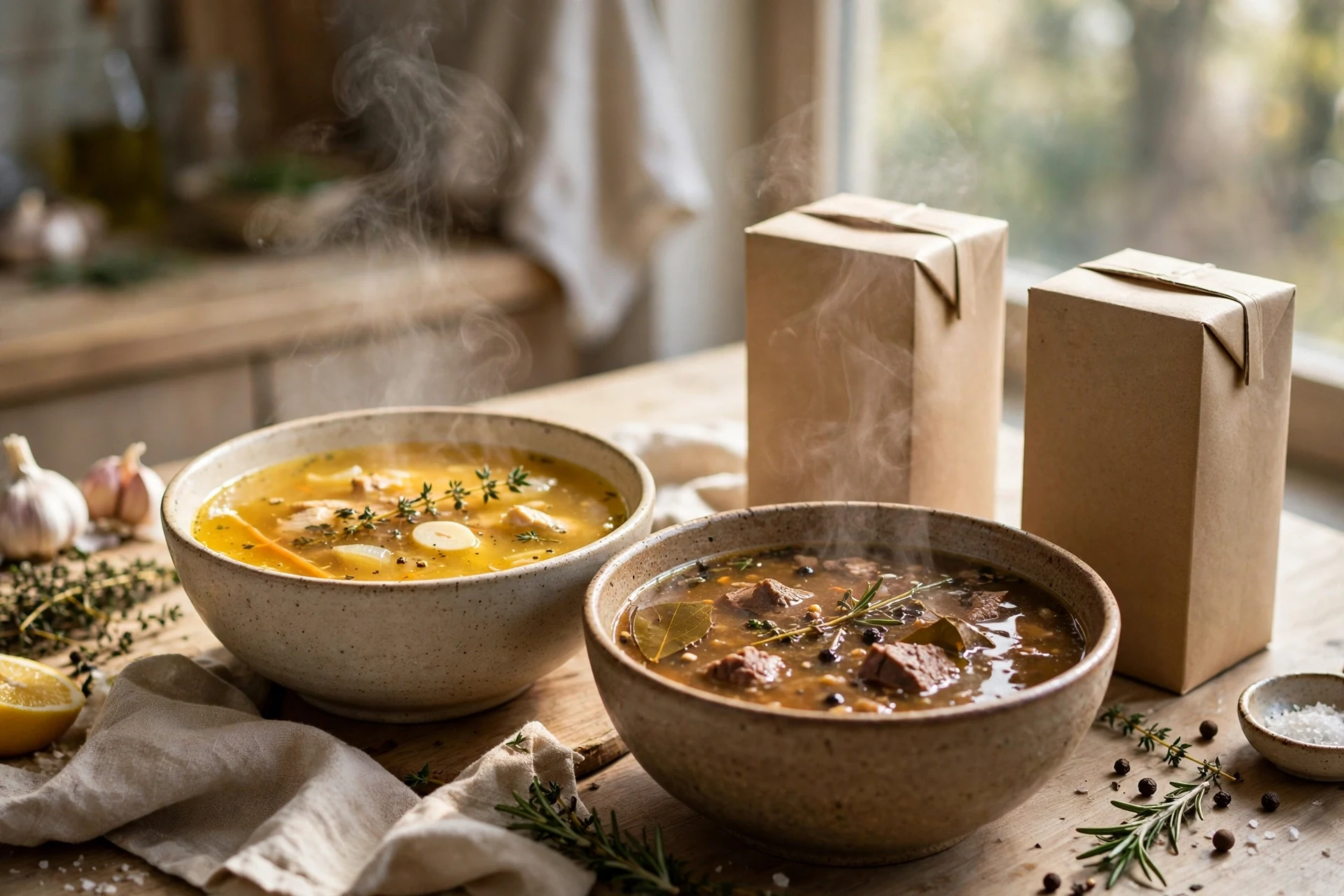
The classic difference is ingredients and body: stock is traditionally made from bones, giving it a richer, more gelatinous texture, while broth is made mainly from meat and vegetables and is lighter and ready to sip on its own. In today’s supermarkets the words are often used loosely, so the ingredient list and sodium level tell you more than the front of the carton. For most home cooking, the two swap easily.
Choose stock when…
- You want more body in sauces, gravies, and braises
- The recipe relies on the liquid to feel rich and coating
- You are making a pan sauce or a hearty stew
- The ingredient list leads with bones or a rich base
- You plan to reduce it for extra concentration
Choose broth when…
- You want a lighter, seasoned soup base
- The dish is a clear soup or a noodle bowl
- You will sip it or use it for cooking grains
- You prefer a ready-seasoned, ready-to-pour flavor
- You are cooking a quick weeknight meal
The traditional definitions — and the modern shelf
In classical cooking, stock starts with bones (sometimes roasted), water, and aromatics, simmered long enough to draw out gelatin, which is why a good stock feels silky and may set softly when chilled. Broth starts with meat, so it tastes more directly of chicken, beef, or vegetables and is usually seasoned enough to eat as a light soup. Supermarket products blur this line — some “stocks” are mostly broth, and some “broths” are quite rich — so flip the carton and read the ingredients and nutrition facts. If you cook poultry often, pairing this with our guide to how to choose chicken helps you plan for homemade stock from a whole bird and its leftover bones.
Flavor, body, and sodium
Body is the easiest difference to notice: stock coats a spoon and gives sauces a glossy, restaurant-like finish, while broth stays light and clean-tasting. Salt is the trap with both — regular versions can be quite salty, so many cooks buy low-sodium and season the dish themselves, especially when the liquid will reduce and concentrate. Taste before you salt the pot. A well-organized pantry helps here too: keeping cartons visible, dated, and rotated follows the same principles as our guide to how to store spices, where freshness and turnover matter more than stockpiling.
When to use each in everyday cooking
Reach for stock when the liquid is a structural ingredient — gravies, braises, risottos, and sauces that should feel rich. Reach for broth when the liquid is the dish itself, as in clear soups, or when you want a lighter background for grains, beans, and steamed vegetables. In mixed dishes like chicken noodle soup or a weeknight stew, honestly, either works: use what you have, adjust the seasoning, and note that a richer stock may need a splash of water if the result tastes heavy. Leftovers of either freeze well in portions, and our guide to how to store leftovers covers safe cooling and freezing habits for soups and cooked dishes generally.
Homemade, boxed, and bouillon
Homemade stock gives you the most control over salt and body and makes good use of bones and vegetable scraps, but boxed versions are consistent and convenient — there is no wrong choice for a home kitchen. Bouillon cubes and pastes are the most concentrated and shelf-stable option; they are handy for adding a spoonful of depth to a sauce, though they tend to be salty, so dilute and taste carefully. Whichever you buy, check the date, store unopened cartons in a cool pantry, and refrigerate after opening, using the remainder within a few days or freezing it.
Common questions
Can I substitute broth for stock one-to-one?
In most recipes, yes. The dish may be slightly lighter in body with broth, or slightly richer with stock, but seasoning adjustments matter more than the label. Taste and adjust salt at the end.
What is bone broth, then?
Bone broth is essentially a long-simmered stock made from bones, marketed for sipping. In cooking terms you can treat it like a rich stock and use it wherever stock is called for.
How long does opened broth keep?
Refrigerated after opening, boxed broth or stock is generally best used within about four to five days. Freeze the rest in labeled portions — ice-cube trays or small containers work well for sauces.
References
U.S. Food and Drug Administration — Safe Food Handling. Reference for safe handling, storage, and spoilage signs.
Prepared October 21, 2026 with AI assistance. Cited sources do not endorse the entire article.