To choose fresh chicken, start with the packaging: it should be tightly sealed, cold to the touch, and free of leaking juices or puffy air pockets. The meat is often pale pink with little odor, but color and smell are clues, not proof — the dates, the cold display, and your handling at home matter just as much.
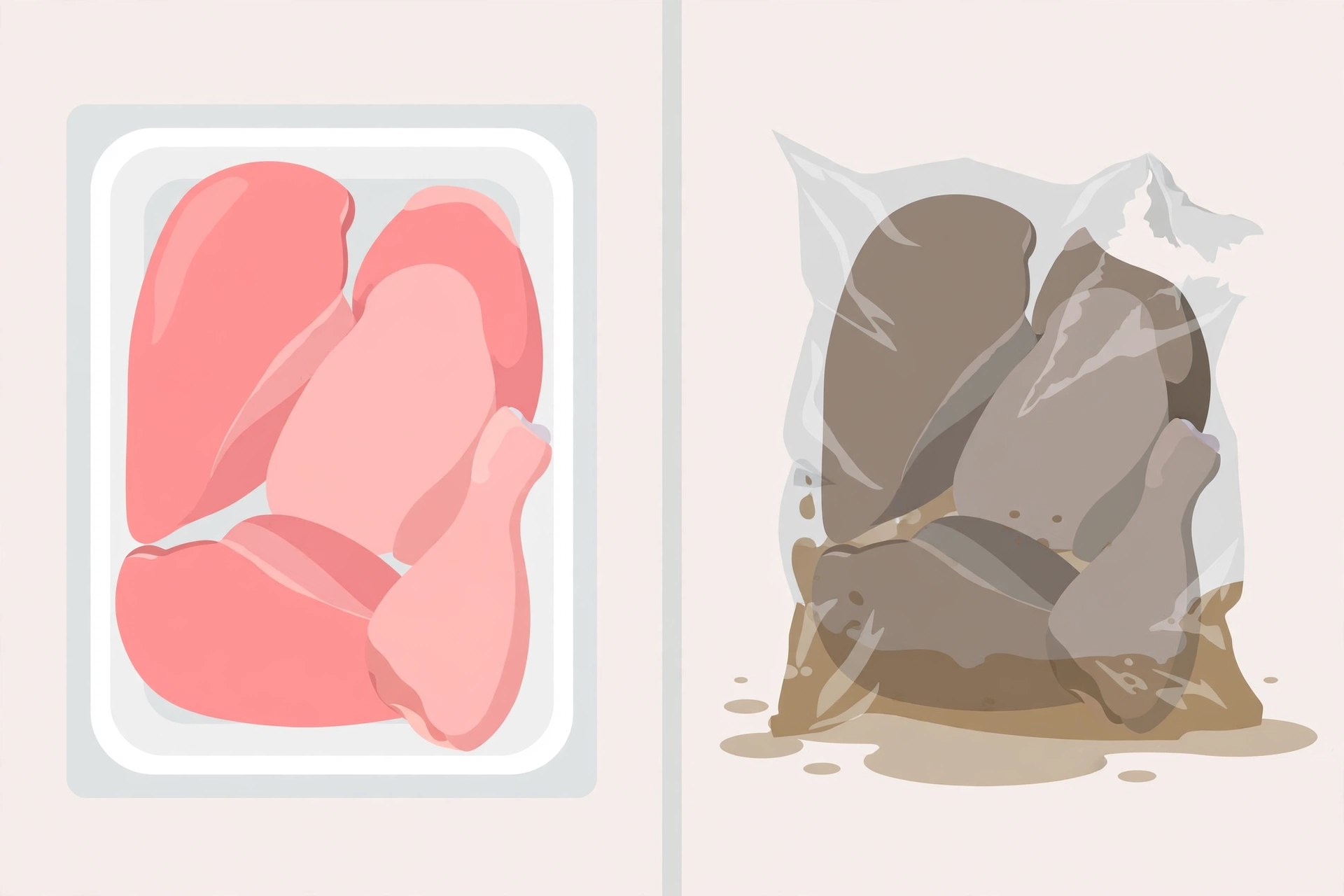
Prefer
- Packaging that is tightly sealed, with no tears, punctures, or leaking juices
- Chicken that feels cold to the touch in a well-chilled display case
- A sell-by or use-by date that leaves enough time for your planned meals
- Pale pink, even-looking meat with no strong odor
- Trays and bags stored on ice or in the coldest part of the refrigerated section
Avoid / check more closely
- Torn, bloated, or leaking packaging
- Gray, green, or unusually dark patches on the meat
- A sour, ammonia-like, or noticeably strong smell
- Packages sitting in a warm, poorly stocked, or disorganized display
- Large packs you cannot realistically use before the date on the label
Check the packaging first
The package is your most useful checkpoint. A good seal keeps air out and juices in; a torn or puffy package suggests rough handling or a break in the cold chain. Look underneath the package — pooled liquid or sticky residue on the tray is worth a second thought. Vacuum-sealed chicken should hug the meat closely; a loose, balloon-like bag is a sign to choose another one.
What chicken color can tell you
Fresh chicken is often pale pink, but the shade varies with feed, age, and cut — breast meat is usually paler than thighs. Do not treat color as a freshness test on its own. Gray or green patches, or meat that looks unusually dark in spots, are reasons to look more closely or pick a different package. Color reflects many things besides freshness, so pair what you see with the checks below.
Smell matters more than you think
Fresh raw chicken has very little smell. If you notice a sour, sulfur-like, or ammonia-like odor when you open the package at home, that is a strong reason not to use it. Sealed packaging limits what you can smell in the store, so treat smell as a final check at home rather than your only tool in the aisle. A faint, neutral scent is normal; anything sharp or unpleasant is not.
Read the dates and plan your meals
The date on the label — whether sell-by or use-by — is there to help you plan. Buy chicken you plan to cook within a day or two, and match the package size to your plans so nothing lingers in the fridge. If your plans change, the freezer is your friend: wrap the chicken well and freeze it promptly rather than letting it sit. When in doubt, the earlier date on two otherwise similar packages is usually the better pick.
Handling chicken after you buy it
Make the meat counter one of your last stops so the chicken spends less time at room temperature, and keep it apart from foods you will eat without cooking. At home, refrigerate it soon after shopping, placing the package on a plate or in a container so juices cannot drip onto other food. Use clean knives and cutting boards for raw chicken, and wash your hands and work surfaces afterward.
A simple chicken-shopping checklist
Before you put a package in your cart, answer three questions: Is the packaging intact and cold? Does the date fit my cooking plans? Is the color even with no strong odor? If the answer to all three is yes, you have done the useful checks. This checklist guides a good choice in the store; it cannot detect anything invisible, so careful handling at home completes the picture.
Common questions
Is pale chicken always fresher than darker chicken?
Not necessarily. Color varies by the cut, the bird’s diet, and processing, so a slightly darker thigh is not automatically older than a pale breast. Judge each package by the full set of clues rather than color alone.
Can I buy chicken on its sell-by date?
A sell-by date is mainly a guide for the store. If the package is intact, cold, and smells neutral, cooking it the same day is a common approach. If you will not cook it that day, freezing it promptly is the practical plan.
Should I rinse raw chicken before cooking?
Most food safety agencies advise against rinsing raw chicken, since splashing water can spread droplets around the sink. Patting the chicken dry with paper towels is the usual alternative, followed by washing your hands and the work area.
References
- USDA Food Safety and Inspection Service — Chicken from Farm to Table
- FoodSafety.gov — Cold Food Storage Chart
Prepared October 8, 2026 with AI assistance. Cited sources do not endorse the entire article.