
To choose ground turkey, read the lean percentage first — packs labeled around 93% lean are a versatile middle ground, leaner packs near 99% suit specific recipes but can cook dry, and regular ground turkey that includes skin will be richer. The meat should look pink and fresh in a cold, tightly sealed package with no sour smell, gray patches, or leaking juices. Avoid warm, torn, or puffy packages and any meat that looks gray-brown throughout.
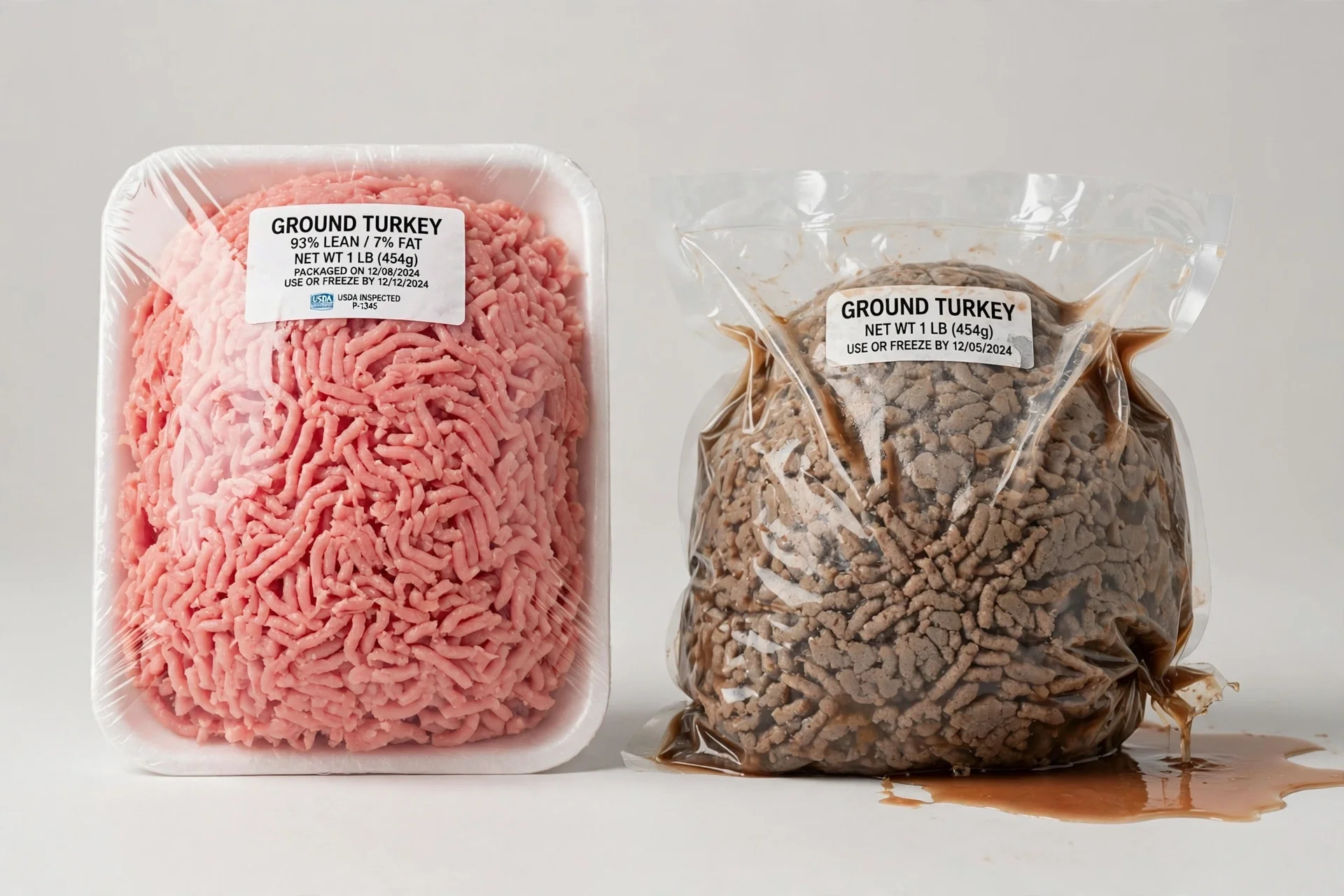
Prefer
- Lean percentage matched to your recipe
- Pink, fresh-looking color throughout the pack
- Cold, tightly sealed packaging with no leaks
- Date that fits your cooking or freezing plans
- Label that states whether skin and dark meat are included
Avoid / check more closely
- Gray or brown color throughout, not just on the surface
- Sour, ammonia-like, or strong off smell
- Torn, puffy, or leaking packaging
- Slimy texture or excessive liquid in the tray
- Warm packages or meat left outside the chilled display
Lean percentages and what they actually mean
Ground turkey labeling can be confusing because ground turkey and ground turkey breast are different products. Ground turkey may include dark meat and skin, while ground turkey breast is breast meat only and much leaner. The percentage on the front — such as 93% lean / 7% fat or 99% lean — is your clearest guide. Mid-range grinds around 90–93% lean usually give the best balance for burgers, meatballs, and sauces, staying moist while still relatively lean. Very lean grinds cook quickly and can become dry and crumbly, so recipes using them often add moisture through vegetables, breadcrumbs, or gentle cooking.
If you are switching from beef, expect ground turkey to look paler and cook a little differently. The comparison with how to choose ground beef is instructive: in both cases, the lean percentage drives cooking behavior and richness, the pack should be cold and sealed, and color should be judged with the meat type in mind — turkey is naturally paler than beef, so do not judge it by beef standards.
Color, packaging, and freshness checks
Fresh ground turkey is pink, though the exact shade varies with the proportion of dark meat. A grayish tint only on the surface where meat touched other meat can occur from lack of oxygen exposure and is less concerning than gray-brown color throughout the whole pack, which suggests age. Because ground meat has a large surface area, it is more perishable than whole cuts, so packaging and temperature matter even more: choose packs from the coldest part of the display, check that film is intact and not ballooned, and make the meat counter a late stop in your shopping.
The handling habits for ground turkey mirror those for whole birds. If you have read how to choose turkey, you already know the core pattern — cold chain, intact wrapping, sensible dates, and prompt refrigeration. For ground turkey specifically, plan to cook or freeze it within one to two days of purchase, since grinding shortens its comfortable fridge life compared with a whole turkey or intact cuts. When in doubt between two similar packs, choose the one with the later date and the colder, cleaner presentation.
Storing and using ground turkey
Refrigerate ground turkey on a plate or tray on a low shelf as soon as you get home, and freeze it if your plans shift. For freezing, flatten portions in freezer bags so they thaw quickly and evenly, label them with the date and lean percentage, and use them within a few months for best quality. The general principles in the whole-chicken guide — keep raw poultry separate from ready-to-eat foods, use clean utensils, and wash hands and surfaces — apply fully here; see how to choose chicken for that shared poultry-handling foundation.
In the kitchen, ground turkey benefits from confident seasoning and from not being overworked when forming burgers or meatballs, which keeps the texture tender. Because it is paler than beef, visual doneness cues are less reliable, so use a food thermometer where accuracy matters and follow current official cooking guidance for ground poultry. If the raw meat smells sour or feels slimy when you open the pack, discard it rather than cooking it, regardless of the date printed on the label.
Common questions
Is 99% lean ground turkey better?
Not automatically. Very lean ground turkey suits some recipes and dietary preferences but cooks drier and can taste bland without added moisture and seasoning. Many cooks find a grind around 93% lean more forgiving and flavorful for everyday dishes like burgers and meat sauce.
Why does ground turkey look gray in the middle of the pack?
Meat that is not exposed to oxygen can look grayish or darker in the interior, which by itself is a normal color effect. Concern is warranted when the meat is gray throughout, smells sour, feels slimy, or is past its date — in those cases, do not use it.
Can I substitute ground turkey for ground beef?
Yes, in most recipes, with small adjustments. Ground turkey is paler and often leaner, so add seasoning confidently, avoid overcooking, and consider a mid-range lean percentage for dishes like meatballs or chili where beef would normally provide more fat.
References
USDA Food Safety and Inspection Service — Chicken from Farm to Table. Reference for poultry selection, handling, and storage.
Prepared October 21, 2026 with AI assistance. Cited sources do not endorse the entire article.