
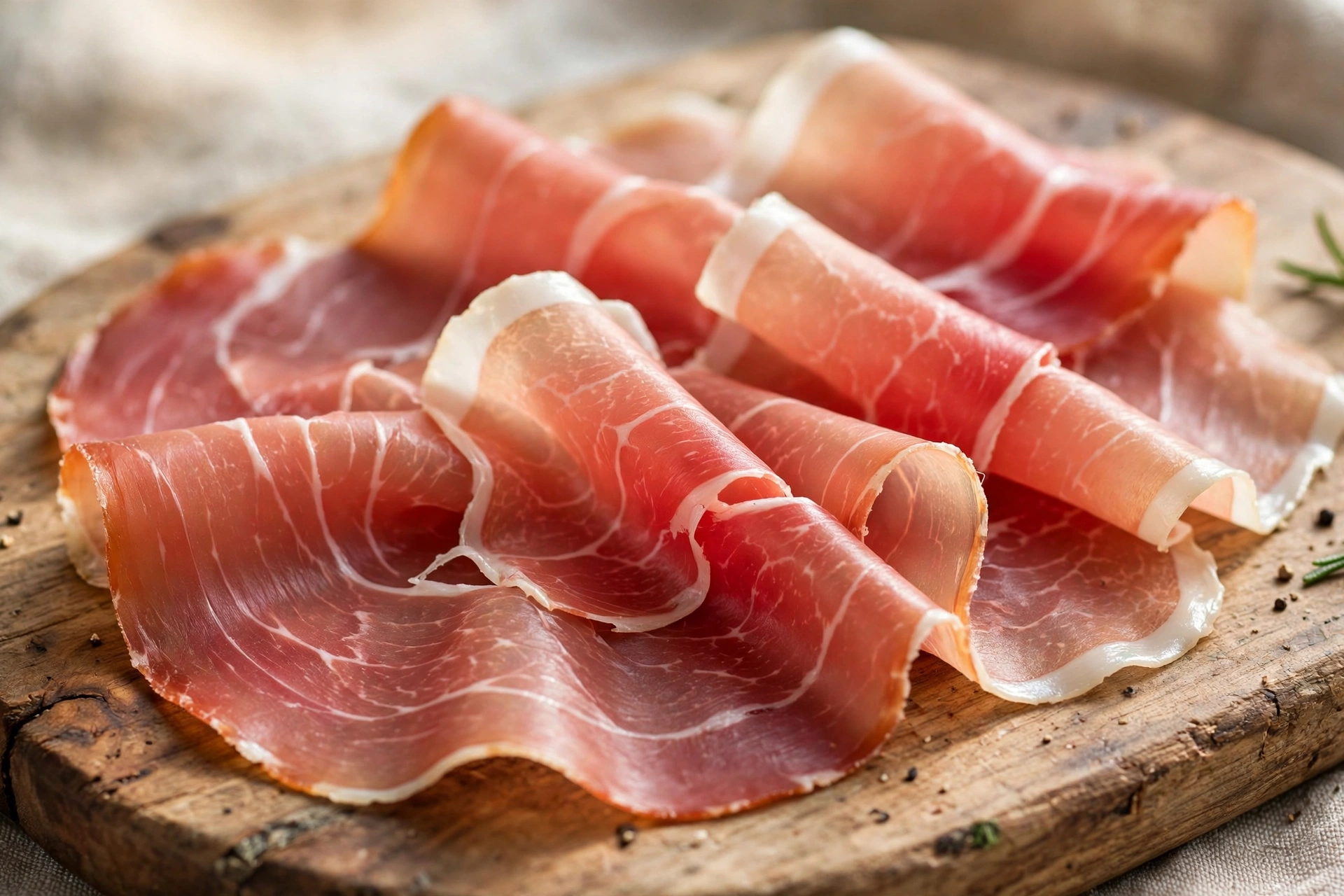
To choose good prosciutto, look for slices with a rosy pink to deep red color, delicate white marbling, and a silky, slightly translucent appearance. At the deli counter, ask for it sliced fresh — pre-sliced packs should lie flat with no curling or drying at the edges. It should smell sweet and meaty, never sour or sharp. Avoid packs with dried-out edges, an iridescent rainbow sheen, or any off odor.
Prefer
- Rosy pink to deep red color
- Fine, even white marbling
- Silky, slightly translucent slices
- Sweet, clean meaty aroma
- Deli-fresh slicing when possible
Avoid / check more closely
- Dry, curled, or darkened edges
- Strong iridescent or rainbow sheen
- Sour, sharp, or ammonia-like smell
- Gray or brown discoloration
- Slimy surface texture
Color and marbling
Good prosciutto ranges from rosy pink to a deeper red depending on the cure and aging. The fat should be creamy white — yellowing fat can indicate age or poor storage, though a slight cream tone is normal. Look for fine marbling threaded through the lean rather than large waxy lumps; even distribution means better flavor in every bite. The slices should look moist and supple, almost glossy. If pre-sliced packs show the meat pulling away from the plastic or the edges turning dark and stiff, the pack has been open to air too long.
Deli counter vs. pre-packaged
Prosciutto sliced to order at the deli counter is usually the best quality — you can specify paper-thin slices, which is how prosciutto is meant to be eaten, and you can see and smell it before buying. Pre-packaged prosciutto is convenient and consistent; choose packs with a recent pack date, intact vacuum seal, and slices that lie flat. Once opened, either type dries out quickly, so buy quantities you will use within a few days. For cooking uses where it will be crisped or rendered, pre-packaged is perfectly fine.
The rainbow sheen question
You may notice an iridescent, rainbow-like shimmer on some slices. A faint sheen is a harmless light effect caused by the way muscle fibers are cut — it appears on many cured meats. But a strong, obvious rainbow color combined with any off smell or slimy texture is a different story and a reason to discard it. When in doubt, trust your nose: fresh prosciutto smells sweet and savory, and any sourness means it has turned.
Storing prosciutto at home
Keep prosciutto refrigerated in its original sealed pack until opened; after opening, rewrap tightly in plastic wrap or wax paper and use within three to five days. For the best flavor and texture, let slices come to room temperature for about 15 minutes before serving — cold mutes the aroma and makes the fat waxy. Do not freeze prosciutto if you plan to serve it fresh; freezing is acceptable for cooking use but changes the delicate texture.
Common questions
What is the difference between prosciutto di Parma and domestic prosciutto?
Prosciutto di Parma is a protected Italian product aged at least 12 months with specific standards; it tends to be sweeter and more delicate. Domestic prosciuttos vary by producer but can be excellent. The same selection rules — color, marbling, freshness — apply to both.
Should prosciutto be served cold?
Slightly cool room temperature is ideal. Straight from the fridge the fat tastes waxy and the aroma is muted; 10–15 minutes on the counter brings out its sweetness.
How thin should the slices be?
As thin as possible — nearly translucent. Thick slices of prosciutto taste salty and chewy rather than silky. If the deli asks, request the thinnest setting.
References
USDA Food Safety and Inspection Service — Meat: Safe Food Handling. Reference for selecting and handling cured meats safely.
Prepared October 13, 2026 with AI assistance. Cited sources do not endorse the entire article.