
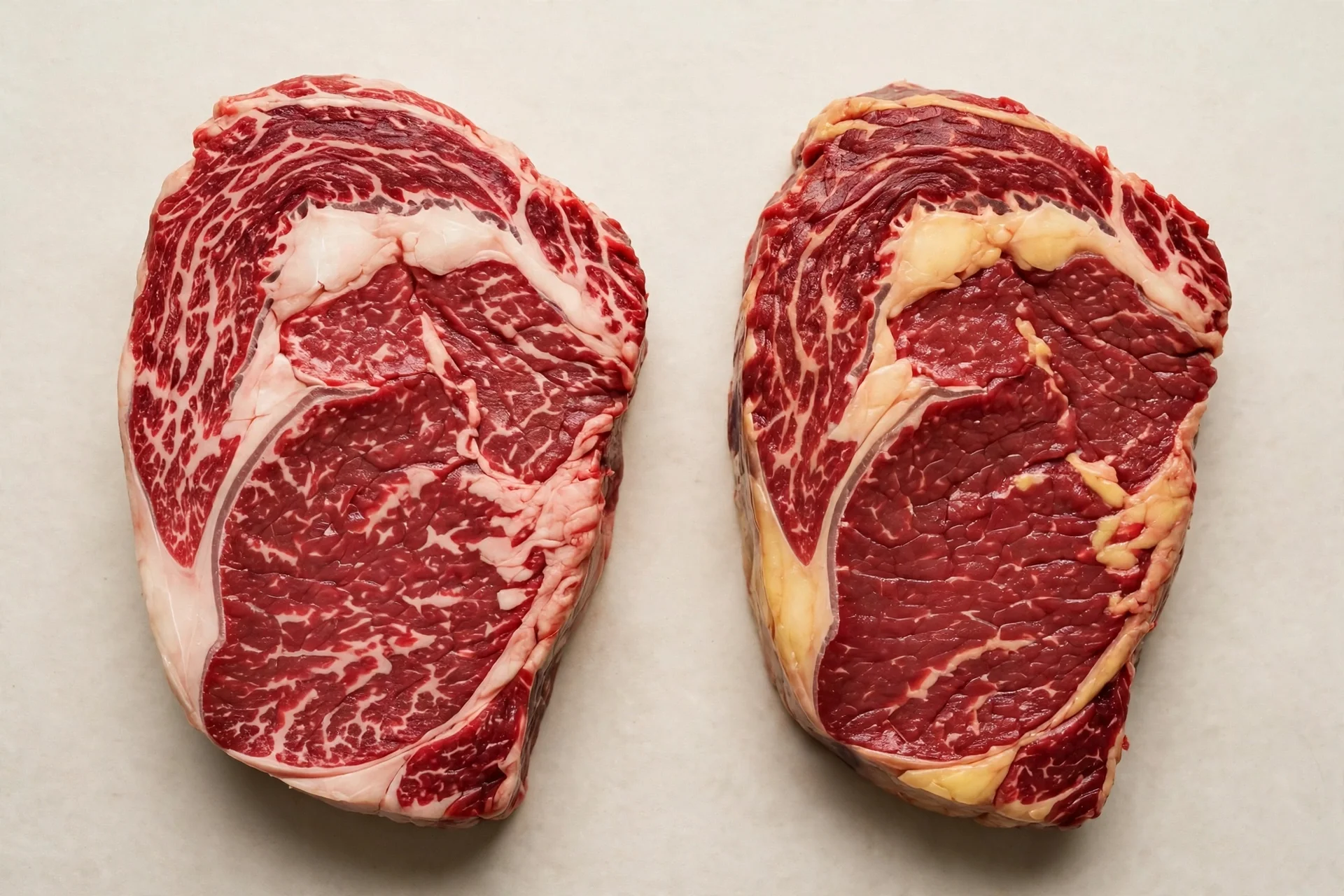
Grass-fed and grain-fed describe how cattle were fed, especially in the finishing stage before slaughter. Grain-fed beef — the conventional option in many supermarkets — is typically finished on grain for a period, producing more marbling and a milder, richer flavor. Grass-fed beef comes from cattle fed forage for most or all of their lives, and it is often leaner, with yellower fat and a more pronounced, sometimes described as beefier or earthier, flavor. Neither label alone guarantees quality, so judge the actual cut on color, marbling, packaging, and date as well.
Prefer
- Clear label stating grass-fed, grass-finished, or grain-fed terms
- Fresh red color and appropriate marbling for the type
- Cold, tightly sealed packaging with no leaks
- Date that fits your cooking or freezing plans
- Cut and thickness matched to your cooking method
Avoid / check more closely
- Vague label claims with no certifier or explanation
- Brown or gray patches across the cut surface
- Torn, puffy, or leaking packaging
- Sour or strong off smell when opened
- Paying a premium without checking the actual cut quality
What the feeding terms mean
Most beef cattle start life on pasture eating grass, so the real difference is how they are finished. Grain-fed, or conventional, cattle are commonly moved to a feedlot and finished on a grain-based diet, which encourages marbling — the white flecks of fat within the muscle — and produces the tender, mild flavor many shoppers expect. Grass-fed cattle continue on grass and forage. The term grass-finished is sometimes used to emphasize that the animal was fed grass for its entire life, while plain grass-fed claims can vary by country and certifier, so look for recognized certification or a clear explanation on the label if the distinction matters to you.
Label literacy is the first skill here, and it pairs with the general selection checks in how to choose beef: bright red surface color, firm flesh, clean smell, and intact cold packaging apply equally to both types. A grass-fed label does not rescue a poorly handled cut, and a grain-fed label does not make a fresh, well-marbled cut a poor choice. Treat feeding method as one factor among several, not as a verdict on the pack in front of you.
Flavor, fat, color, and price differences
In the store, grass-fed beef often looks slightly darker and leaner, with fat that can be more yellow because of pigments in forage. Grain-fed beef usually shows more white marbling and paler fat. In the pan, grass-fed cuts can cook a little faster because they are leaner, and many people describe the flavor as more pronounced. Grain-fed beef tends to be more forgiving for shoppers who like well-marbled, richly flavored steaks cooked to higher temperatures. Price usually differs too: grass-fed beef commonly costs more, reflecting slower growth and different production costs, so buying it makes most sense when you value that production method and flavor profile.
These differences show up clearly in ground products as well as steaks. If you compare grinds, the lean-percentage logic from how to choose ground beef still governs cooking: a lean grass-fed grind will behave like any lean grind, drying out if overcooked, while a fattier grain-fed grind stays juicier in burgers. In other words, feeding method changes flavor and fat character, but the percentage on the pack still predicts how the meat cooks day to day.
How to choose between them in practice
Start with the dish. For a richly marbled steak experience, a well-chosen grain-fed cut such as the ones described in how to choose ribeye steaks is often the satisfying pick. For shoppers who prefer a leaner cut, a stronger beef flavor, or a specific production method, grass-fed is the natural choice — just plan slightly gentler cooking and resting to keep leaner meat tender. Trying both types in the same cut, cooked the same way, is the most honest way to learn which your household actually prefers, since descriptions of flavor vary widely between tasters.
Whatever you choose, apply the standard freshness routine: buy from a cold, clean display, check the date, keep beef refrigerated on a low tray at home, and cook or freeze it within its comfortable window. If a pack smells sour or feels slimy on opening, discard it regardless of label or price. Labels describe how the animal was raised; they cannot tell you how this particular pack was handled, which is why your own inspection at the shelf and at home remains the final step for both grass-fed and grain-fed beef.
Common questions
Is grass-fed beef healthier than grain-fed?
Grass-fed beef is often leaner and can differ somewhat in fat composition, but the overall difference depends on the cut and the rest of the diet. It is reasonable to choose it for flavor or production preferences, but no single label makes a cut automatically the better choice for everyone.
Why is grass-fed beef more expensive?
Grass-fed cattle typically grow more slowly and may require more land and time to finish, which raises production costs. Retail prices also reflect certification, supply, and demand. A higher price reflects those factors, not a guarantee that a given pack is fresher than a grain-fed alternative.
Does grass-fed beef cook differently?
Yes, slightly. Because it is usually leaner, grass-fed beef can cook faster and dry out more easily if taken to high temperatures. Many cooks use a little less cooking time, rest the meat well, and avoid pressing moisture out during cooking.
References
USDA Food Safety and Inspection Service. Reference for beef labeling, handling, and storage.
Prepared October 21, 2026 with AI assistance. Cited sources do not endorse the entire article.