
To choose chicken breast, look for pale pink, plump fillets that spring back when pressed, in tightly sealed, cold packaging with a date that fits your plans. The surface should look moist but not slimy, with no gray patches, dark edges, or strong odor. Avoid packages with torn film, pooled liquid, or breasts with thick white striping and a noticeably hard, woody feel, which tends to cook up tough.
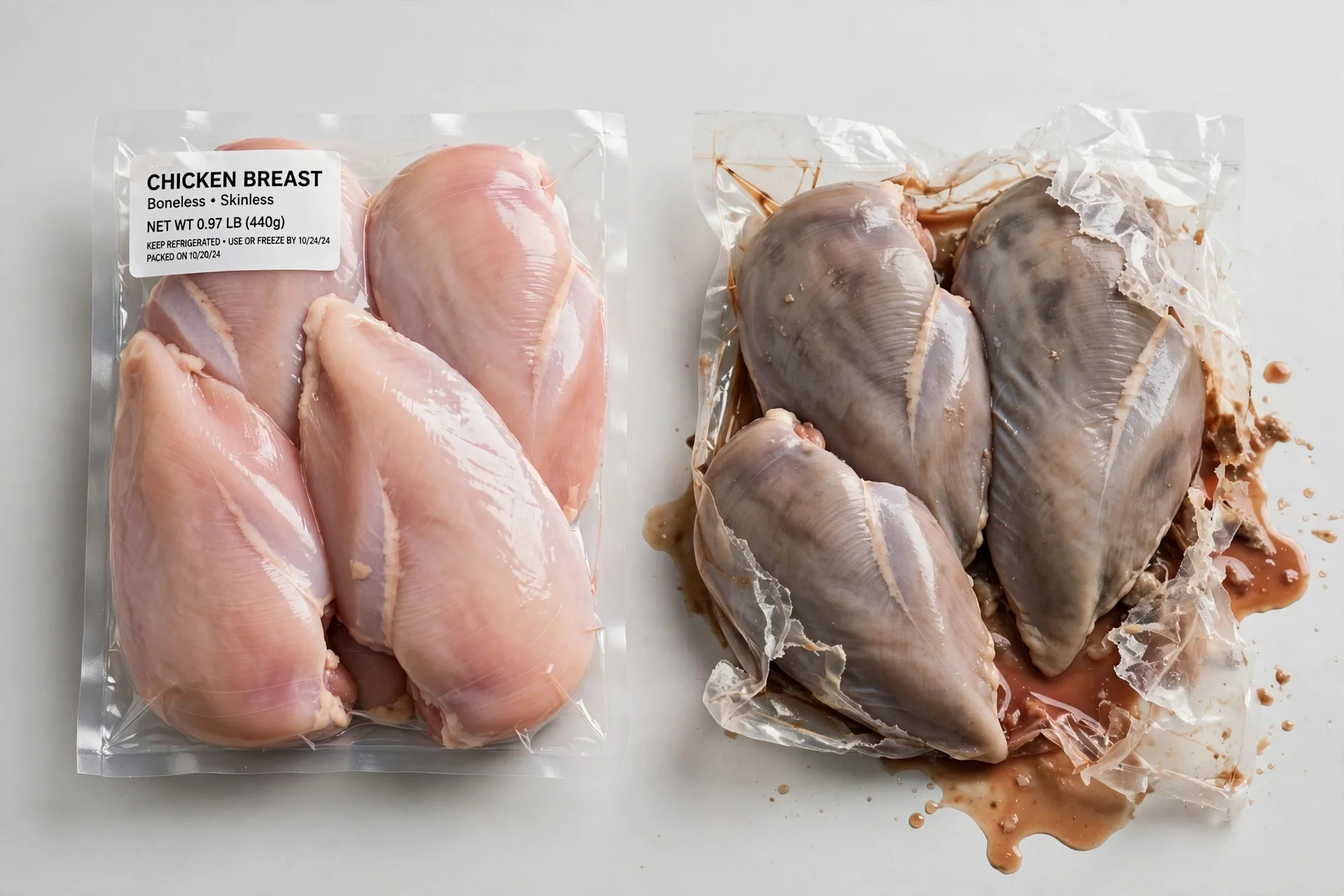
Prefer
- Pale pink, even color with no gray or dark patches
- Flesh that springs back when pressed gently
- Tightly sealed, cold packaging with no leaks
- Date that leaves time for your planned cooking
- Plump fillets of similar thickness for even cooking
Avoid / check more closely
- Torn, puffy, or leaking packaging
- Gray, green, or dried dark edges
- Slimy surface or sour, strong odor
- Thick white striping and a hard, woody feel
- Packages that feel warm or sit in a disorganized display
What good chicken breast looks and feels like
Boneless, skinless chicken breast is the most commonly bought cut, and the checks are straightforward. Color should be an even pale pink — slightly paler or rosier areas can occur naturally, but gray or green patches are a reason to choose another pack. Press the flesh through the film: it should indent slightly and spring back. Flesh that stays dented, feels mushy, or feels unusually hard and rigid in thick bands deserves a closer look. White striping — thin to thick white lines running along the fillet — is common in modern chicken; heavier striping is associated with tougher texture, so choose fillets with minimal striping when you can compare.
These breast-specific checks build on the general principles in how to choose chicken — intact cold packaging, sensible dates, neutral smell, and prompt refrigeration at home. Apply the general rules first, then judge the fillets themselves on color, spring, and striping. Buying fillets of similar size and thickness also helps them cook evenly, so a mixed pack of one very thick and one thin breast is less convenient than a uniform pack.
Labels, sizing, and packaging choices
Labels add useful context. Terms such as air-chilled, organic, or free-range describe production methods and are regulated to varying degrees, while sell-by and use-by dates guide stocking and planning rather than guaranteeing quality on their own. Enhanced or brined products, where a salt solution has been added, should say so on the label and will taste saltier and retain more liquid — worth knowing if you are watching sodium or want a dry surface for searing. If you also buy other cuts, the packaging discipline is identical to that for chicken wings: cold, sealed, leak-free, and bought near the end of your shopping trip.
Consider how you will cook the chicken before choosing a pack size. Large value packs are economical if you will portion and freeze what you cannot cook within a day or two, but a smaller pack you use fresh is better than a bargain pack that lingers in the fridge. Butterfly-cut or thin-sliced breasts cook quickly and evenly for weeknight meals, while whole thick fillets suit stuffing or slow, gentle cooking. Whatever the format, avoid packs with excessive pooled liquid, which can indicate age or temperature abuse.
Handling and storing chicken breast at home
Get chicken breast into the refrigerator promptly, stored on a plate or tray on the lowest shelf so juices cannot drip onto other foods, and cook it within one to two days or freeze it. For freezing, wrap portions tightly or use freezer bags with as much air removed as practical, and label them with the date. The full storage picture, including safe fridge placement and freezing habits, is covered in how to store meat — those habits matter as much as the in-store choice, because even a perfect pack deteriorates if it warms up in the car or sits too long in the fridge.
At preparation time, pat breasts dry for better browning, use separate boards and utensils for raw chicken, and wash hands and surfaces afterward. Food safety agencies generally advise against rinsing raw chicken, since splashing can spread droplets around the sink. If a pack smells sour or ammonia-like when opened, or the surface feels slimy, do not cook it — those are clear discard signs regardless of the printed date. Appearance and smell cannot detect everything, so careful handling remains part of choosing chicken well.
Common questions
What is white striping on chicken breast?
White striping is white lines of fat and connective tissue running through the fillet. Light striping is common and mainly cosmetic, while heavy striping is associated with a tougher, chewier cooked texture. Choosing fillets with less visible striping is a practical quality preference.
Why is one chicken breast much bigger than the others?
Breast size varies by bird and breed, and very large fillets are common. Size alone does not indicate a problem, but very thick breasts cook unevenly, so pounding them to an even thickness or butterflying them helps them cook through without drying at the edges.
How long can chicken breast stay in the fridge?
Raw chicken breast is generally best cooked within one to two days of purchase when kept properly refrigerated. If your plans change, freeze it promptly in tight wrapping rather than letting it sit, and follow the pack date as an additional guide.
References
USDA Food Safety and Inspection Service — Chicken from Farm to Table. Reference for poultry selection, handling, and storage.
Prepared October 21, 2026 with AI assistance. Cited sources do not endorse the entire article.