
To choose fresh sugar snap peas, look for pods that are plump, bright green, and glossy — they should look full and rounded, not flat or deflated. A fresh pod snaps crisply when bent, which is the whole point of the name. The peas inside should fill the pod evenly without bulging through the skin. Avoid pods that look dull, yellowed, or limp, and skip any with brown spots or mold.
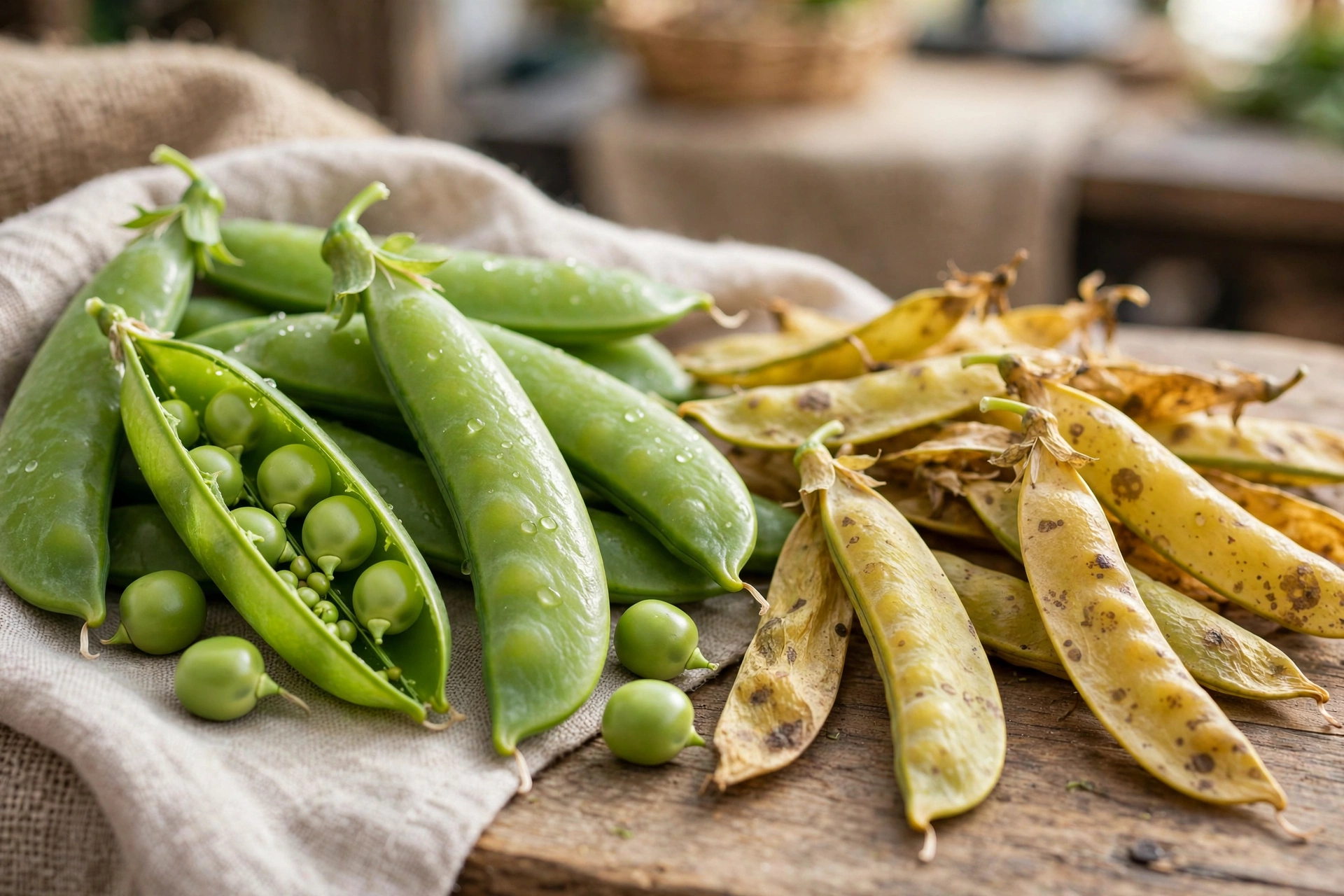
Prefer
- Plump, rounded, full-looking pods
- Bright green, glossy color
- Pods that snap crisply when bent
- Evenly filled pods without bulging peas
- Fresh, clean smell
Avoid / check more closely
- Flat, deflated, or wrinkled pods
- Dull, yellowed, or pale color
- Limp pods that bend without snapping
- Brown spots, blemishes, or mold
- Overly bulging pods with splitting seams
Plumpness and the snap test
Sugar snap peas are eaten pod and all, so the pod itself is the product — judge it like one. A good pod looks inflated and smooth, with the peas inside forming gentle bumps along its length. If the pods look flat or wrinkled, the peas have lost moisture and will taste starchy rather than sweet. The classic test is the snap: bend a pod gently and it should break with a clean, crisp snap. Limp pods that fold without breaking are old. In the store you cannot snap every pod, but you can squeeze a few gently — they should feel firm and springy, not soft.
Color and surface details
Fresh snap peas are a vivid, almost luminous green with a slight sheen. Dull or yellowish pods are aging, and yellowing means the sugars are converting to starch — the sweetness is fading. A little variation in size is normal, but avoid bags or bins with many undersized, flat pods mixed in. Check for brown spots or dark blemishes, which spread in the bag, and look at the stem ends: they should look fresh, not dried or blackened. If buying from a bulk bin, choose pods from the top and middle rather than crushed ones at the bottom.
Season and snap peas vs. snow peas
Sugar snap peas are a spring vegetable, sweetest in the cool months of spring and early summer, though they are available year-round from various growing regions. Do not confuse them with snow peas, which are flat with tiny peas inside and meant for stir-frying, or English peas, which are shelled. Snap peas are the plump, sweet, eat-whole kind — great raw as a snack, which is why freshness matters so much. Out-of-season pods can still be good, but inspect them more carefully.
Storing snap peas at home
Refrigerate snap peas immediately in a perforated bag or loosely closed container in the crisper drawer — they keep four to five days at best, and their sweetness fades fast. Do not wash before storing; rinse just before eating. Eat them as soon as possible: snap peas lose sugar to starch within days of harvest, so the sooner the better. They can be blanched and frozen for longer keeping, though frozen pods suit cooked dishes rather than raw snacking.
Common questions
Do you eat the whole snap pea pod?
Yes — the entire pod is edible and sweet. Just pinch off the stem end and pull away the tough string along the seam if there is one.
Why are my snap peas starchy instead of sweet?
Starchiness usually means the peas are old or were stored too long — sugars convert to starch after harvest. Buying bright, plump pods and eating them within a day or two keeps them sweet.
Can you eat snap peas raw?
Absolutely — raw is one of the best ways to enjoy them. Their crisp sweetness makes them ideal for snacking, lunchboxes, and salads.
References
U.S. Food and Drug Administration — Selecting and Serving Produce Safely. Reference for produce selection, handling, and visible damage.
Prepared October 13, 2026 with AI assistance. Cited sources do not endorse the entire article.