
To choose good kohlrabi, look for small to medium bulbs — about the size of a tennis ball — that feel firm and heavy with smooth, unblemished skin. If the leaves are still attached, they should look fresh, green, and perky, not wilted or yellow. The bulb can be pale green or purple; both taste similar. Avoid oversized bulbs, which tend to be woody, and skip any with cracks, soft spots, or dried-out stems.
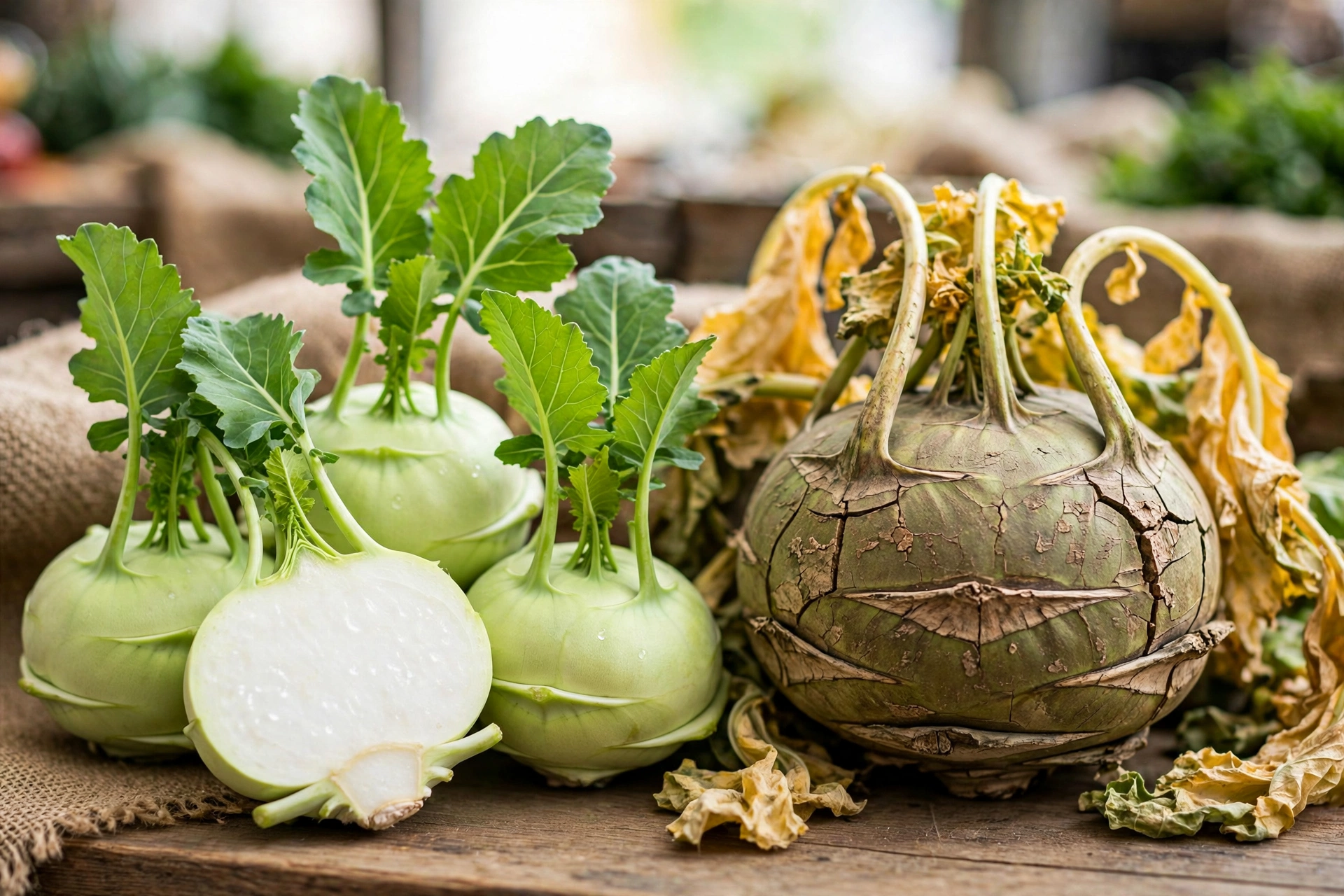
Prefer
- Small to medium bulbs, tennis-ball sized
- Firm, solid feel with smooth skin
- Fresh, green, perky leaves if attached
- Even color, green or purple, without blotches
- Heavy feel for the size
Avoid / check more closely
- Oversized bulbs, which are often woody
- Soft spots or spongy areas
- Cracked or split skin
- Wilted, yellow, or slimy leaves
- Dried-out or hollow-feeling bulbs
Size is the tenderness test
With kohlrabi, smaller is almost always better. Young, small bulbs are tender, crisp, and mildly sweet, while bulbs left to grow large develop a tough, woody texture that no cooking fully fixes. Aim for bulbs between a golf ball and a tennis ball in size. They should feel firm and dense — squeeze gently all around, since any soft or spongy patch means the interior is breaking down. A heavy-for-size bulb indicates good moisture and crispness inside.
Bulb, skin, and leaves
The swollen stem that forms the “bulb” should have smooth, taut skin in an even pale green or purple, depending on the variety — color does not indicate quality. Avoid bulbs with cracks or splits, which happen when growth is uneven and let the interior dry out. If leaves are attached, they are a freshness gauge: crisp, bright green leaves mean the kohlrabi was recently harvested, while wilted or yellowing leaves suggest age. You can cook the leaves like other greens, so fresh ones are a bonus, not just a signal.
What to expect and when to buy
Kohlrabi tastes like a mild cross between cabbage and broccoli stem — crisp, slightly sweet, and peppery when raw. It is a cool-season vegetable, at its best in spring and fall, though greenhouse-grown bulbs appear year-round. Since the bulb is usually peeled before eating, minor skin blemishes are fine, but deep scars can mean tough fibers underneath. Buy it ready to use: unlike some vegetables, kohlrabi does not improve with waiting.
Storing kohlrabi at home
Remove the leaves first — they draw moisture from the bulb — and store the leaves separately like other greens, using them within a day or two. The bulb keeps two to three weeks refrigerated in a loosely closed bag in the crisper drawer. Do not wash before storing; rinse just before peeling and using. Once peeled and cut, kohlrabi dries out quickly, so use it the same day or keep cut pieces in water in a covered container in the fridge.
Common questions
Do you peel kohlrabi?
Yes, peel away the tough outer skin before eating, especially on larger bulbs. Small, young bulbs have thinner skin, but peeling still gives the best texture.
Can you eat kohlrabi raw?
Absolutely — raw kohlrabi is crisp and refreshing in salads and slaws. It also cooks well: roast, steam, or add it to soups and stir-fries.
What is the difference between green and purple kohlrabi?
Very little in flavor — both are mild and sweet when young. The purple color is only in the skin, which is peeled away. Choose by size and firmness, not color.
References
U.S. Food and Drug Administration — Selecting and Serving Produce Safely. Reference for produce selection, handling, and visible damage.
Prepared October 13, 2026 with AI assistance. Cited sources do not endorse the entire article.