
The best turnips are small to medium, firm, and heavy for their size, with smooth skin and no soft spots. Pick roots about 2 to 3 inches across — larger turnips often turn woody and sharp-tasting. If the greens are still attached, they should look crisp and fresh, not wilted or yellow. A mild, earthy smell is a good sign; avoid anything spongy, wrinkled, or cracked.
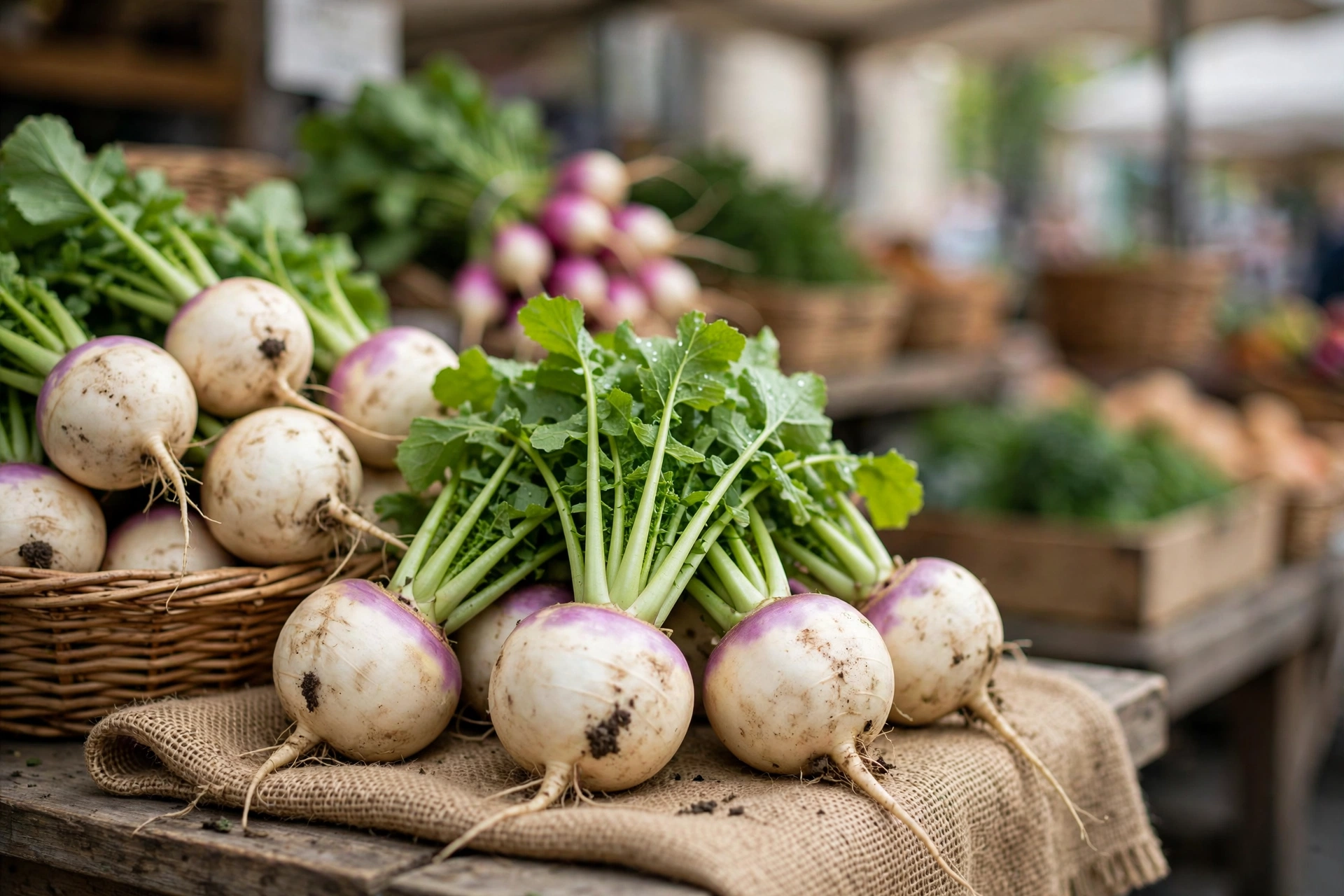
Prefer
- Small to medium roots, about 2 to 3 inches across
- Firm, solid feel with no give when squeezed
- Heavy for the size — a sign the root is juicy, not dried out
- Smooth, unblemished skin, creamy white shading to purple at the top
- Crisp, fresh greens if still attached
- Mild, earthy smell
Avoid / check more closely
- Oversized roots (over 4 inches) — often woody and bitter inside
- Soft spots, sponginess, or wrinkled, shriveled skin
- Cracks, deep scars, or moldy patches
- Wilted or yellowing greens
- Strong, sharp, or unpleasant odors
Size matters more than you think
With turnips, smaller is generally better. Young, small-to-medium turnips — roughly 2 to 3 inches in diameter — tend to be sweet, crisp, and tender. As turnips grow large, the flesh often becomes pithy, woody, and noticeably more pungent or bitter. A giant turnip may look like good value, but it is more likely to disappoint at the table. If you only find large ones, plan to cook them longer and consider peeling thickly, since the outer layer is where much of the harshness sits. For salads and quick roasting, stay small; for long braises and stews, a medium root is fine.
Roots, skin, and greens
Pick up the turnip and give it a gentle squeeze — it should feel rock-solid, like a billiard ball. Any sponginess or soft spots suggest age and moisture loss, which usually means a mealy, less flavorful root. The skin should be smooth and taut, not wrinkled. A little soil is normal and harmless; deep cracks or scars are not, since they can invite decay. Weight is a useful clue: a turnip that feels heavy for its size is still full of moisture. If the leafy tops are attached, they should be bright and crisp — greens are edible and delicious when fresh, but wilted, slimy tops suggest the root has been sitting around. Finally, give the root end a sniff: fresh turnips smell mildly earthy and sweet, never sharp or sour.
Storing turnips at home
Refrigerate turnips promptly. If the greens are attached, twist or cut them off before storing — the leaves keep drawing moisture from the root and will shorten its life. Store the roots unwashed in a perforated bag or loosely wrapped in the crisper drawer, where they generally keep well for two weeks or more. Use the greens within a couple of days, treating them like any other leafy green. Do not wash the roots until just before you use them, and trim away any small soft spots before cooking.
Common questions
Why do my turnips taste bitter?
Bitterness usually comes from size and age — large, older turnips develop a sharper, more pungent flavor. Choosing small, firm roots is the simplest fix. Peeling also helps, since the skin and the layer just under it hold much of the bite.
Can you eat turnip greens?
Yes — fresh turnip greens are edible and cook much like other hearty greens. Sauté, braise, or stir them into soups. Only use greens that look crisp and fresh; discard any that are wilted, yellowed, or slimy.
How can you tell if a turnip is too old?
An old turnip feels light for its size, has wrinkled or rubbery skin, and may give slightly when squeezed. Fresh turnips are heavy, firm, and smooth-skinned.
References
U.S. Food and Drug Administration — Selecting and Serving Produce Safely. Reference for produce selection, handling, and visible damage.
Prepared October 12, 2026 with AI assistance. Cited sources do not endorse the entire article.