
To choose fresh fennel, pick a bulb that feels firm, heavy, and solid, with tightly layered white to pale green skin and no cracks or soft spots. The stalks rising from the bulb should stand crisp and upright, topped with bright green, feathery fronds — wilted or brown fronds mean the bulb is old. Give it a sniff: fresh fennel smells clean with a light sweet anise scent. Avoid bulbs that feel soft or hollow, show browning between layers, or have dried-out, flowering tops.
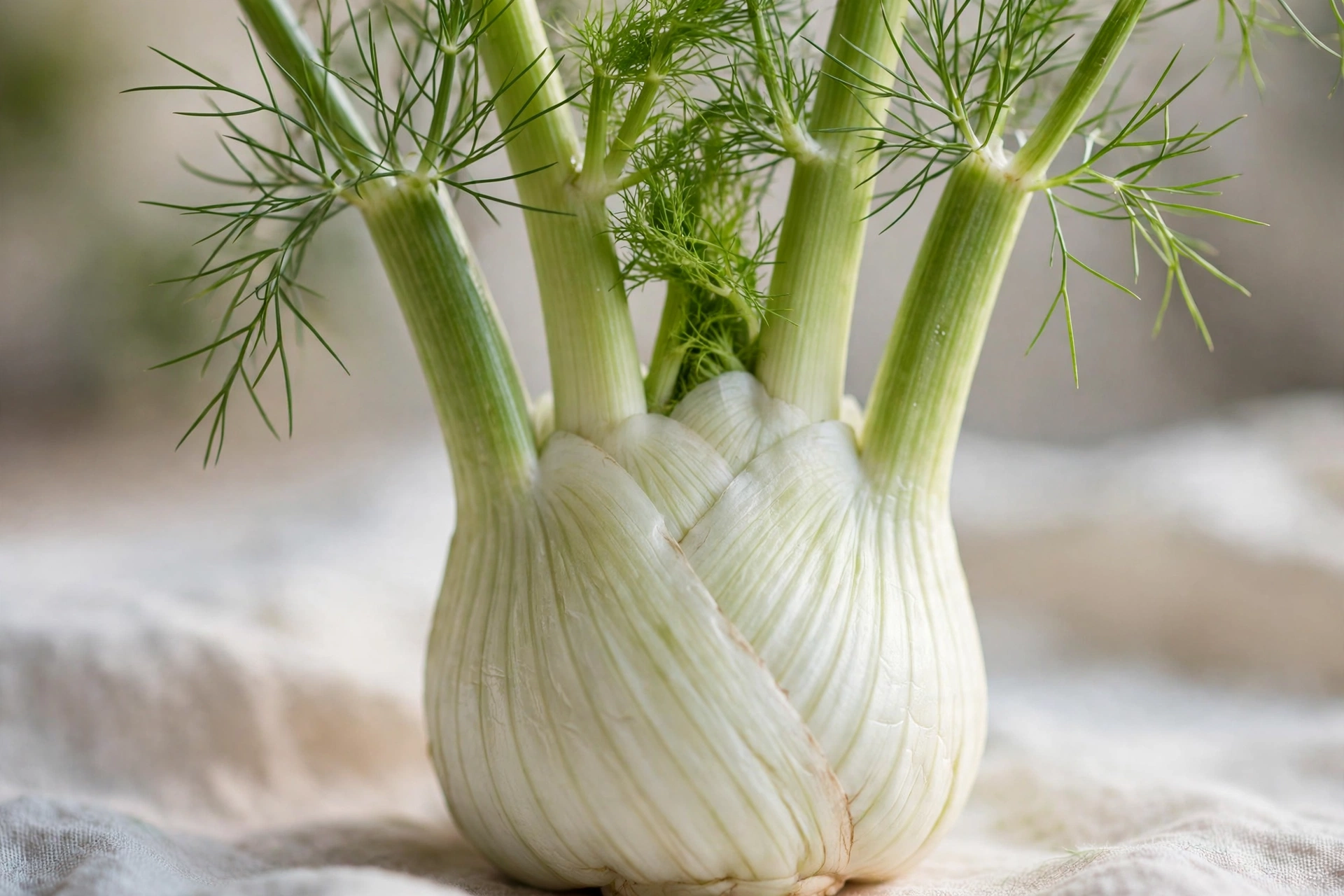
Prefer
- Firm, heavy bulb with no soft spots
- Tight, unblemished white to pale green layers
- Crisp, upright stalks
- Bright green, feathery fresh fronds
- Clean, lightly sweet anise scent
Avoid / check more closely
- Soft, spongy, or hollow-feeling bulbs
- Browning or splitting between layers
- Wilted, dried, or brown fronds
- Flowering tops, a sign the plant bolted
- Sour or off smell
Squeeze the bulb
The bulb is the main event, so test it directly. A fresh fennel bulb feels dense and solid when you squeeze it gently — the layers should feel tightly packed with no give or hollow spaces. Soft spots, especially near the base, indicate decay, and a bulb that feels light for its size has dried out. The outer layers should be smooth, white to pale green, and free of cracks; slight greening on the outer layer is normal sun exposure, but brown streaks or splits between the layers mean age. Smaller to medium bulbs are often more tender and sweet than oversized ones, which can be fibrous.
Read the stalks and fronds
Fennel is usually sold with its stalks and fronds attached, and they are a freshness billboard. The stalks should be firm, moist-looking, and upright — not floppy, rubbery, or dried. The fronds, the delicate feathery leaves at the top, should be bright green and perky; brown, wilted, or slimy fronds tell you the bulb has been sitting for a while. Flowering tops, where the fronds have formed yellow flower buds, mean the plant bolted, and the bulb is often tougher and more bitter. Fresh fronds are usable as an herb, so perky tops are a bonus, not just a signal.
Size, season, and what to expect
Fennel is at its best from fall through early spring. Choose bulbs sized for your use — medium bulbs around the size of a tennis ball are versatile for both raw salads and roasting. Very large bulbs can have a woody core; if you buy one, plan to trim the tougher center. The anise or licorice flavor mellows considerably with cooking, becoming sweet and gentle, while raw fennel is crisp with a brighter licorice note. Knowing which preparation you want helps you decide how much of the stalks and fronds to keep — save the fronds for garnish and the stalks for stock.
Storing fennel at home
Refrigerate fennel in a perforated plastic bag or loosely wrapped in a damp paper towel inside a bag — it keeps about a week, sometimes a bit more. Trim the fronds before storing if they are already wilting, but keep fresh ones; they are good for several days wrapped separately. Do not wash the bulb until you are ready to use it. If the outer layer dries or browns in the fridge, simply peel it away — the inner layers are usually still fine. Cut fennel browns at the edges like an apple; a squeeze of lemon on cut surfaces slows it if you are serving it raw.
Common questions
Can I eat the stalks and fronds?
Yes. The fronds work as a fresh herb for garnish and salads, with a mild anise flavor. The stalks are tougher but add good flavor to stocks and braises; they are usually too fibrous to enjoy raw.
Why does my fennel taste bitter?
Older, oversized, or bolted bulbs tend toward bitterness. Fresher, smaller bulbs are sweeter. Cooking also mellows bitterness considerably — roasting brings out fennel’s sweetness.
Is the anise flavor very strong?
Raw fennel has a noticeable but usually pleasant licorice note that most people find refreshing rather than overpowering. If you are cautious, try a thin slice raw first — cooked fennel is much milder.
References
U.S. Food and Drug Administration — Selecting and Serving Produce Safely. Reference for produce selection, handling, and visible damage.
Prepared October 12, 2026 with AI assistance. Cited sources do not endorse the entire article.