
To choose fresh bok choy, look for heads with crisp, firm white stalks that snap rather than bend, and vibrant dark green leaves with no yellowing. The head should feel compact and heavy for its size, with stalks packed tightly at the base. Check the cut base — it should look fresh and pale, not brown or slimy. Avoid bok choy with limp stalks, wilted or yellow leaves, brown spots, or a sour smell at the base.
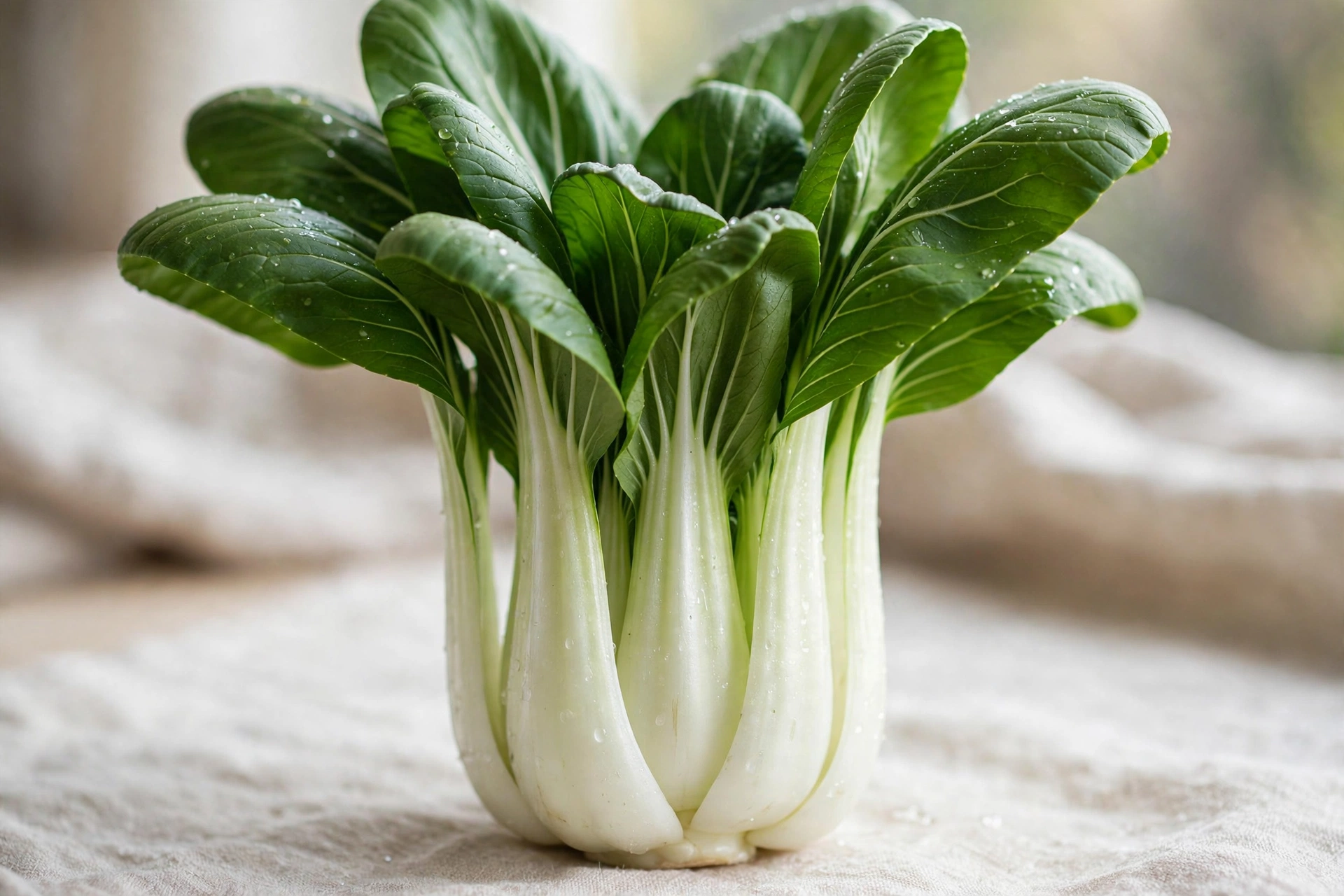
Prefer
- Crisp, firm stalks that snap when bent
- Vibrant dark green, unwilted leaves
- Compact head that feels heavy for its size
- Fresh, pale cut base with no browning
- Clean smell with no sourness
Avoid / check more closely
- Limp, rubbery stalks that bend without snapping
- Yellowing or browning leaves
- Brown spots or streaks on the stalks
- Slimy or darkened cut base
- Sour or off smell
The stalk snap test
Bok choy stalks are mostly water, so crispness is the freshness readout. A fresh stalk is rigid and snaps cleanly when you bend it — that snap means the cells are still full of water. A stalk that bends like rubber without breaking is dehydrated and old, and it will taste limp and bland even after cooking. Check several outer stalks, since the outer ones age first. The stalks should also look plump and smooth, not shriveled or pitted. White stalks with the faintest green tint near the leaves are normal; brown streaks or translucent patches are not.
Leaves, base, and head structure
The leaves should be deep green, smooth, and perky — they wilt and yellow before the stalks give out, so they are an early warning system. Small holes from field insects are cosmetic and common on market bok choy, but widespread yellowing or slimy patches mean decline. Look at the base where the stalks join: it should be pale, firm, and clean-smelling. A brown, mushy, or sour-smelling base indicates rot setting in. The whole head should feel dense and compact; a loose, splaying head with separating stalks is usually older, though some varieties naturally grow more open.
Baby bok choy vs. full size
Baby bok choy is simply harvested young — the heads are small, tender, and mild, with a higher leaf-to-stalk ratio, and they cook in minutes. Full-size bok choy has thicker, crunchier stalks and a stronger flavor that stands up to stir-frying and braising. Choose baby for quick sautés and soups where tenderness matters, and full-size when you want crunch and structure. Shanghai bok choy, a common variant, has pale green stalks instead of white and is equally good; judge it by the same crispness standards.
Storing bok choy at home
Refrigerate bok choy unwashed in a perforated or loosely closed plastic bag in the crisper drawer — it keeps three to five days at best, and baby bok choy fades faster than full-size. Do not wash before storing; surface moisture speeds decay. If the outer stalks wilt slightly, you can often revive the head with a short soak in ice water, then dry it well before refrigerating. Trim the base and separate the stalks for washing just before cooking, since grit hides where the stalks meet the base. Use the leaves and stalks together or separately — stalks need a head start in the pan.
Common questions
Can I eat bok choy raw?
Yes, especially baby bok choy — the stalks are crunchy and mild in salads and slaws. Full-size stalks are also edible raw but are crunchier and better suited to cooking for most tastes. Wash thoroughly either way.
Why are the stalks brown inside when I cut them?
Brown discoloration inside the stalks usually means age or cold damage during storage. Fresh bok choy stalks are white to pale green all the way through. Trim away small brown areas; if browning is widespread, the head is past its best.
Should I separate leaves from stalks when cooking?
It helps: stalks are dense and need a minute or two more heat than the delicate leaves. Starting the stalks first, then adding the leaves, gives even cooking without mushy leaves or raw stalks.
References
U.S. Food and Drug Administration — Selecting and Serving Produce Safely. Reference for produce selection, handling, and visible damage.
Prepared October 12, 2026 with AI assistance. Cited sources do not endorse the entire article.