
To choose fresh arugula, look for leaves that are vibrant green, perky, and crisp-looking — they should stand up rather than flop. The leaves should smell fresh and faintly peppery, never sour or rotten. Check the bottom of the bag or clamshell for yellowed, wilted, or slimy leaves, which signal age. Baby arugula has small, tender, mild leaves, while mature arugula has larger leaves with a bolder peppery bite — pick the size that matches your dish.
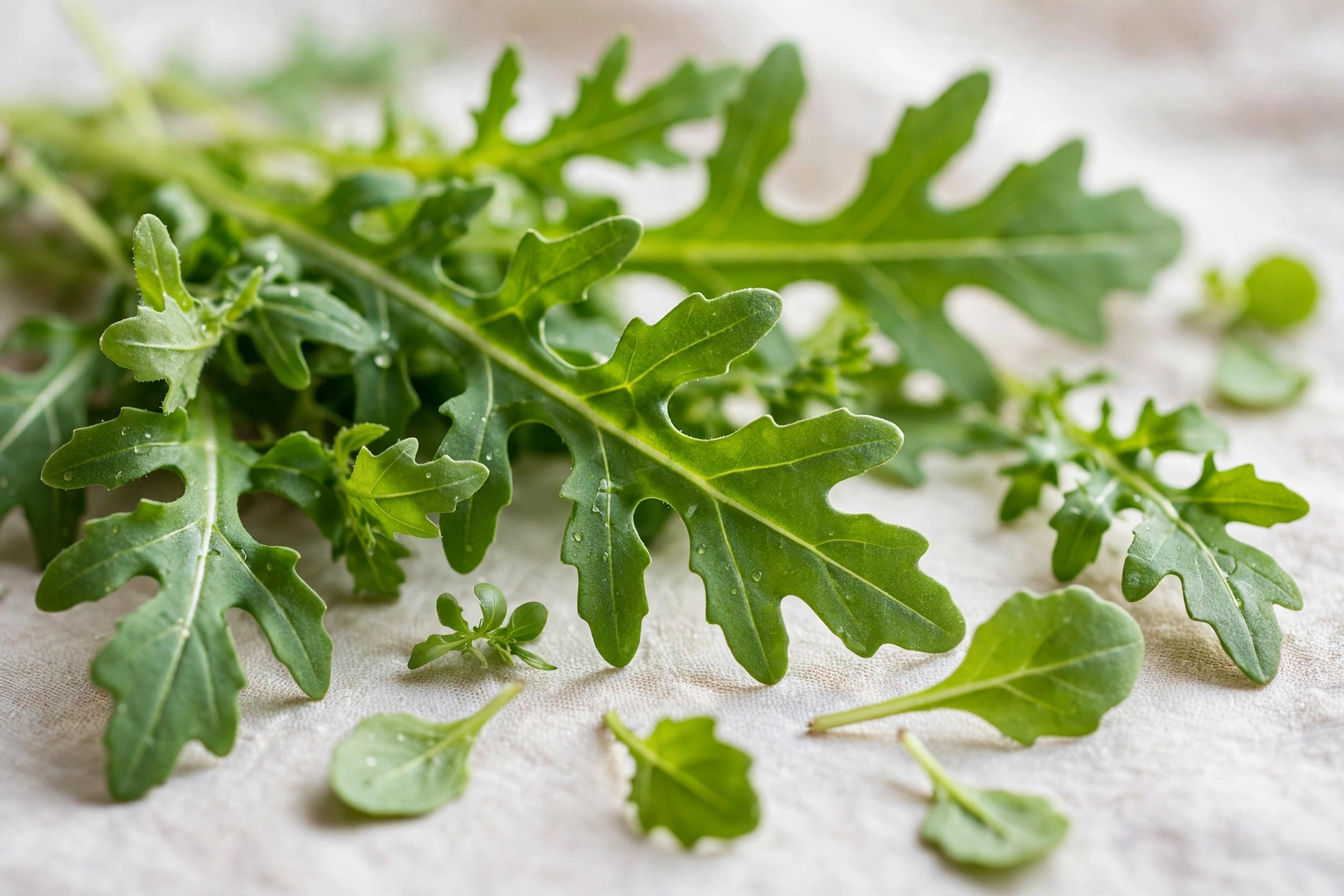
Prefer
- Vibrant, even green color with no yellowing
- Crisp, perky leaves that hold their shape
- Dry leaves with no slime or excess moisture
- Fresh, peppery smell
- Intact leaves without tears or dark spots
Avoid / check more closely
- Yellowed or brown-edged leaves
- Slimy or wet, matted leaves
- Wilted, limp leaves that lie flat
- Sour or rotten smell in the bag
- Condensation pooling at the bottom of the container
Look past the top layer
Arugula is almost always sold pre-washed in bags or clamshells, and the top layer is the showcase. Flip the container and inspect the bottom, where moisture collects and the oldest leaves sit. A few slightly imperfect leaves are normal in any pack, but widespread yellowing, dark wet patches, or leaves that have dissolved into slime mean the pack is old. Press the container gently — fresh arugula feels springy and dry, while declining arugula feels damp and compacted. Also check the date on the package, but trust your eyes over the date: a pack can fade before its printed date in a warm display case.
Baby vs. mature: flavor follows size
Leaf size is a flavor choice. Baby arugula, with leaves one to two inches long, is tender and mildly peppery — good for salads where you want a gentle bite. Mature arugula has larger, sometimes lobed leaves with a distinctly bold, mustardy heat that stands up to rich foods like steak or pizza. Wild arugula, sold in some specialty stores, has narrow serrated leaves and an even stronger flavor. Neither is better; the right one depends on the dish. For cooking, mature leaves hold up better to heat, while baby leaves wilt into almost nothing.
Freshness signs beyond the leaves
Smell the pack when you open it at home — fresh arugula smells green and peppery. A sour or sulfurous note means it is turning, even if the leaves still look okay. Stems should look crisp and green, not brown or mushy. If you buy arugula in bunches from a farmers market, look for bunches with firm stems and leaves that snap rather than bend, and check that the cut stem ends are not dried out or slimy. Market bunches are often unwashed, so expect some field grit and plan to wash well.
Storing arugula at home
Refrigerate arugula immediately and keep it dry — moisture is the main enemy. If the leaves feel damp, line the container with a dry paper towel to absorb condensation, replacing the towel if it gets wet. Stored this way in the fridge, fresh arugula typically keeps three to five days. Do not wash it until just before using; pre-washed packs are ready to eat, and extra washing adds moisture that shortens life. If a few leaves turn, pick them out promptly so they do not affect the rest. Arugula does not freeze well for fresh use.
Common questions
Why does my arugula taste extremely bitter?
Bitterness increases with maturity, heat stress during growing, and age after harvest. Mature and wild types are naturally bolder. Very bitter, yellowing leaves are likely old — fresher, smaller leaves taste milder and sweeter.
Can I still use arugula that is slightly wilted?
Slightly wilted but otherwise green and fresh-smelling arugula is fine, especially for cooked dishes. A quick ice-water bath can even re-crisp it. Discard anything slimy, yellowed, or sour-smelling.
Do I need to wash pre-washed arugula?
Pre-washed, bagged arugula labeled ready-to-eat can be used as is. If you are unsure or the pack is not labeled that way, a quick rinse is sensible. Bunch arugula from markets should always be washed.
References
U.S. Food and Drug Administration — Selecting and Serving Produce Safely. Reference for produce selection, handling, and visible damage.
Prepared October 12, 2026 with AI assistance. Cited sources do not endorse the entire article.