
To choose a good butternut squash, pick one that feels heavy for its size with smooth, matte tan skin and no soft spots or cracks. The stem should be intact, dry, and firmly attached — a missing or moldy stem means the squash may be drying out or decaying inside. A deep, even tan color usually signals full ripeness and sweeter flesh.
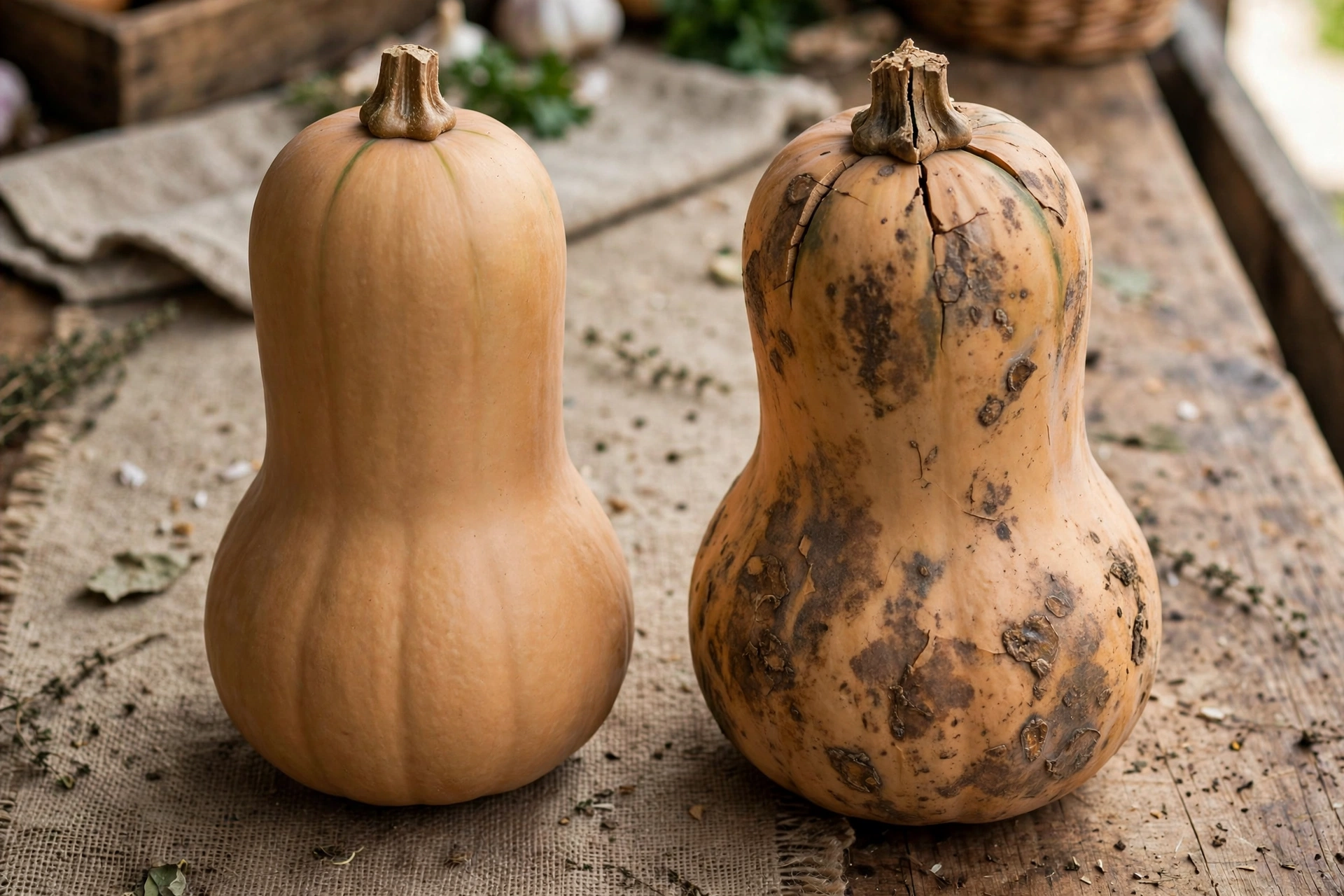
Prefer
- Heavy feel for the size
- Smooth, matte, deep tan skin
- Intact, dry, firmly attached stem
- No soft spots, cracks, or blemishes
- Long neck relative to the bulb (more flesh, fewer seeds)
Avoid / check more closely
- Light-feeling squash (drying out inside)
- Shiny green skin (underripe)
- Missing, soft, or moldy stems
- Soft spots or sunken areas
- Cracks or cuts in the skin
Weight, skin, and ripeness
Heft the squash — dense and heavy means thick, moist flesh inside. The skin should look matte and deep tan; shiny or greenish skin means it was picked too early and will be bland and starchy. Small surface scratches are harmless, but any soft or sunken spot means decay is starting. A squash with a long, thick neck gives you more usable flesh per pound, since the seed cavity sits in the bulb end.
The stem tells the story
The stem is your ripeness and storage gauge. A dry, hard, firmly attached stem means the squash cured properly after harvest and will store well. A missing stem leaves an open wound where moisture escapes and mold enters. Soft or moldy stems suggest the squash sat in damp conditions — pick another one.
Storing butternut squash at home
Whole butternut squash keeps for one to three months in a cool, dark, ventilated spot — not the refrigerator, which speeds decay. Once cut, wrap the pieces tightly, refrigerate, and use within four to five days. Peeled and cubed squash freezes well: spread on a tray to freeze, then bag for months of easy use.
Common questions
How do I know if butternut squash is ripe?
Deep matte tan skin, heavy weight, and a hard dry stem. Green or shiny skin means underripe.
Should I refrigerate whole butternut squash?
No — store it cool, dark, and ventilated at room temperature. Refrigerate only after cutting.
Can I freeze butternut squash?
Yes — peel, cube, freeze on a tray, then bag. It keeps for months and cooks straight from frozen.
References
U.S. Food and Drug Administration — Selecting and Serving Produce Safely. Reference for produce selection, handling, and visible damage.
Prepared October 11, 2026 with AI assistance. Cited sources do not endorse the entire article.